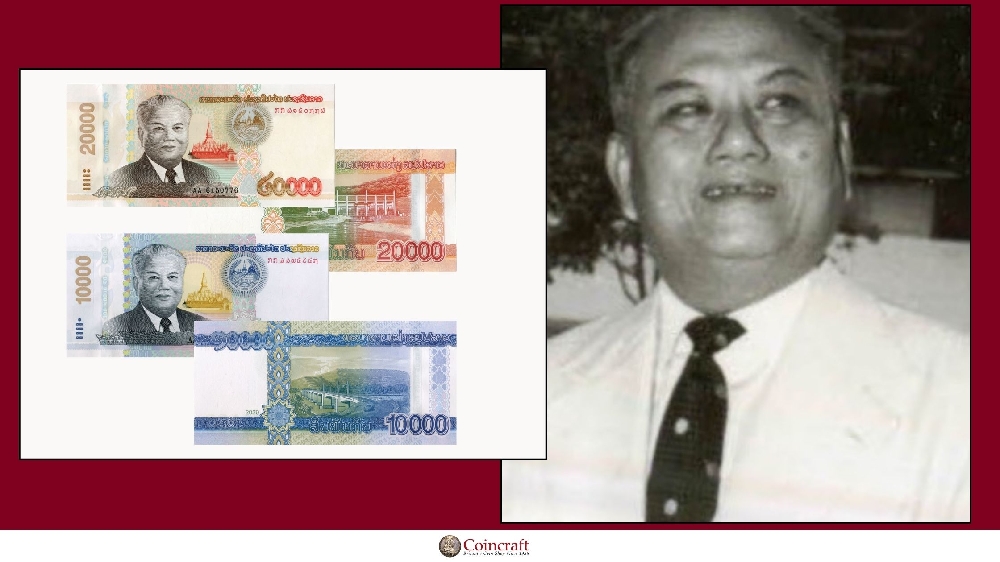
Picture Source of Kaysone Phomvihane: Wikipedia
Kaysone Phomvihane: The Architect of Modern Laos
Introduction: A Revolutionary Legend
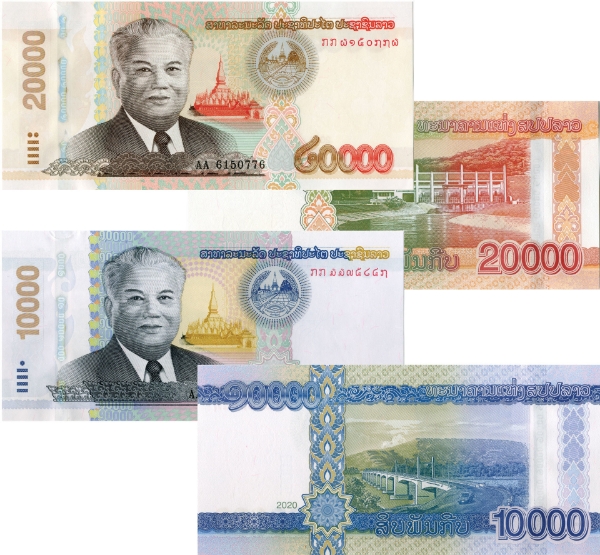
When you look at a Lao banknote or walk through the streets of Vientiane, one face stands out above all others: Kaysone Phomvihane. Known as the "Father of the Lao People’s Democratic Republic," Kaysone was the quiet force that steered Laos through decades of conflict, revolution, and eventual state-building. Unlike many of his world-famous contemporaries, Kaysone often preferred the shadows to the spotlight, but his impact on the destiny of Laos is undeniable. From his humble beginnings in Savannakhet to his final days as President, his life is a gripping tale of ideological passion and national transformation.
Key Takeaways
Revolutionary Founder: He was a founding member of the Lao People’s Revolutionary Party (LPRP) in 1955 and led the communist Pathet Lao forces for decades.
National Architect: He served as the first Prime Minister of the Lao People’s Democratic Republic from 1975 to 1991, and then as President until 1992.
Economic Reformer: In the 1980s, he spearheaded the "New Economic Mechanism," shifting Laos toward a more market-oriented economy while maintaining socialist roots.
Enduring Legacy: Today, he is revered in Laos as a national hero, with his portrait appearing on almost all currency and a dedicated national museum in his honor.
Early Life: The Student and the Spark
Kaysone Phomvihane was born on December 13, 1920, in the village of Na Seng, Savannakhet Province, in what was then French Indochina.(1) At birth, he was given the name Nguyễn Cai Song, reflecting his mixed heritage; his father, Nguyễn Trí Loan, was a Vietnamese civil servant, and his mother, Nang Dok, was Laotian.(2)
Growing up in a colonial environment, Kaysone was academically gifted and eventually made his way to Hanoi to study law at the University of Indochina.(3) It was here, in the bustling intellectual hubs of Vietnam, that he first encountered the revolutionary ideas of Ho Chi Minh. The spark of independence was lit, and Kaysone soon abandoned his formal studies to join the fight against French colonial rule.(4)
The Path of the Pathet Lao
By the late 1940s, Kaysone had fully committed to the revolutionary cause. In 1949, he played a pivotal role in founding the Lao People’s Liberation Army, and by 1950, he was serving as the Minister of Defense in the resistance government.(5)
One of the most fascinating aspects of Kaysone’s career was his ability to lead from behind the scenes. While Prince Souphanouvong (often called the "Red Prince") was the public face of the Pathet Lao, Kaysone was the ideological engine.(6) In 1955, he helped establish the Lao People’s Revolutionary Party (LPRP) in Xam Neua, becoming its first General Secretary—a position he would hold for the rest of his life.(7)
Leading a New Nation
The year 1975 changed everything. After years of civil war, the Pathet Lao took control of the capital, Vientiane. In December of that year, Kaysone took the stage at a national conference to announce the abolition of the 600-year-old monarchy and the birth of the Lao People’s Democratic Republic.(8)
As the country's first Prime Minister, Kaysone faced the monumental task of rebuilding a nation shattered by war and "secret" bombings.(9) His early years in power were defined by strict socialist policies and a close alliance with Vietnam. However, ever the pragmatist, Kaysone realized by the mid-1980s that the economy needed a change. He introduced the "New Economic Mechanism" (Chintanakan Mai), which decentralized control and encouraged private enterprise—a move that laid the groundwork for the modern Lao economy.(10)
The Final Chapter and Legacy
In 1991, after serving as Prime Minister for 16 years, Kaysone became the President of Laos.11 His time in this role was short, as he passed away on November 21, 1992, in Vientiane at the age of 71.(1)(2)
Today, the memory of Kaysone Phomvihane is woven into the fabric of Lao society. The government built a grand museum in Vientiane to honor his life, and his image remains a symbol of national unity and sovereignty. He is remembered not just as a communist leader, but as a man who dedicated every waking moment to the idea of a free and independent Laos.
FAQs
What was Kaysone Phomvihane's real name? He was born Nguyễn Cai Song, a name reflecting his Vietnamese paternal heritage.
What was his most significant economic achievement? His introduction of the "New Economic Mechanism" in 1986 is widely credited with modernizing the Lao economy by introducing market reforms while maintaining a socialist political structure.
Is there a place I can visit to learn more about him? Yes, the Kaysone Phomvihane Museum in Vientiane is the primary site dedicated to his life, featuring many of his personal belongings and documents from the revolution.
References
Britannica Editors (2025). Kaysone Phomvihan: Communist leader, Lao People's Revolutionary Party. [online] Encyclopedia Britannica. Available at: https://www.britannica.com/biography/Kaysone-Phomvihan [Accessed 27 Jan. 2026].
Kiddle Encyclopedia (2025). Kaysone Phomvihane Facts for Kids. [online] Kids.kiddle.co. Available at: https://kids.kiddle.co/Kaysone_Phomvihane [Accessed 27 Jan. 2026].
Marxists Internet Archive (n.d.). Kaysone Phomvihane Archive. [online] Marxists.org. Available at: https://www.marxists.org/archive/kaysone/index.htm.
Vientiane Times (2025). President Kaysone Phomvihane: A timeless national hero who guided the revolutionary movement to ultimate success. [online] Vientianetimes.org.la. Available at: https://www.vientianetimes.org.la/freefreenews/freecontent_240_President_y25.php [Accessed 27 Jan. 2026].
Kiddle Encyclopedia (2025). Kaysone Phomvihane Facts for Kids. [online] Kids.kiddle.co. Available at: https://kids.kiddle.co/Kaysone_Phomvihane.
Britannica Editors (2025). Kaysone Phomvihan. [online].
Simple English Wikipedia (n.d.). Kaysone Phomvihane. [online] simple.wikipedia.org. Available at: https://simple.wikipedia.org/wiki/Kaysone_Phomvihane.
Britannica Editors (2025). Kaysone Phomvihan. [online].
Banknote World (2024). The Laos Banknotes Dedicated to Former President Kaysone Phomvihane. [online] Banknoteworld.com. Available at: https://www.banknoteworld.com/blog/the-laos-banknotes-dedicated-to-former-president-kaysone-phomvihane/.
Wikipedia (2024). New Economic Mechanism (Laos). [online] en.wikipedia.org. Available at: https://en.wikipedia.org/wiki/New_Economic_Mechanism_(Laos).
Simple English Wikipedia (n.d.). Kaysone Phomvihane. [online].
Evendo (2025). Kaysone Phomvihane Memorial: A Tribute to Laos. [online] Evendo.com. Available at: https://evendo.com/locations/laos/vientiane-province/landmark/kaysone-phomvihane-memorial.