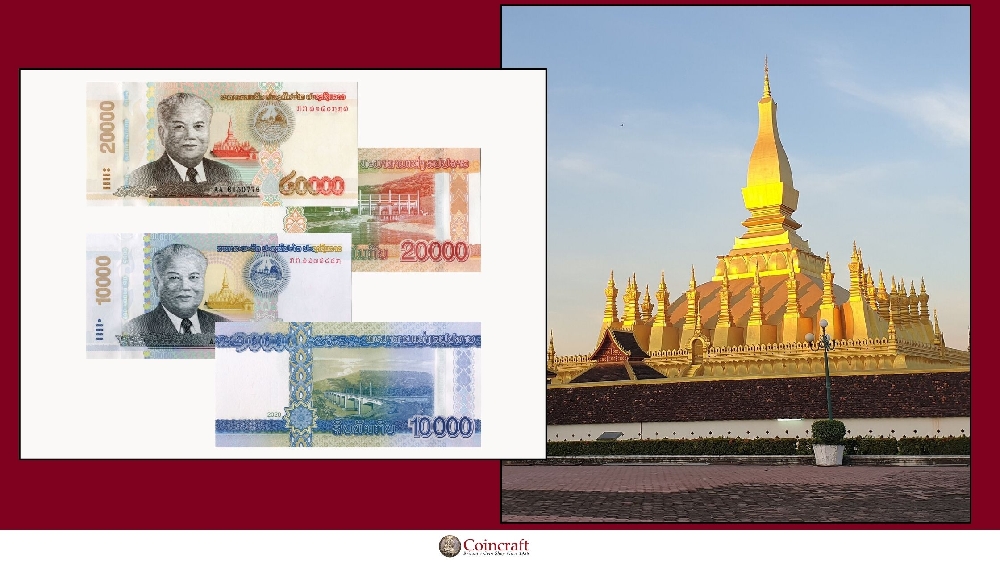
Picture Source of Wat That Luang Stupa: Wikipedia
The Golden Soul of Laos: The Incredible Story of Pha That Luang
If you’ve ever seen a postcard from Vientiane, you’ve seen it: a shimmering, golden pyramid-like structure reaching toward the sky, surrounded by palm trees and the quiet hum of prayer. This is Pha That Luang, or the "Great Sacred Stupa." It is, without exaggeration, the most important national monument in the Lao People’s Democratic Republic. It is so iconic that it’s featured on the national seal and the currency. But beyond the gold leaf and the tourist photos lies a story that spans over two thousand years—a story of faith, destruction, and a resilience that mirrors the history of the Lao people themselves.
Key Takeaways
Ancient Roots: Legend suggests the site originated in the 3rd century BC as a shrine for a relic of the Buddha sent by Emperor Ashoka.
National Symbol: It is the ultimate symbol of Lao sovereignty and Buddhist identity, appearing on the national seal and currency.
A Story of Rebirth: The stupa was destroyed by Thai invaders in the 19th century and underwent major restorations by the French and later the Lao government.
Architectural Marvel: Its unique three-level design represents the progression from the material world to the state of enlightenment.
The Boun That Luang Festival: It serves as the focal point for the country's most significant religious festival every November.
An Ancient Beginning: Legend and Lore
The story of Pha That Luang doesn't start with the gold we see today. If we believe the local legends, it starts nearly 2,300 years ago. Tradition holds that around the 3rd century BC, missionaries sent by the Indian Mauryan Emperor Ashoka—often credited with spreading Buddhism across Asia—arrived in the area of Vientiane. They supposedly brought with them a sacred relic: a breastbone of the Lord Buddha¹.
To house this relic, a small Hindu-style stone shrine (a that) was erected. While archeological evidence for this specific timeline is a bit thin, the belief itself is a cornerstone of the stupa's spiritual power. It makes Pha That Luang not just a building, but a living connection to the Buddha himself. For centuries, this modest shrine sat on the outskirts of what would eventually become a bustling capital city.
The King Who Went Big: Setthathirath’s Vision
Fast forward to the 16th century. This is where the Pha That Luang we recognize today really takes shape. In 1560, King Setthathirath moved the capital of the Lan Xang Kingdom from Luang Prabang to Vientiane. He wasn't just moving for the scenery; it was a strategic move to better defend against Burmese invasions².
As part of this new capital, Setthathirath wanted a monument that screamed "power" and "devotion." In 1566, he ordered the construction of a massive new stupa right over the ruins of the ancient 13th-century Khmer temple that had stood there previously. He didn't just want a small shrine; he wanted a fortress of faith. The resulting structure was 45 meters high and surrounded by 30 smaller stupas, each representing a stage of Buddhist enlightenment³.
Imagine the sight! In an era of wooden homes and dirt paths, this massive, golden mountain would have been visible for miles. It was a statement: the King was the protector of the faith, and Vientiane was the center of the Buddhist world.
Darkness and Destruction: The 19th Century Tragedy
History isn't always kind to beautiful things. For about 250 years, Pha That Luang stood as the crown jewel of Lan Xang. However, the 1820s brought disaster. A conflict with the Siamese (Thai) Kingdom led to the 1828 invasion of Vientiane. The city was almost entirely leveled.
Pha That Luang didn't escape the carnage. Invaders, hunting for the gold that reportedly covered the stupa and the treasures buried within its base, heavily damaged the structure⁴. For decades after, the great stupa sat in ruins, overgrown by the jungle, its gold stripped away, looking like a ghost of its former self. It stayed this way until the French arrived in the late 1800s.
The French Restoration and the Path to Modernity
When the French established their protectorate over Laos, they were fascinated by the "lost" city of Vientiane. In 1900, a French architect named Louis Delaporte attempted a restoration, but honestly? He kind of missed the mark. His design didn't quite capture the original Lao aesthetic⁵.
Realizing the mistake, the French tried again in the 1930s. This time, they based the restoration on detailed sketches made by early explorers like Francis Garnier. This version is much closer to what we see today. However, even this wasn't the final form. During the Franco-Thai War in the early 1940s, the stupa was damaged again by Thai air raids⁶. It seems Pha That Luang just couldn't catch a break!
Finally, after World War II, a massive renovation effort was undertaken by the Lao people. They didn't just want to fix it; they wanted to perfect it. They covered the entire structure in gold leaf (and gold paint for the larger surfaces), restoring its brilliance and ensuring it looked as magnificent as King Setthathirath had intended centuries ago.
Architecture That Tells a Story
If you visit Pha That Luang today, you'll notice it’s built on three distinct levels. This isn't just for looks; it’s a physical map of Buddhist cosmology.
The Base: The first level represents the material world, the realm of human desires and struggles. It’s wide and solid.
The Middle: The second level features 30 small stupas. These represent the "Ten Perfections" of Buddhism (like generosity, morality, and patience) across three different levels of intensity⁷. It’s the path the soul takes to leave the material world behind.
The Spire: The top level is the soaring, slender spire that represents the transition into the spiritual world—Nirvana, or ultimate enlightenment.
The entire complex is surrounded by high, crenelated walls with tiny windows, making it look almost like a fortress. This reflects the turbulent history we talked about—a place of peace that always had to be ready for war.
The Heartbeat of the Nation: Boun That Luang
To truly understand Pha That Luang, you have to see it in November during the full moon of the 12th lunar month. This is the Boun That Luang Festival, the biggest party (and prayer session) in Laos.
Tens of thousands of monks and pilgrims travel from every corner of the country to Vientiane. They perform a "wax castle" procession, carrying elaborate structures made of wax and flowers to the stupa. There are traditional games, massive markets, and a collective sense of joy that is hard to describe⁸. It’s the moment when the "biography" of this building feels most alive—it’s not a museum; it’s the heartbeat of a culture.
FAQs
Is the stupa made of solid gold? No, it is not solid gold. The core is made of brick and stone. The exterior is covered in high-quality gold leaf and gold paint. However, many believe that ancient treasures and gold relics are still hidden deep within the base of the structure.
Can you go inside Pha That Luang? Interestingly, you cannot go inside the main stupa itself. Unlike a Western cathedral, a stupa is a "reliquary"—it is meant to be walked around (circumambulation) as a form of meditation and respect, rather than entered. You can, however, walk through the beautiful cloisters and courtyards surrounding it.
When is the best time to visit? Early morning is the best time. The sun hitting the gold is spectacular, and it’s much cooler. If you can time your visit for the Boun That Luang festival in November, you will experience the site in its full religious and cultural glory, though it will be very crowded!
References
Lao Tourism Board. (2023). "History of Pha That Luang." https://www.tourismlaos.org/attractions/pha-that-luang/
Stuart-Fox, M. (1998). The Lao Kingdom of Lan Xang: Rise and Decline. White Lotus Press.
Askew, M., Logan, W., & Long, C. (2007). Vientiane: Transformations of a Lao Landscape. Routledge.
Ancient Origins. (2021). "The Resilience of Pha That Luang: A Golden Symbol." https://www.ancient-origins.net/ancient-places-asia/pha-that-luang-0015421
Cœdès, G. (1968). The Indianized States of Southeast Asia. University of Hawaii Press.
Lonely Planet. (2024). "Pha That Luang, Vientiane." https://www.lonelyplanet.com/laos/vientiane/attractions/pha-that-luang/a/poi-sig/414435/356948
Grabowsky, V. (2004). An Introduction to the History of Laos. Chiang Mai: Silkworm Books.
Lao News Agency (KPL). (2022). "The Significance of Boun That Luang Festival." http://kpl.gov.la/En/Detail.aspx?id=69432