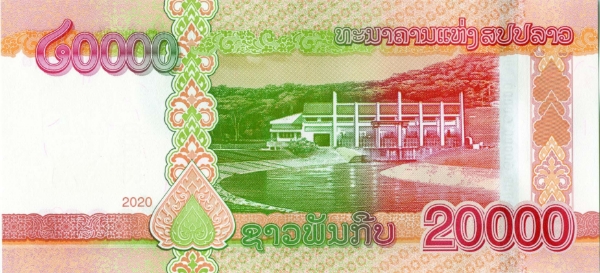
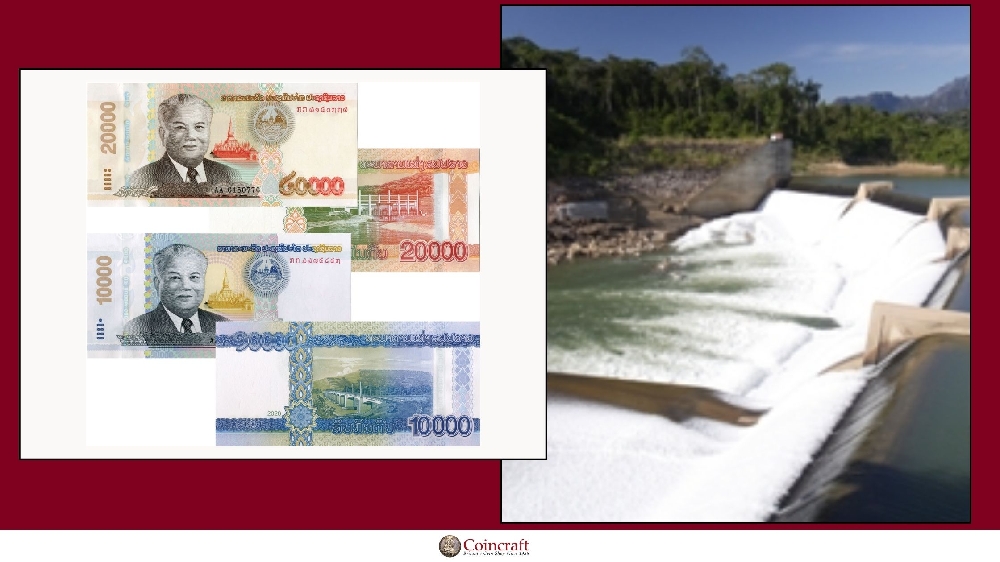
Picture Source of Theun Hinboun Hydroelectric Dam: Theun Hinboun Hydroelectric Company
The Mighty Theun Hinboun Hydroelectric Dam: Powering Laos and Beyond
This massive structure is intricately woven into the natural river systems of Southeast Asia, designed not just to tame water, but to fuel the economic dreams of a whole nation! It’s a story of incredible engineering, international cooperation, and the complex balancing act between progress and nature. Let’s dive right into the fascinating waters of the Theun Hinboun project! It’s a story of incredible engineering, international cooperation, and the complex balancing act between progress and nature. Let’s dive right into the fascinating waters of the Theun Hinboun project!
Key Takeaways
A Two-Part Epic: The original dam was completed in 1998, with a massive expansion project finishing up in 2012 to more than double its energy output.
Economic Pioneer: It was the first power plant in Laos to establish a commercial agreement to export electricity to neighboring Thailand.
Engineering Marvel: The project features a clever "run-of-river" diversion system and utilized a massive Tunnel Boring Machine (TBM) to carve a 5.5-kilometer tunnel straight through solid rock.
Complex Legacy: While bringing huge economic benefits to the country, the dam has also drastically altered local river ecosystems and displaced thousands of local residents.
The Original Blueprint: Making Waves in the 90s
Back in the late 1980s and early 1990s, Laos was actively looking for ways to boost its economy. They realized they had a massive, untapped natural resource right in their backyard: the incredible kinetic power of their rushing rivers(1). Enter the original Theun-Hinboun Hydropower Project.
Completed in 1998 at a relatively modest cost of $260 million, this wasn't your typical, gigantic wall-of-water dam(2). Instead, it was brilliantly designed as a "run-of-river" project. Through a clever feat of engineering, it diverted water from the Nam Theun river basin, funneling it through a 5.5-kilometer underground tunnel, and releasing it into the neighboring Nam Hai and Nam Hinboun rivers(3). It generated a solid 210 to 220 megawatts (MW) of power and became an instant commercial success for the region(2).
The Expansion: Bigger, Better, and Deeper
Fast forward to the 2000s. The original dam was working so well and generating so much revenue that the decision-makers thought, "Why stop here?" This ambition led to the massive Theun-Hinboun Expansion Project (THXP), which officially wrapped up in 2012(3).
This wasn't just a minor upgrade; it was a jaw-dropping $665 million megaproject! Engineers constructed a massive 65-meter-tall roller-compacted concrete dam on the Nam Gnouang River, creating a vast new reservoir to regulate water flow during the dry seasons(2). To make this happen, construction crews brought in a colossal Single Shield Tunnel Boring Machine (TBM) to chew through another 5.5 kilometers of sandstone and mudstone. This marked the very first time a TBM was ever used in the country of Laos!(3) The expansion added an impressive 280 MW of capacity, bringing the total output of the complex to a whopping 500 MW(2).
The Ripple Effect: Economics vs. Environment
Of course, every grand story has its shadows, and the history of this dam is no exception. From a strictly economic standpoint, the Theun Hinboun Dam is a resounding triumph. It’s owned by a coalition including Electricite du Laos alongside international partners, and it sells the lion's share of its electricity to the Electricity Generating Authority of Thailand (EGAT)(1). This setup pumps vital foreign exchange directly into the Laotian economy, funding national growth.
However, moving mountains and diverting rivers inevitably impacts the people and wildlife that call the area home. The 2012 expansion alone led to the displacement of over 7,500 people—mostly ethnic minorities—who had to relocate to make way for the new reservoir (4). Additionally, the diversion of extra water into the downstream rivers caused increased flooding, severe erosion, and significant declines in local fish catches, forever changing the traditional way of life for tens of thousands of villagers living downstream (4). It's a stark, real-world reminder that harnessing nature's power always comes with a profound social and environmental cost.
FAQs
Where is the Theun Hinboun Dam located? The dam is located in the central part of Laos, spanning the border of the Bolikhamxay and Khammouane provinces. It primarily utilizes the waters of the Nam Theun and Nam Gnouang rivers.
How much electricity does it generate? Following the completion of its massive expansion in 2012, the entire Theun-Hinboun complex has a total installed generating capacity of roughly 500 Megawatts (MW).
Who buys the power generated by the dam? The vast majority of the electricity is exported to Thailand and bought by the Electricity Generating Authority of Thailand (EGAT), while a smaller, dedicated portion is supplied domestically to Electricite du Laos (EDL) to power local communities.
References
Power Technology, 2024. Power plant profile: Theun Hinboun (Nam Theun), Laos. [online] Available at: https://www.power-technology.com/data-insights/power-plant-profile-theun-hinboun-nam-theun-laos/ [Accessed 12 Feb. 2026].
Hobo Maps, 2022. Hydropower Thakhek Loop. [online] Available at: https://hobomaps.com/ThakhekLoopHydropower.html [Accessed 12 Feb. 2026].
The Robbins Company, n.d. Theun Hinboun Expansion Project. [online] Available at: https://www.robbinstbm.com/projects/theun-hinboun-expansion-project/ [Accessed 12 Feb. 2026].
BankTrack, 2015. Theun-Hinboun dam expansion. [online] Available at: https://www.banktrack.org/project/theun_hinboun_dam_expansion [Accessed 12 Feb. 2026].