
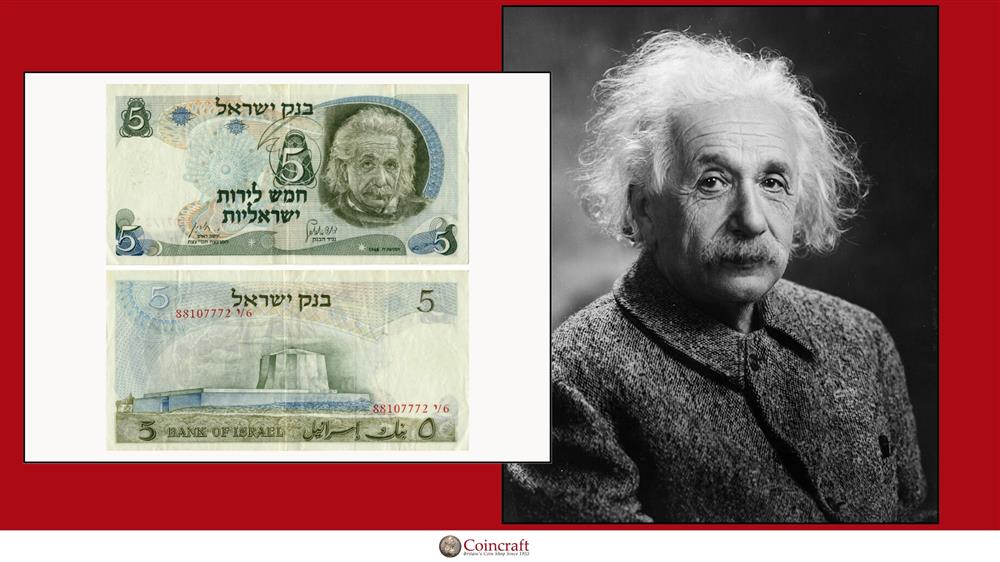
Picture Source of Albert Einstein: Wikipedia
Introduction to Albert Einstein: The Man Behind the Genius
Albert Einstein stands as a towering figure in the realm of science, whose name is synonymous with genius. His contributions have not only reshaped the landscape of physics but also influenced the broader intellectual culture of the 20th century. Born in the late 19th century, Einstein's journey from a curious child to a world-renowned physicist is a testament to his relentless pursuit of knowledge and understanding. His theories, particularly the theory of relativity, have revolutionised how we perceive time, space, and energy.
Einstein's impact extends beyond his scientific achievements. His life was marked by a deep engagement with the social and political issues of his time. Whether advocating for civil rights or criticising militarism, Einstein's voice resonated well beyond the scientific community. His personal philosophy, characterised by a profound sense of humanism and pacifism, reflects a man deeply concerned with the welfare of humanity.
Despite his extraordinary intellect, Einstein was known for his humility and wit. He possessed a unique ability to explain complex scientific concepts in a manner accessible to the layperson. This skill not only cemented his reputation as a brilliant scientist but also as a beloved public figure. As we delve into the various facets of Einstein's life, we uncover the myriad ways in which he has left an indelible mark on the world.
Early Life and Education of Albert Einstein
Albert Einstein was born on 14 March 1879 in Ulm, in the Kingdom of Württemberg in the German Empire. From an early age, Einstein displayed a keen interest in the natural world and an insatiable curiosity that would later define his approach to science. His family moved to Munich shortly after his birth, where he began his formal education. Despite not fitting into the rigid school system, which he found stifling, Einstein's passion for learning was evident.
Einstein's early education was not without its challenges. He struggled with the authoritarian nature of the German educational system, which emphasised rote learning over creative thinking. This environment was at odds with Einstein's inquisitive mind, leading him to often clash with his teachers. However, he excelled in subjects such as mathematics and physics, subjects that allowed him to explore the world of abstract thought.
In 1896, Einstein enrolled in the Swiss Federal Polytechnic in Zurich, where he pursued a diploma in mathematics and physics. It was here that he met like-minded peers who shared his passion for science, and where he honed his analytical skills. This period of intellectual growth and exploration set the stage for his later groundbreaking work. By the time he graduated in 1900, Einstein had already begun to formulate the questions that would lead to his revolutionary theories.
Breakthrough Discoveries: The Theory of Relativity
Among Albert Einstein's most significant contributions to science is the theory of relativity, which fundamentally altered our understanding of space and time. Comprised of two parts, the special theory of relativity (1905) and the general theory of relativity (1915), these theories provided new frameworks for understanding the universe. The special theory introduced the famous equation (E=mc^2), which describes the equivalence of energy (E) and mass (m), with (c) being the speed of light.
The impact of the special theory of relativity was profound. It challenged the Newtonian concepts of absolute time and space, positing instead that time and space are relative and interwoven into a single continuum known as spacetime. This shift in understanding had far-reaching implications, influencing not only physics but also philosophy and the arts. It opened up new avenues of inquiry and laid the groundwork for modern physics.
Einstein's general theory of relativity further expanded on these ideas by incorporating gravity into the framework of spacetime. It proposed that massive objects like stars and planets cause a curvature in spacetime, which is perceived as gravity. This theory was spectacularly confirmed in 1919 when observations during a solar eclipse showed light bending around the sun, as predicted by Einstein. The success of this theory cemented Einstein's status as a leading scientific thinker and changed the course of physics forever.
Einstein's Contributions to Quantum Physics
In addition to his work on relativity, Albert Einstein played a pivotal role in the development of quantum physics. His exploration of the photoelectric effect in 1905 provided crucial evidence for the quantum theory, earning him the Nobel Prize in Physics in 1921. Einstein's work demonstrated that light could be understood as both a wave and a particle, a dual nature that was central to the emerging field of quantum mechanics.
Despite his contributions, Einstein was famously sceptical of some aspects of quantum mechanics. He found the probabilistic nature of the theory at odds with his belief in a deterministic universe. This scepticism was famously encapsulated in his remark, "God does not play dice with the universe." Einstein's critiques of quantum mechanics led to numerous debates with fellow physicists, most notably Niels Bohr, and spurred further advancements in the field.
Einstein's engagement with quantum theory exemplifies his broader approach to science: a willingness to question established ideas and a commitment to seeking fundamental truths. His work laid the foundation for many of the technological advancements of the 20th century, including lasers and semiconductors, which have transformed modern life. Despite his reservations, Einstein's contributions to quantum physics remain an integral part of his scientific legacy.
The Impact of Einstein's Work on Modern Science
Albert Einstein's theories have had a profound and lasting impact on modern science. His insights into the nature of energy, mass, and the fabric of spacetime have influenced a wide range of scientific disciplines, from cosmology to particle physics. By providing a new understanding of the fundamental forces that govern the universe, Einstein's work has paved the way for breakthroughs in our comprehension of everything from black holes to the expansion of the cosmos.
In the realm of technology, Einstein's theories have been instrumental in the development of numerous innovations. The understanding of nuclear energy, which arises from his equation (E=mc^2), has led to both the development of nuclear power and the creation of nuclear weapons. Additionally, the principles of relativity are crucial for the operation of technologies such as GPS, which relies on precise timekeeping adjusted for the effects of Earth's gravity and motion.
Beyond specific scientific and technological advancements, Einstein's influence extends to the way science is conducted. His emphasis on theoretical models and mathematical elegance has shaped the methodologies of contemporary physics. By challenging scientists to think beyond the observable and to question established paradigms, Einstein has inspired generations of researchers to push the boundaries of human knowledge.
Personal Life: The Man Beyond the Scientist
While Albert Einstein is celebrated for his scientific achievements, his personal life reveals a complex individual with diverse interests and relationships. Despite his public persona as an intellectual giant, Einstein was known for his approachable and humorous demeanour. He was a passionate violinist, finding solace and inspiration in music, which he considered a source of profound joy and creative expression.
Einstein's familial relationships were marked by both affection and complexity. He was married twice, first to Mileva Marić, with whom he had two sons, and later to his cousin Elsa Löwenthal. His relationships with his children were varied; while he maintained a close bond with his younger son, Eduard, his relationship with his elder son, Hans Albert, was more strained. Despite these challenges, Einstein's letters and personal writings reveal a deep love and concern for his family.
Einstein also cultivated a wide network of friendships with fellow scientists, philosophers, and artists. His correspondence with figures like Sigmund Freud and Rabindranath Tagore reflects his interest in broader intellectual and cultural discussions. These relationships enriched his understanding of the world and informed his perspectives on issues beyond the scientific realm. Through these connections, Einstein's legacy extends into the arts and humanities, highlighting the breadth of his influence.
Einstein's Views on Politics and Society
Albert Einstein was not only a scientific visionary but also a prominent public intellectual who engaged actively with political and social issues of his time. His experiences as a Jewish man in early 20th-century Europe shaped his views on nationalism, war, and human rights. An outspoken critic of militarism, Einstein was a committed pacifist who advocated for global disarmament and international cooperation.
Einstein's political activism was particularly evident during the rise of the Nazi regime in Germany. He was an early and vocal opponent of Adolf Hitler and the policies of the Third Reich, which forced him to flee to the United States in 1933. In America, Einstein continued his advocacy for peace and justice, supporting the civil rights movement and speaking out against racial segregation. He saw science as a means to promote human welfare, rather than a tool for destructive ends.
Despite his pacifist beliefs, Einstein's views evolved during World War II. Aware of the potential for nuclear weapons, he famously signed a letter to President Franklin D. Roosevelt urging the development of atomic research, a decision he later regretted. This complex position underscores the tension Einstein felt between his ideals and the realities of the geopolitical landscape. His political engagement, driven by a deep sense of moral responsibility, remains a significant aspect of his legacy.
Legacy and Influence: How Einstein Changed the World
Albert Einstein's legacy is multifaceted, encompassing his groundbreaking scientific contributions, his influence on modern thought, and his role as a moral and social advocate. His theories have become foundational components of modern physics, continuing to inspire and challenge scientists in their quest to unravel the mysteries of the universe. The concepts of relativity and quantum mechanics have not only advanced our understanding of the cosmos but have also led to practical applications that touch every aspect of contemporary life.
Einstein's impact extends beyond the scientific community, as his ideas have permeated popular culture and philosophical discourse. His approach to questioning accepted norms and exploring the unknown has become a model for innovation and creativity across various fields. Moreover, his advocacy for peace, justice, and intellectual freedom has made him a symbol of resistance against oppression and an icon of humanism.
The influence of Einstein's work is evident in the continued exploration of theoretical physics, where researchers build upon and test his ideas in new and exciting ways. From the search for gravitational waves to the study of quantum entanglement, Einstein's legacy lives on in the ongoing pursuit of scientific discovery. His life and achievements serve as a testament to the power of curiosity and the enduring quest for understanding, inspiring future generations to explore and innovate.
Celebrating Einstein: Museums and Memorials
In recognition of Albert Einstein's monumental contributions to science and society, numerous museums and memorials have been dedicated to preserving his legacy. These institutions serve as important educational resources, offering insights into Einstein's life, work, and the historical context in which he lived. Visitors from around the world flock to these sites to honour the memory of one of history's most influential figures.
The Albert Einstein Museum in Bern, Switzerland, is a key destination for those interested in Einstein's life. Located in the city where he developed the special theory of relativity, the museum offers a comprehensive overview of his scientific achievements and personal history. Exhibits include original manuscripts, photographs, and interactive displays that bring Einstein's ideas to life, allowing visitors to engage with his work in a meaningful way.
In addition to dedicated museums, numerous memorials and institutions around the world celebrate Einstein's legacy. The Einstein Memorial in Washington, D.C., features a bronze statue of the physicist seated on a granite bench, surrounded by inscriptions of his most famous equations. Universities and research centres bearing his name continue to advance scientific knowledge, reflecting the lasting impact of his contributions. These tributes ensure that Einstein's spirit of inquiry and dedication to the betterment of humanity endure for future generations.
The Enduring Legacy of Albert Einstein
Albert Einstein remains a paragon of scientific achievement and intellectual curiosity, whose contributions have left an indelible mark on the world. His groundbreaking theories have not only transformed our understanding of the universe but have also paved the way for countless innovations that define contemporary life. Einstein's influence extends beyond science, as his commitment to social justice and human rights continues to inspire those who champion the cause of peace and equality.
The enduring legacy of Albert Einstein is reflected in the ongoing exploration of the questions he posed and the challenges he addressed. His work has set the stage for future generations of scientists, philosophers, and thinkers to push the boundaries of human knowledge. As we celebrate Einstein's life and achievements, we are reminded of the power of curiosity and the importance of pursuing truth in all its forms.
In honouring Albert Einstein, we are called to emulate his spirit of inquiry and dedication to the betterment of humanity. Whether through scientific discovery, social activism, or creative expression, each of us can contribute to a legacy of innovation and understanding. Let us continue to explore, discover, and strive for a world that reflects the values and vision of one of history's greatest minds.