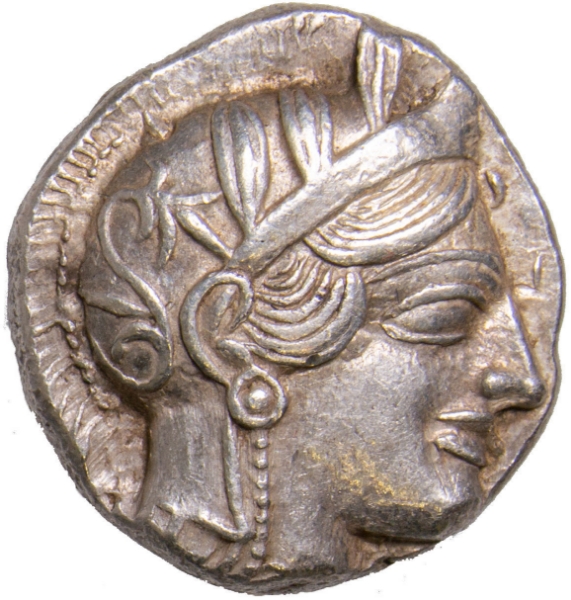
Picture Source of Owl of Athena: Wikipedia

The Owl of Athena: Wisdom's Winged Companion
Have you ever wondered why the owl is the universal symbol of wisdom? It’s not just because they look serious with those big, unblinking eyes. The reason actually dates back thousands of years to the rocky hills of ancient Greece, specifically to a goddess and her tiny, feathered sidekick.
We often think of mythological beasts as massive dragons or terrifying monsters, but in this case, one of the most enduring symbols of Western culture is a bird no bigger than a pigeon. The "Owl of Athena" (or Owl of Minerva to the Romans) wasn't just a pet; it was a sacred emblem that appeared on money, in art, and even on the battlefield. Let’s dive into the story of this little bird that cast a very large shadow over history.
Key Takeaways
A Tiny Inspiration: The "Owl of Athena" is based on a real species, the Little Owl (Athene noctua), which is still common in Greece today.
The "Glaucus" Gaze: Athena’s grey, flashing eyes were linked to the owl’s night vision, symbolizing the ability to see the truth where others see darkness.
Ancient Currency: The Athenian tetradrachm coin, featuring the owl, was the "dollar of the ancient world," used for centuries across the Mediterranean.
A Sign of Victory: Greek soldiers believed that if an owl flew over them before a battle, it was a guarantee of victory from the goddess.
Philosophy's Mascot: The philosopher Hegel famously used the owl to explain that we often only understand history after it has already happened.
The Myth of Nyctimene
So, where did this partnership begin? While Athena is the star of the show, her owl has a tragic origin story of its own. According to Roman poet Ovid, the owl wasn't always a bird. She was originally Nyctimene, a princess of Lesbos.
The story goes that Nyctimene was the victim of a terrible crime committed by her own father. Shame and grief drove her to flee into the forests, refusing to show her face in the daylight. Athena, the goddess of wisdom and war, took pity on her. She transformed Nyctimene into an owl, a creature of the night, and appointed her as her sacred companion¹. This transformation allowed Nyctimene to hide in the safety of the dark while serving the goddess who saw everything.
"Glaukopis": Seeing Through the Dark
One of Athena's most famous Homeric epithets is Glaukopis, which translates to "bright-eyed" or "grey-gleaming." It turns out, this word shares a root with glaux, the Greek word for owl².
This connection isn't accidental. The ancient Greeks admired the owl for its ability to see in the dark. They believed that just as the owl could hunt in the night, Athena could "see" the truth through the darkness of ignorance and deception. The bird became a living symbol of vigilance. While Ares, the god of war, represented bloodlust and chaos, Athena represented strategy and disciplined warfare. If an owl flew over an Athenian army before a fight, the soldiers didn't just see a bird; they saw a divine promise of victory from their protector³.
The Dollar of the Ancient World
You might not carry a lucky coin, but President Teddy Roosevelt did—and it was an ancient Athenian owl coin⁴.
The image of the owl became most famous through the Athenian Tetradrachm, a silver coin minted in Athens starting around the 5th century BC. On the front (obverse) was the head of Athena; on the back (reverse) was the owl, standing next to an olive sprig and the letters "ΑΘΕ" (short for Athens).
These coins were so reliable and high-quality that they became the standard currency for trade across the Mediterranean. They were referred to simply as "owls." In fact, the coins were so numerous in the wealthy city of Athens that a popular proverb emerged: "Sending owls to Athens." It meant giving something to someone who already had plenty of it—similar to the English phrase "carrying coals to Newcastle"⁵.
The Owl Flies at Dusk
The owl didn't stay in ancient Greece. It migrated into modern philosophy thanks to the German philosopher G.W.F. Hegel. In a famous preface, he wrote:
*"The owl of Minerva spreads its wings only with the falling of the dusk."*⁶
It’s a beautiful but slightly melancholy idea. Hegel was saying that philosophy (wisdom) is always a little bit late. We can only truly understand a historical era or a major event after it has finished (at "dusk"), when we can look back and analyze it. We can't fully understand the "day" while we are still in the middle of it.
FAQs
1. What species of owl is the Owl of Athena? It is widely agreed to be the Little Owl (Athene noctua). It is a small, white-spotted bird with yellow eyes that is crepuscular (active at dawn and dusk) and still lives in the region today⁷.
2. Why did Athena choose an owl and not an eagle or a hawk? While eagles (associated with Zeus) represent raw power, the owl represents intellect and night vision. The owl sits on Athena's "blind side," helping her see truths that might be hidden in the darkness⁸.
3. Is the owl symbol still used today? Absolutely. You can find the Owl of Athena on the Greek 1-Euro coin, in the logos of countless universities and libraries, and even in the insignia of military intelligence units, symbolizing their role in "seeing" what the enemy hides.
References
The Historian's Hut (2022). The Myth Of Athena’s Owl, Nyctimene. [Online] Available at: https://thehistorianshut.com [Accessed 22 Jan. 2026].
Liddell, H.G. and Scott, R. (1940). A Greek-English Lexicon. Oxford: Clarendon Press.
John Moore Museum (2024). Symbols of the Owl in different cultures. [Online] Available at: https://www.johnmooremuseum.org [Accessed 22 Jan. 2026].
Century Stamps (2021). The double wisdom of the classic Athenian Owl tetradrachm coin. [Online] Available at: https://centurystamps.com [Accessed 22 Jan. 2026].
Medium (2024). Whooo Loves Owl Mythology? [Online] Available at: https://medium.com [Accessed 22 Jan. 2026].
Hegel, G.W.F. (1820). Philosophy of Right. Preface.
Paul Browning Photography (2024). The story of the little owl and how it arrived in England. [Online] Available at: https://www.paulbrowning.photography [Accessed 22 Jan. 2026].
Medium (2024). Athena's Nocturnal Companion: The Owl's Journey Through Myth and Reality. [Online] Available at: https://leightworks.com [Accessed 22 Jan. 2026].