
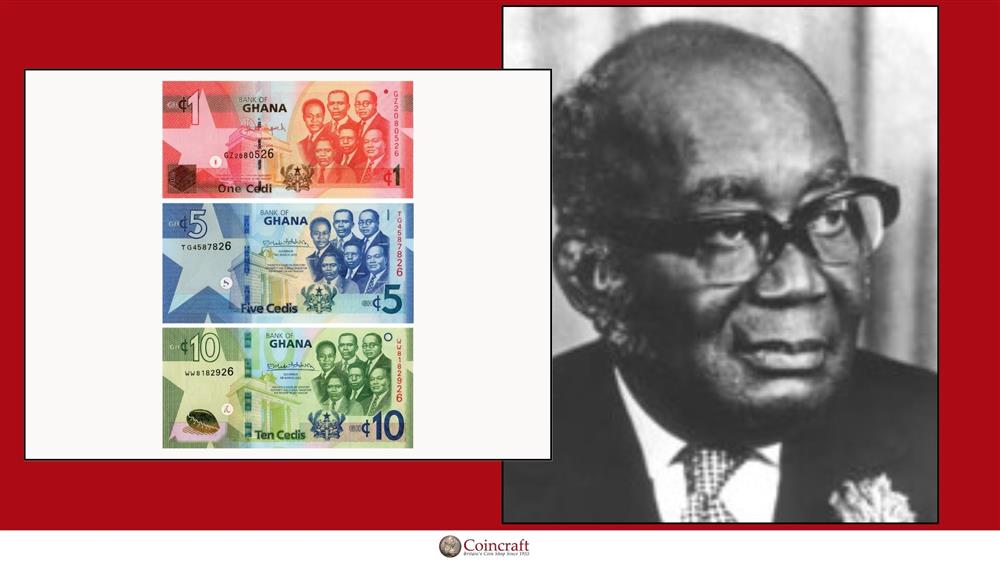
Picture source of Edward Akufo-Addo: Wikipedia
Introduction to Edward Akufo-Addo
Edward Akufo-Addo, a prominent figure in Ghana's history, played a crucial role in shaping the nation's political landscape. As the third Chief Justice of Ghana and later the ceremonial President, his contributions to the country's democratic evolution remain significant. His leadership journey is marked by dedication to justice and governance, making him a revered statesman in Ghanaian history.
Born on 26 June 1906, Akufo-Addo's early life was grounded in the values of education and public service. His ambition and vision for his nation were evident from a young age. Throughout his career, he focused on fostering a legal and political framework that would support Ghana's growth and stability, reflecting his commitment to national service.
In his tenure as President, Akufo-Addo was instrumental in navigating the complexities of a post-colonial Ghana. His presidency, although ceremonial, was marked by significant political events that shaped the country's future. His influence extended beyond politics into the realms of law and education, establishing a legacy that continues to inspire future generations.
Early Life and Education
Edward Akufo-Addo was born in Dodowa, a town in the Greater Accra Region of Ghana. His early education took place at the Presbyterian Primary and Middle Schools, where he displayed a keen interest in academic pursuits. This foundation paved the way for his attendance at the prestigious Achimota College, known for producing many of Ghana's leaders.
After completing his secondary education, Akufo-Addo pursued further studies at the University of London. He obtained a degree in Mathematics and Law, disciplines that would later play a vital role in his legal and political career. His time in the United Kingdom also exposed him to various political ideologies, which influenced his future governance style.
Upon returning to Ghana, Akufo-Addo embarked on a career in law, becoming a prominent barrister. His legal expertise and commitment to justice earned him respect and admiration from his peers. These early experiences and education laid the groundwork for his subsequent roles in Ghana's political sphere, where he would leave an indelible mark.
Political Career Beginnings
Edward Akufo-Addo's entry into politics was marked by his involvement in the independence movement. As a founding member of the United Gold Coast Convention (UGCC), he worked alongside other nationalists to advocate for self-governance. This period was pivotal in shaping his political ideology and commitment to Ghana's sovereignty.
In 1952, Akufo-Addo was appointed as a member of the Coussey Committee, tasked with drafting a new constitution for Ghana. His contributions were instrumental in setting the foundation for the country's democratic governance. His legal acumen and dedication to justice were evident in his approach to constitutional matters, earning him a reputation as a principled leader.
The culmination of his political career came when he was appointed Chief Justice in 1966, following the overthrow of the Nkrumah government. His tenure as Chief Justice saw significant reforms in Ghana's legal system, emphasizing the importance of the rule of law. These efforts laid the groundwork for his later role as President, where he would continue to champion democratic principles.
Key Policies and Achievements
During his presidency, Edward Akufo-Addo focused on several key policies aimed at strengthening Ghana's governance framework. Although his role was largely ceremonial, his influence in shaping policy decisions was significant. He advocated for a system of checks and balances, ensuring that the executive, legislative, and judicial branches operated independently.
One of his notable achievements was his support for the establishment of a new constitution that emphasized democratic governance. This constitution laid the groundwork for subsequent political developments in Ghana, reflecting his commitment to a stable and just society. His efforts in this regard were pivotal in ensuring a smooth transition of power in a politically turbulent era.
Akufo-Addo's presidency also saw significant strides in education and social reform. He championed policies that promoted access to education for all Ghanaian citizens, recognizing its role in national development. His vision for an educated populace was aligned with his belief in empowering individuals to contribute to the country's progress.
Leadership Style and Philosophy
Edward Akufo-Addo's leadership style was characterized by a steadfast commitment to justice and integrity. He believed in leading by example, demonstrating transparency and accountability in his public duties. His legal background influenced his approach to governance, emphasizing the importance of upholding the rule of law.
His philosophy was rooted in the belief that effective leadership required collaboration and consensus-building. Akufo-Addo was known for his ability to engage with diverse political actors, fostering an environment of dialogue and cooperation. This approach was instrumental in navigating the complex political landscape of post-independence Ghana.
Integrity was a cornerstone of Akufo-Addo's leadership, earning him the respect of both allies and adversaries. His unwavering commitment to ethical governance inspired trust and confidence among the Ghanaian populace. His legacy as a principled leader continues to serve as a model for current and future leaders in Ghana.
Challenges Faced During His Presidency
Edward Akufo-Addo's presidency was not without its challenges. The political climate in Ghana during his tenure was marked by instability and unrest. As a ceremonial President, navigating these turbulent times required diplomacy and tact, ensuring the continuation of democratic governance.
One of the significant challenges he faced was managing the relationship between the executive and legislative branches. Balancing these entities' interests while maintaining the independence of the judiciary was a complex task. His legal expertise and commitment to democratic principles were crucial in addressing these challenges effectively.
Economic challenges also posed a significant hurdle during Akufo-Addo's presidency. Ghana was grappling with economic difficulties, necessitating policies that would stabilize the economy and promote growth. His leadership in addressing these issues demonstrated his ability to prioritize Ghana's long-term interests, despite the immediate pressures.
Impact on Ghanaian Society and Economy
Edward Akufo-Addo's impact on Ghanaian society and the economy was profound. His emphasis on education and social reform contributed to a more informed and empowered populace. By advocating for policies that promoted access to education, he laid the foundation for a skilled workforce, crucial for national development.
Economically, Akufo-Addo's presidency focused on establishing a stable framework for growth. His support for constitutional reforms and democratic governance created an environment conducive to investment and economic progress. These efforts were instrumental in positioning Ghana as a stable and attractive destination for international investment.
Socially, his presidency was marked by efforts to foster national unity and cohesion. He championed initiatives that promoted inclusivity and social justice, recognizing the importance of a harmonious society for sustainable development. His impact on Ghanaian society continues to be felt, influencing the nation's trajectory in pivotal ways.
International Relations and Diplomacy
In the realm of international relations, Edward Akufo-Addo played a key role in positioning Ghana on the global stage. His presidency was marked by a commitment to fostering diplomatic ties and promoting peace and stability in the region. He believed that strong international relationships were essential for Ghana's prosperity.
Akufo-Addo's diplomatic efforts were evident in his engagement with regional and international organisations. He worked towards strengthening Ghana's ties with other African nations, advocating for regional cooperation and unity. His efforts in this regard were instrumental in fostering a sense of solidarity among African countries.
On the global stage, Akufo-Addo sought to promote Ghana as a respected and influential nation. His diplomatic initiatives were focused on enhancing Ghana's reputation and securing partnerships that would benefit the country's development. His legacy in international relations is marked by a commitment to peace, cooperation, and mutual respect.
Legacy and Future Prospects
Edward Akufo-Addo's legacy is one of principled leadership and unwavering commitment to justice and democracy. His contributions to Ghana's political and legal framework continue to influence the country's governance and development. His leadership journey serves as a testament to the power of integrity and dedication to public service.
As Ghana continues to evolve, the principles and values championed by Akufo-Addo remain relevant. His emphasis on education, justice, and democracy provides a foundation upon which future leaders can build. The lessons from his presidency offer valuable insights for navigating the challenges of contemporary governance.
Looking to the future, Akufo-Addo's legacy offers a blueprint for sustainable development and national progress. His vision for a just, equitable, and educated society continues to inspire generations, shaping Ghana's trajectory in significant ways. His impact on Ghanaian history is enduring, reflecting a life dedicated to the service of his nation.