 - WFR0430.jpg)
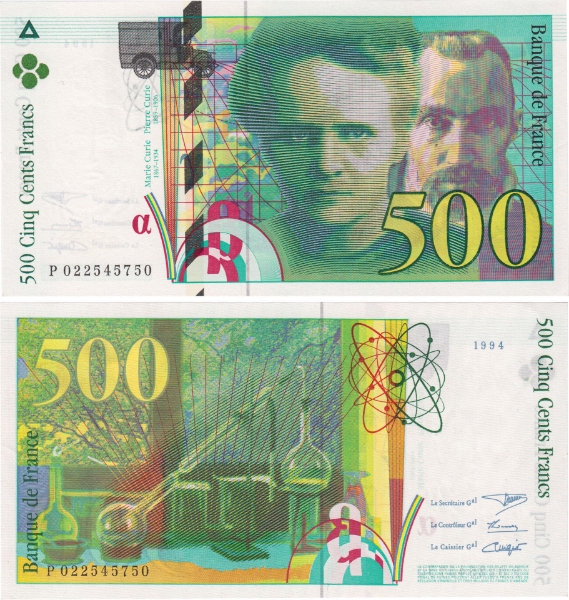
Picture Source of Marie Curie: Wikipedia
Introduction to Marie Curie
Marie Curie, a name synonymous with groundbreaking scientific discovery and an enduring symbol of perseverance, stands as one of the most influential figures in both science and feminism. As the first woman to win a Nobel Prize and the only person to receive Nobel honours in two different scientific fields, Curie's contributions have left an indelible mark on modern science. Her work has transcended the laboratory, inspiring countless individuals to pursue their passions irrespective of societal barriers.
Curie’s journey from a young girl in Poland to a world-renowned physicist and chemist in France is a testament to her relentless pursuit of knowledge and her unwavering dedication. Her discoveries in radioactivity have not only revolutionised the scientific landscape but have also paved the way for future innovations in medicine and technology. Through her life's work, Curie has become a beacon for women in science, illustrating that gender should never be a barrier to intellectual achievement.
Her legacy is not just confined to her scientific contributions; it is also deeply intertwined with her role as a feminist icon. In a male-dominated field, Curie broke through numerous glass ceilings, showing that with determination and resilience, the barriers of gender inequality can be dismantled. The following exploration of her life and achievements provides a comprehensive understanding of her enduring legacy.
Early Life and Education of Marie Curie
Born Maria Skłodowska on 7 November 1867, in Warsaw, Poland, Curie's early life was marked by a passion for learning and a drive to excel. Despite facing numerous socio-political challenges, including the Russian occupation of Poland, her family placed a strong emphasis on education. Her father, a teacher of mathematics and physics, instilled in her a love for the sciences, which would later define her career.
Curie’s pursuit of higher education was fraught with obstacles due to the prevalent gender biases of the time. Women in Poland were not permitted to attend university, which led her to participate in the clandestine "Flying University," an institution that operated in secrecy to provide higher education to women. Her determination to further her studies took her to Paris, where she enrolled at the University of Paris (Sorbonne) in 1891. Despite living in poverty and struggling to learn a new language, Curie excelled in her studies, earning degrees in physics and mathematics.
Her time at the Sorbonne was transformative, providing her not only with academic accolades but also with the opportunity to engage with leading scientific minds. It was here that she met Pierre Curie, her future husband and collaborator, with whom she would conduct some of her most significant research. Together, they formed a formidable partnership that would challenge scientific norms and lead to groundbreaking discoveries.
Marie Curie's Scientific Achievements
Marie Curie's scientific achievements are monumental and have had a lasting impact on the field of science. Her most notable work involved the discovery of the radioactive elements polonium and radium, a feat that would not have been possible without her meticulous research and innovative methodologies. Her pioneering work in radioactivity, a term she coined, laid the foundation for the development of X-rays and cancer treatment methods.
In 1898, alongside Pierre Curie, Marie announced the discovery of polonium, named after her native Poland, and shortly thereafter, radium. These discoveries were revolutionary, not just in terms of expanding the periodic table but also in understanding the atomic structure. The Curies' work led to the development of the theory of radioactivity, which fundamentally altered scientific conceptions of matter and energy.
Marie Curie's dedication to scientific research was recognised with numerous accolades. In 1903, she shared the Nobel Prize in Physics with Pierre Curie and Henri Becquerel for their collective work on radioactivity. In 1911, she was awarded the Nobel Prize in Chemistry for her services to the advancement of chemistry through the discovery of radium and polonium, becoming the first person to win two Nobel Prizes in different scientific fields. Her work remains a cornerstone of modern physics and chemistry, inspiring generations of scientists.
The Impact of Marie Curie's Work on Modern Science
The impact of Marie Curie's work on modern science cannot be overstated. Her discoveries have fundamentally transformed scientific understanding and opened new avenues for research and application. The isolation of radium and polonium provided critical insights into the nature of atomic particles, which laid the groundwork for the development of nuclear physics and chemistry.
Curie's research into radioactivity has had profound implications in the medical field. The use of radium in the treatment of cancer, known as radiotherapy, has saved countless lives and continues to be a vital component of cancer treatment protocols today. Her work has also influenced advancements in diagnostic imaging technologies, such as X-rays, which have become indispensable tools in modern medicine.
Beyond her scientific contributions, Curie’s work has played a pivotal role in challenging the status quo of gender roles within the scientific community. Her success as a woman in a male-dominated field has inspired numerous initiatives aimed at increasing female participation and representation in science, technology, engineering, and mathematics (STEM). Her legacy continues to inspire and empower women around the world to pursue careers in science, breaking down barriers and advancing gender equality within the scientific community.
Marie Curie and the Feminist Movement
Marie Curie's life and career are not only a testament to her scientific prowess but also to her role as a pioneer in the feminist movement. In an era where women were often relegated to the domestic sphere, Curie defied societal norms, proving that women could excel in the highest echelons of scientific inquiry. Her accomplishments challenged the gender biases of her time and laid the groundwork for future generations of women scientists.
Curie's contributions to feminism extend beyond her personal achievements. Her presence and success in the scientific community served as a powerful symbol of gender equality, inspiring women worldwide to pursue their ambitions. Despite facing numerous obstacles, such as being denied membership in the French Academy of Sciences due to her gender, Curie persevered, demonstrating resilience and strength in the face of adversity.
Her legacy as a feminist icon is reflected in the numerous initiatives and programmes that have emerged in her honour, aimed at increasing female participation in STEM fields. Organisations and institutions around the world continue to draw inspiration from Curie’s life and work, promoting gender equality and empowering women to pursue careers in science and technology. Her story remains a powerful reminder of the importance of diversity and inclusion in all fields of endeavour.
Challenges Faced by Marie Curie in Her Career
Marie Curie's illustrious career was marked by numerous challenges, both personal and professional. As a woman in a male-dominated scientific community, she faced significant barriers, including discrimination and scepticism. Despite these obstacles, Curie's determination and passion for science propelled her forward, allowing her to overcome adversity and achieve extraordinary success.
One of the primary challenges Curie faced was the lack of recognition for her work. Her early research was often overshadowed by her male counterparts, and she had to fight for the acknowledgment she deserved. When she was finally awarded the Nobel Prize, it was initially only offered to her husband, Pierre. It took the intervention of Pierre Curie to ensure that Marie's contributions were recognised and that her name was included in the award.
Curie's personal life was also fraught with difficulties. The death of her husband, Pierre, in 1906 was a devastating blow, leaving her to raise their two daughters while continuing her research. Despite this personal tragedy, Curie remained resolute, assuming Pierre's position at the Sorbonne and continuing their work on radioactivity. Her resilience in the face of these challenges is a testament to her character and her unwavering commitment to science and discovery.
The Legacy of Marie Curie in Today's World
Marie Curie's legacy is enduring and far-reaching, influencing multiple aspects of society today. Her groundbreaking work in radioactivity has had a lasting impact on the fields of physics, chemistry, and medicine, providing the foundation for numerous scientific advancements. Her discoveries continue to drive research and innovation, with applications ranging from medical treatments to energy production.
Beyond her scientific contributions, Curie's legacy as a trailblazer for women in science is profound. Her achievements have inspired numerous initiatives aimed at promoting gender equality and increasing female representation in STEM fields. Organisations and educational institutions continue to honour her legacy by advocating for diversity and inclusion, ensuring that the barriers Curie faced are dismantled for future generations.
Curie's story is a powerful reminder of the impact one individual can have on the world. Her dedication to science, her resilience in overcoming adversity, and her role as a feminist icon continue to inspire people around the globe. Her legacy lives on, not only through the scientific advancements she catalysed but also through the generations of women she has empowered to pursue their dreams.
Inspiring Quotes by Marie Curie
Marie Curie's words continue to resonate, offering motivation and insight into her extraordinary life and mindset. Here are a few of her most inspiring quotes:
"Nothing in life is to be feared; it is only to be understood."
This quote reflects Curie's unwavering belief in the power of knowledge and understanding to overcome challenges and fears."One never notices what has been done; one can only see what remains to be done."
This sentiment encapsulates her relentless pursuit of progress and her commitment to continuous learning and discovery."Be less curious about people and more curious about ideas."
Curie’s emphasis on intellectual curiosity underscores her dedication to the pursuit of scientific knowledge and her belief in the importance of ideas over personal matters.
These quotes not only highlight Curie’s profound insights but also serve as a source of inspiration for those striving to make an impact in their fields.
Resources for Learning More About Marie Curie
For those interested in delving deeper into the life and contributions of Marie Curie, numerous resources are available:
Books:
- "Madame Curie: A Biography" by Eve Curie provides a personal and insightful look at Curie’s life, written by her daughter.
- "Marie Curie and Her Daughters: The Private Lives of Science's First Family" by Shelley Emling offers an intimate portrait of Curie and her family.
Documentaries:
- "Marie Curie: The Courage of Knowledge", a film that explores Curie's life, focusing on her scientific achievements and personal struggles.
Online Courses and Lectures:
- Platforms like Coursera and edX offer courses on the history of science and notable scientists, including Marie Curie.
Museums and Exhibits:
- The Curie Museum in Paris provides a comprehensive look at her life and work, featuring original artifacts and documents.
These resources provide a wealth of information for anyone looking to explore Curie's remarkable contributions to science and society.
Celebrating the Life and Impact of Marie Curie
Marie Curie’s life and work continue to be celebrated and revered for their profound impact on science and society. Her groundbreaking discoveries in radioactivity have paved the way for numerous scientific advancements, transforming fields such as physics, chemistry, and medicine. Beyond her scientific achievements, Curie’s legacy as a feminist icon and trailblazer for women in science remains a powerful source of inspiration.
Her story is a testament to the power of perseverance, resilience, and the relentless pursuit of knowledge. Curie’s contributions extend beyond her own time, influencing countless individuals and inspiring future generations to challenge societal norms and strive for excellence. Her legacy serves as a reminder that with determination and passion, one can overcome any obstacle and leave a lasting impact on the world.
As we continue to celebrate Marie Curie's life and achievements, let us be inspired by her example and strive to break down barriers in our own pursuits. Whether in science, technology, or any other field, Curie's legacy reminds us of the importance of curiosity, courage, and the pursuit of knowledge.