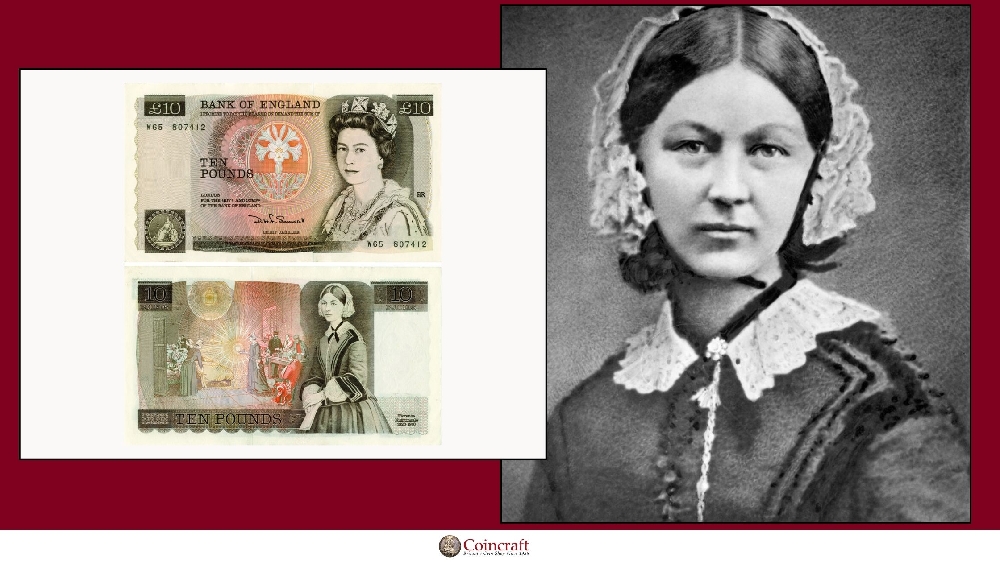
Picture Source of Florence Nightingale: Wikipedia
Beyond the Lamp: The Real Story of Florence Nightingale
When you hear the name Florence Nightingale, what’s the first thing that pops into your head?
I’m willing to bet it’s a gentle, saintly figure gliding through dark hospital wards, holding a flickering lantern aloft. It’s an iconic image, right? But here is the truth: that "Lady with the Lamp" persona, while true, is only a tiny fraction of who she actually was.
In reality, Florence was a data nerd. She was a fierce social reformer, a brilliant statistician who used colorful graphs to shame the government into action, and a rebel who defied her wealthy family to pursue a "lowly" profession. She didn’t just hold a lamp; she shone a spotlight on the grim realities of healthcare and changed it forever.
So, grab a cup of tea, and let’s dive into the story of the woman who invented modern nursing.
Key Takeaways
Founder of Modern Nursing: Florence established the first scientifically based nursing school at St Thomas' Hospital in London, professionalizing a job that was previously looked down upon.
The "Coxcomb" Diagram: She was a pioneer in data visualization, creating the "Polar Area Diagram" to prove that poor sanitation killed more soldiers than enemy bullets.
Sanitation Reformer: Her work in the Crimean War highlighted the critical link between hygiene and survival, influencing healthcare standards worldwide.
A Rebel with a Cause: Born into high society, she rejected marriage and social expectations to follow her "calling" to serve others.
The Rebel Daughter
Florence was born on May 12, 1820, in—you guessed it—Florence, Italy. Her parents, William and Frances, were wealthy British socialites on an extended European honeymoon. They named her after the city of her birth, just as they had named her older sister Parthenope after the Greek name for Naples(1).
Growing up in Victorian England, Florence’s path was supposed to be simple: wear nice dresses, attend parties, marry a rich man, and manage a household. But Florence was... different. She was brilliant, tutored in mathematics and philosophy by her father (which was rare for girls at the time), and she felt suffocated by the trivialities of high society.
At the age of 16, she experienced what she described as a "calling" from God to serve others. When she announced she wanted to be a nurse, her family was horrified. In the mid-1800s, nursing wasn't a respected profession; it was often associated with drunkenness and lack of education(2). But Florence was stubborn. She rejected a marriage proposal from a wealthy suitor, Richard Monckton Milnes, because she feared domestic life would stifle her destiny. Eventually, her father relented, allowing her to train at the Kaiserswerth institute in Germany in 1850. The rebel had won her first battle.
Into the Nightmare: The Crimean War
The true test of her resolve came in 1854. Britain was fighting the Crimean War against Russia, and reports began filtering back to London about the horrific conditions for wounded soldiers. There were no nurses, no supplies, and men were dying in droves—not just from bullets, but from neglect.
Sidney Herbert, the Secretary of War and a friend of Florence, asked her to organize a team of nurses to go to the front. She rallied 38 women and sailed for Scutari (in modern-day Istanbul).
What they found there was the stuff of nightmares. The Barrack Hospital was built over a cesspool. The floor was an inch deep in filth, rats were running rampant, and there was no clean linen or soap. Dysentery and cholera were killing men faster than the Russian army could(3).
Florence went to work. She didn't just nurse; she managed. She scrubbed floors, reorganized the kitchen to provide edible food, and set up a laundry. It was during this time that the legend was born. At night, after the doctors had retired, she would walk the miles of corridors with a Turkish lantern, checking on the soldiers. To the men, she was an angel; to the disorganized army officials, she was a terrifying force of nature.
The Lady with the Data
Here is the part of the story that often gets left out of history books. When Florence returned to Britain after the war, she was a national hero. But she was haunted by a terrible realization: for the first part of her time at Scutari, the death rate had actually gone up. It wasn't until a Sanitary Commission arrived to flush out the sewers and improve ventilation that the deaths dropped famously(3).
Florence realized that sanitation was the key. To prove this to the government, she didn't just use words; she used math. She became a pioneer of statistics. She created the "Polar Area Diagram" (often called the rose diagram or coxcomb), a beautiful but deadly chart that showed deaths from preventable disease in blue, far outstripping deaths from wounds in red(4).
It was undeniable proof. She showed that bad hygiene was the real killer. Her work led to a massive overhaul of army health, saving countless lives in future conflicts. In 1858, she became the first female member of the Royal Statistical Society. That’s right—she was a data scientist before the term even existed!
A Legacy Written in Stone
Florence never really stopped working. She used the "Nightingale Fund"—money donated by the public in her honor—to establish the Nightingale Training School for Nurses at St Thomas' Hospital in 1860(5). This was the birth of professional nursing. She wrote Notes on Nursing, a book that became a bestseller and is still read today.
She spent the last decades of her life often bedridden due to an illness contracted in the Crimea (likely brucellosis), but she continued to campaign for health reform from her bedroom. In 1907, she became the first woman to be awarded the Order of Merit(6).
Florence Nightingale died peacefully in her sleep on August 13, 1910, at the age of 90. She had asked for a quiet funeral, and despite the offer of a burial at Westminster Abbey, she was laid to rest in her family's plot in East Wellow, Hampshire(7).
FAQs
Q: Did Florence Nightingale really carry a lamp? A: Yes! However, it wasn't the genie-style oil lamp often seen in cartoons. It was a Turkish lantern (a fanoos), made of paper or linen with a candle inside, which she used during her night rounds at Scutari.
Q: Was Florence Nightingale a mathematician? A: Absolutely. While she is known for nursing, her contribution to statistics is equally huge. She was a pioneer in data visualization and used her skills to prove that sanitary reforms worked.
Q: Did Florence Nightingale and Mary Seacole work together? A: Briefly, but not really. They met for about five minutes in the Crimea. While they were both there at the same time and both did incredible work, they had different roles and approached care differently. Seacole ran a "British Hotel" and nursed soldiers near the front lines, while Nightingale managed the base hospitals(8).
References
National Women's History Museum. (2019). Florence Nightingale. [Online] Available at: womenshistory.org
The National Archives. (n.d.). Florence Nightingale. [Online] Available at: nationalarchives.gov.uk
National Army Museum. (n.d.). Florence Nightingale: The Lady with the Lamp. [Online] Available at: nam.ac.uk
Science Museum. (n.d.). Florence Nightingale: The pioneer statistician. [Online] Available at: sciencemuseum.org.uk
British Red Cross. (2023). Florence Nightingale's story and legacy. [Online] Available at: redcross.org.uk
The London Gazette. (1907). Order of Merit. Issue 28084, p. 8246.
National Churches Trust. (n.d.). East Wellow St Margaret. [Online] Available at: nationalchurchestrust.org
Mary Seacole Trust. (n.d.). Mary Seacole's Relationship with Florence Nightingale. [Online] Available at: maryseacole.info


