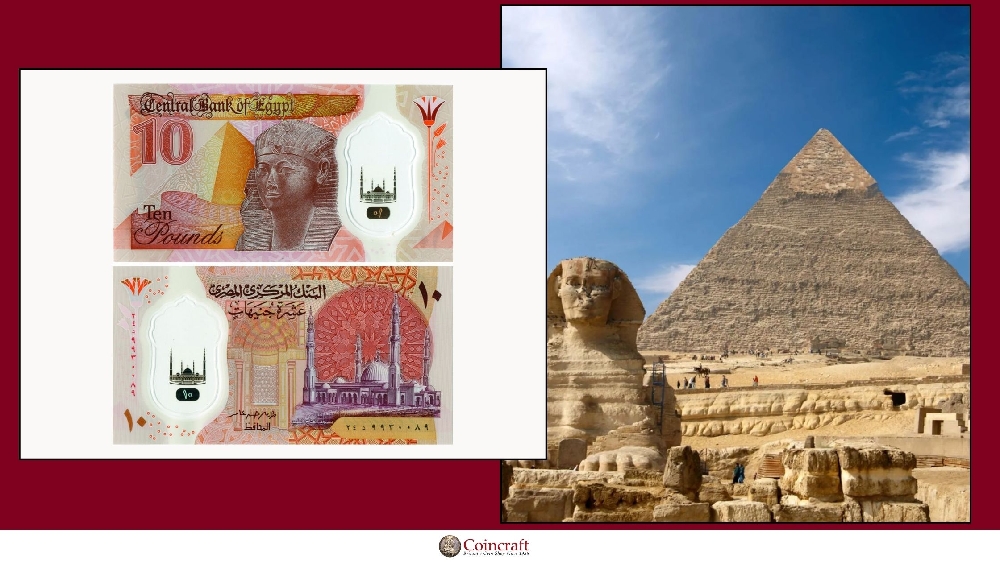
Picture Source of Sphinx and The Great Pyramids: Britannica
Guardians of the Sands: A Chat with the Sphinx and the Great Pyramids
Today, we are trading our office chairs for camels (metaphorically, at least) and heading to the Giza Plateau. If there is one place on Earth that screams "legacy," it’s here.
We aren't just talking about piles of rocks; we are talking about the sheer audacity of human ambition. Standing tall against the Cairo skyline, the Great Pyramids and their stoic guardian, the Sphinx, have been staring down the sun for roughly 4,500 years. But who built them? Why? And seriously, what happened to the Sphinx's nose?
Grab your pith helmets, and let’s dive into the story of the most famous limestone celebrities in the world.
Key Takeaways
Built for Eternity: The Great Pyramid was built for Khufu, a Pharaoh of the Fourth Dynasty, and remained the tallest man-made structure in the world for over 3,800 years.
Not Slaves, But Skilled Workers: Contrary to popular movies, evidence suggests the pyramids were built by well-fed, paid laborers, not enslaved people.
The Sphinx is a Portrait: Most Egyptologists agree the Sphinx bears the face of Pharaoh Khafre, combining human intelligence with a lion's strength.
A Mathematical Marvel: The Great Pyramid consists of approximately 2.3 million stone blocks, aligned with incredible astronomical precision.
The Big One: Khufu’s Stairway to Heaven
Let’s start with the big guy on the block: The Great Pyramid of Giza. It was commissioned by Pharaoh Khufu (or Cheops, if you prefer the Greek name) around 2550 B.C.
To understand the scale of this thing, you have to look at the numbers. We are talking about 2.3 million stone blocks, each weighing an average of 2.5 to 15 tons¹. That’s basically like stacking a mountain of elephants on top of each other. For nearly four millennia, this was the tallest building on the planet until the Lincoln Cathedral in England stole the title in 1311 AD.
But why go to all the trouble? For the Ancient Egyptians, death wasn't the end—it was just a chaotic commute to the afterlife. Khufu needed a resurrection machine. The pyramid wasn't just a tomb; it was a launchpad to help his soul ascend to the stars and join the sun god, Ra.
The Sphinx: The Silent Guardian
Just a stone’s throw away sits the Great Sphinx. It is arguably the most recognizable statue in history, with the body of a lion and the head of a human.
While the Great Pyramid is all about geometric perfection, the Sphinx is about raw, primal power. Carved directly from the limestone bedrock, it measures a whopping 240 feet long². That is longer than a Boeing 747!
Who is it? The general consensus among historians is that the face belongs to Pharaoh Khafre, Khufu’s son. Khafre is also the guy who built the second-tallest pyramid at Giza (the one that still has some of the smooth casing stones at the very top). The idea was simple: A lion symbolizes strength, and the Pharaoh’s head symbolizes wisdom. Put them together, and you have the ultimate divine ruler³.
The Workforce: Myth vs. Reality
Here is where the story gets really interesting. For a long time, we pictured thousands of enslaved people toiling under the whip to build these monuments. But recent archaeology has flipped that script entirely.
Excavations of the "worker's village" near the pyramids suggest that the workforce was composed of skilled Egyptian labourers. These guys were well-fed on a diet of prime beef, bread, and beer⁴. They worked in shifts, likely as a form of tax payment or national service to the Pharaoh. It was a massive national project, kind of like the Apollo moon landing, but with more sand and fewer spacesuits.
The Mystery of the Missing Nose
We can't talk about the Sphinx without addressing the elephant (or the missing nose) in the room.
There is a popular rumor that Napoleon Bonaparte’s soldiers shot the nose off with a cannon during his Egyptian campaign in 1798. It makes for a great story, but it’s totally false. Sketches of the Sphinx drawn before Napoleon was even born already show the nose missing⁵.
The real culprit? Historical accounts point to a Sufi Muslim fanatic named Muhammad Sa'im al-Dahr in the 14th century. Apparently, he was upset that locals were making offerings to the Sphinx to ensure a good harvest, so he vandalized the face to discourage what he saw as idolatry.
Why They Still Matter
Standing before the Pyramids and the Sphinx today, you get a humbling sense of perspective. They have seen empires rise and fall, withstood erosion, vandalism, and the pollution of modern Cairo creeping up to their paws.
They remind us that humans have always had a desperate need to be remembered. Khufu and Khafre didn't just want to be buried; they wanted to echo through eternity. And considering we are still blogging about them 4,500 years later, I’d say they succeeded.
Frequently Asked Questions (FAQs)
1. Can you go inside the Great Pyramid? Yes, you can! However, be warned: it is not for the claustrophobic. You have to crouch-walk through a long, steep, narrow ascending tunnel (the Grand Gallery) to reach the King's Chamber. It’s hot and humid, but standing in the center of the pyramid is a once-in-a-lifetime experience.
2. Did aliens build the pyramids? While it’s a fun theory for TV shows, there is zero archaeological evidence for aliens. We have found the quarries, the copper chisels, the ramps, and even the tombs of the workers who built them. It turns out, humans are just incredibly clever when we work together!
3. Is there really a hidden Hall of Records under the Sphinx? Many have theorized that a library of ancient knowledge exists beneath the Sphinx's paws. While ground-penetrating radar has identified some voids and cavities in the limestone bedrock, excavations have never yielded a secret chamber of gold or books. Most anomalies are likely natural cracks in the porous rock.
References
National Geographic. (2023). The Great Pyramid of Giza. [Online] Available at: https://www.nationalgeographic.com/history/article/giza-pyramids [Accessed 01 Jan. 2024].
History.com Editors. (2018). The Sphinx. [Online] A&E Television Networks. Available at: https://www.history.com/topics/ancient-egypt/the-sphinx [Accessed 01 Jan. 2024].
Britannica, The Editors of Encyclopaedia. (2023). Great Sphinx of Giza. [Online] Encyclopedia Britannica. Available at: https://www.britannica.com/topic/Great-Sphinx [Accessed 01 Jan. 2024].
Harvard Magazine. (2003). Who Built the Pyramids?. [Online] Available at: https://www.harvardmagazine.com/2003/07/who-built-the-pyramids-html [Accessed 01 Jan. 2024].
Journeys to the Past. (2021). What Happened to the Sphinx’s Nose?. [Online] Available at: https://journeystothepast.com [Accessed 01 Jan. 2024].