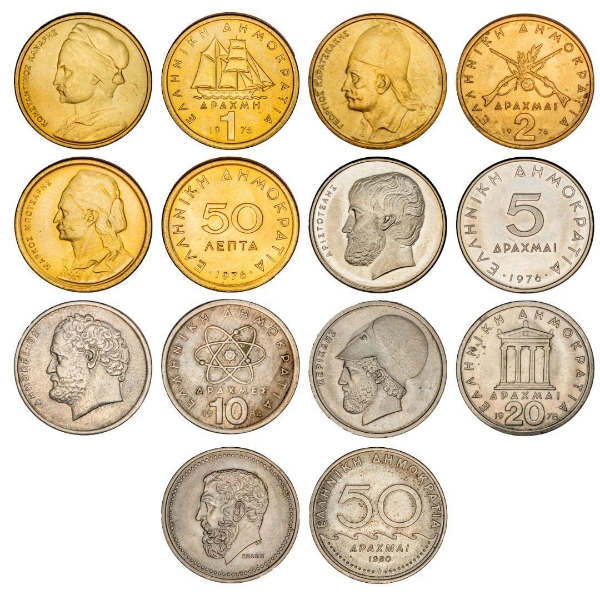
Picture Source of Konstantinos Kanaris: Wikipedia
 - .jpg)
The Fireship Captain Who Became a Founding Father: The Story of Konstantinos Kanaris
The annals of history are replete with heroic figures. Occasionally, however, an individual emerges whose exceptional bravery appears almost legendary, challenging the boundaries of conventional belief. It becomes even more remarkable to discover that this same individual possessed the qualities of a modest and dedicated statesman who played a pivotal role in the foundational development of a new nation.
Konstantinos Kanaris, a preeminent hero of the Greek War of Independence, exemplifies such a figure.
Dramatic artistic representations of the Greek revolution frequently depict his notable actions. His renown was not earned as a general commanding armies or as an orator in political forums; rather, he was a sailor from the small island of Psara, and his specialty was one of the most terrifying jobs imaginable: piloting fireships.
The Man Who Sailed Into the Fire
At the onset of the Greek War of Independence in 1821, the Greek forces faced overwhelming odds. Lacking a formal navy, they possessed only a modest collection of merchant vessels to counter the formidable Ottoman imperial fleet. Success necessitated a strategy reliant on superior intellect, bravery, and a degree of audacious unconventionality.
It was in this context that Konstantinos Kanaris emerged, assuming the role of a bourlotieris (μπουρλοτιέρης), or fireship captain.
This position was exceptionally hazardous, carrying an extremely high risk of mortality. The objective involved navigating a vessel laden with explosives and combustibles directly into a heavily armed enemy ship, igniting a fuse, and attempting a perilous escape via lifeboat moments before the ensuing detonation. These maneuvers were executed under the cover of darkness and amidst hostile cannon fire.
Kanaris demonstrated not merely proficiency but an exceptional mastery of this tactical approach.
His most celebrated accomplishment occurred in June 1822. This followed the devastating Chios massacre perpetrated by Ottoman forces, an event that resulted in tens of thousands of Greek casualties and left the nation in a state of shock. Motivated by a desire for retribution, Kanaris orchestrated a bold nocturnal assault.
He and another captain maneuvered their fireships directly toward the Ottoman flagship, upon which Admiral Kara-Ali Pasha and his officers were observing the conclusion of Ramadan. Kanaris successfully affixed his vessel to the flagship, ignited the fuse, and executed a retreat. The subsequent explosion was catastrophic, resulting in the complete destruction of the Ottoman flagship and the loss of approximately 2,000 personnel, including the admiral.
Beyond an act of reprisal, this event constituted a significant strategic and psychological victory. It demonstrated to the international community the resilience of the Greek resistance.
Kanaris achieved legendary status. He was reportedly known to remark to himself, “Konstantí, you are going to die,” upon approaching an enemy vessel. This was not an expression of despair, but rather an acknowledgment of the mortal risks inherent in his mission; he had evidently reconciled himself to the possibility of his own demise in pursuit of his objectives.
The Hero Who Wouldn't Quit
Following a distinguished military career marked by successful naval operations and the personal tragedy of his home island's destruction in 1824, one might have expected Kanaris to retire from public life. However, his contributions to Greece were far from complete.
Upon the establishment of Greek independence, he actively participated in the formidable task of nation-building. This phase of his life, while frequently overshadowed by his military exploits, holds coequal importance. The audacious naval commander transitioned into a dedicated and notably modest statesman.
He was appointed Admiral in the new Hellenic Navy.
He served as a trusted advisor to Greece’s first governor, Ioannis Kapodistrias.
He was elected Prime Minister of Greece on six separate occasions over a span of three decades.
The individual renowned for high-risk naval tactics during his youth later became a stabilizing political force, guiding the nation in its maturity. He was a pivotal figure in the 1862 revolution that deposed an unpopular monarch and facilitated the transition toward a new era of Greek democracy.
Such was his dedication that he remained in service as Prime Minister until his death in 1877 at the age of 87.
Why Kanaris Matters
The life of Konstantinos Kanaris illustrates two distinct forms of courage. First, the conspicuous, acute bravery of a young man risking his life for national liberation. Second, the persistent, enduring fortitude of a statesman dedicated to the arduous and often unheralded work of nation-building over several decades.
By all contemporary accounts, he was a man of simple, modest, and affable character. He was not a warlord motivated by a desire for power, but rather a patriot who responded to his nation's needs—initially with military force and subsequently with civic service.
Key Takeaways
Diverse Manifestations of Courage: Kanaris's life demonstrates both exceptional physical bravery in naval combat and profound civic courage throughout his extensive political career.
Impact Beyond Formal Affiliation: Although not a member of the Filiki Eteria, the secret society that organized the revolution, his decisive actions established him as one of its most critical figures.
From Insurgent to Statesman: The ability to excel in both revolutionary conflict and post-war governance is rare. Kanaris distinguished himself as a hero in both war and peace.
Quick FAQs
1. What is Konstantinos Kanaris's most renowned achievement? His most famous achievement was the destruction of the Ottoman flagship off the coast of Chios in 1822. This operation served as a significant act of reprisal for the Chios massacre and substantially bolstered Greek morale.
2. What was the function of a fireship? A fireship was typically an older vessel laden with gunpowder and other flammable materials. A small crew would navigate it directly into an enemy ship, ignite it, and then attempt to escape via a small boat before the ensuing explosion. The role was exceptionally hazardous.
3. Was Kanaris's career limited to military service? No. Following the War of Independence, he embarked on a long and distinguished political career, achieving the rank of Admiral and serving as Prime Minister of Greece on six separate occasions.
4. What is Kanaris's legacy in Greece? Kanaris is revered as one of the preeminent national heroes of the War of Independence, comparable in stature to figures like Theodoros Kolokotronis. He is remembered for his extraordinary bravery, personal modesty, and profound, lifelong dedication to his nation.