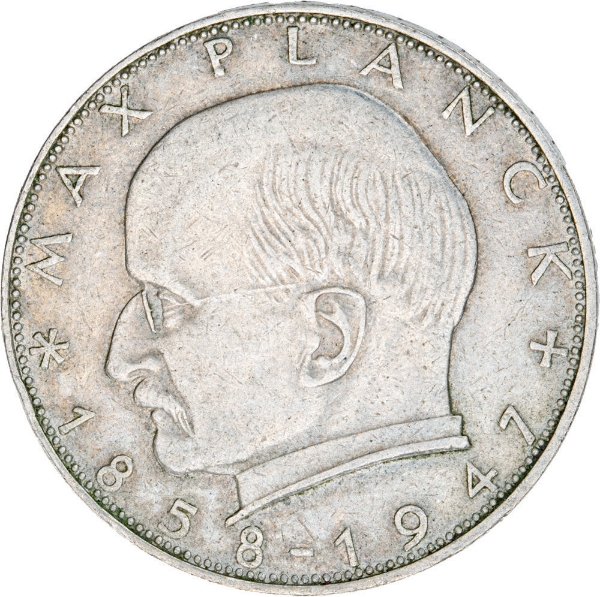
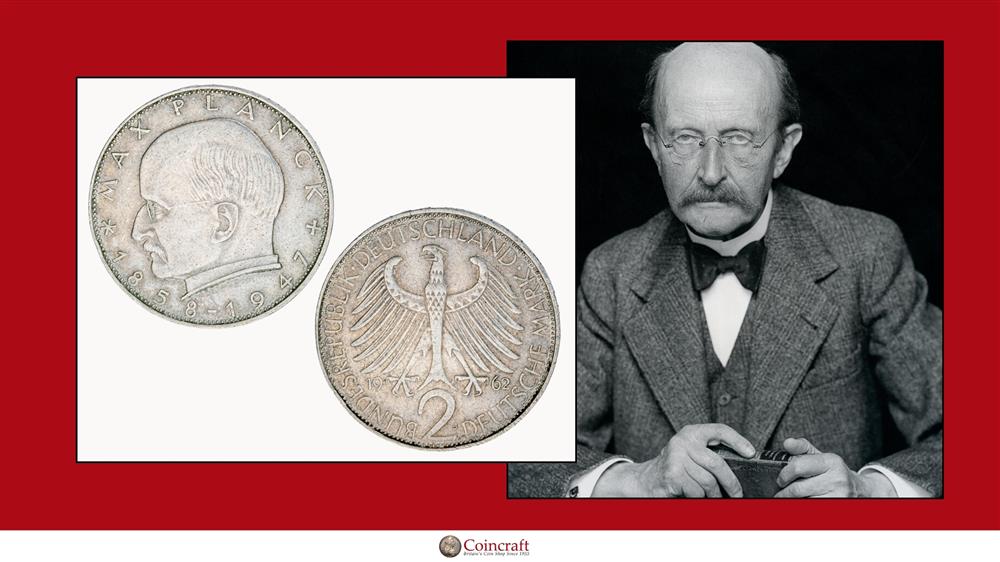
Picture Source of Max Planck: Wikipedia
Who Was Max Planck? A Brief Introduction
Max Planck, born on April 23, 1858, in Kiel, Germany, was a renowned physicist whose groundbreaking work laid the foundation for quantum theory. His contributions to science revolutionised our understanding of the physical world and earned him a place among the most influential scientists of the 20th century.
Planck's intellectual prowess and dedication to scientific inquiry led him to make significant discoveries that challenged the established laws of classical physics. His work on black-body radiation and the introduction of the concept of energy quanta marked the beginning of a new era in physics, paving the way for the development of quantum mechanics.
Throughout his career, Planck demonstrated an unwavering commitment to scientific truth, even when it meant challenging his own deeply held beliefs. His intellectual honesty and rigorous approach to research set a standard for future generations of scientists, earning him the respect and admiration of his peers and successors alike.
The Early Years: Planck's Education and Scientific Beginnings
Max Planck's journey into the world of physics began during his formative years. He attended the University of Munich and later the University of Berlin, where he studied under renowned physicists such as Hermann von Helmholtz and Gustav Kirchhoff. These early experiences shaped Planck's scientific mindset and laid the groundwork for his future contributions to the field.
Upon completing his doctoral dissertation on the second law of thermodynamics in 1879, Planck embarked on his academic career. He initially focused on thermodynamics and entropy, areas that would later prove crucial in his development of quantum theory. His early work, while not as revolutionary as his later discoveries, demonstrated his keen analytical skills and deep understanding of physical principles.
In 1885, Planck was appointed as an associate professor of theoretical physics at the University of Kiel. This position provided him with the opportunity to delve deeper into his research and begin exploring the concepts that would eventually lead to his groundbreaking work on quantum theory.
The Birth of Quantum Theory: Planck's Revolutionary Idea
The genesis of quantum theory can be traced back to Planck's work on black-body radiation in the late 19th century. At the time, classical physics failed to explain the observed spectrum of radiation emitted by heated objects. This discrepancy, known as the "ultraviolet catastrophe," puzzled physicists and challenged the established laws of thermodynamics and electromagnetism.
In a bold departure from conventional thinking, Planck proposed that energy is emitted and absorbed in discrete packets, which he called "quanta." This revolutionary idea, introduced in 1900, marked the birth of quantum theory. Planck's quantum hypothesis successfully explained the black-body radiation spectrum and resolved the ultraviolet catastrophe, but it also challenged the very foundations of classical physics.
Planck's quantum theory initially met with scepticism from the scientific community, including Planck himself. However, as experimental evidence accumulated and other physicists, such as Albert Einstein and Niels Bohr, built upon Planck's work, the importance of quantum theory became increasingly apparent.
Understanding Planck's Constant: The Cornerstone of Quantum Physics
Central to Planck's quantum theory is a fundamental physical constant, now known as Planck's constant. This constant, denoted by the symbol 'h', relates the energy of a photon to its frequency. The value of Planck's constant is approximately 6.62607015 × 10^-34 joule-seconds.
Planck's constant plays a crucial role in various aspects of quantum mechanics:
- Quantization of energy: It determines the smallest possible unit of energy that can be exchanged in quantum systems.
- Wave-particle duality: It appears in the de Broglie relation, which describes the wave-like properties of particles.
- Heisenberg's uncertainty principle: It sets the fundamental limit on the precision with which certain pairs of physical properties can be determined.
The significance of Planck's constant extends far beyond its mathematical value. It represents a fundamental limit in nature, defining the scale at which quantum effects become relevant. This discovery has had profound implications for our understanding of the universe, from the behaviour of subatomic particles to the properties of stars and galaxies.
Max Planck's Contributions Beyond Quantum Theory
While Planck is best known for his work on quantum theory, his scientific contributions extend far beyond this groundbreaking discovery. Throughout his career, he made significant advancements in various areas of physics and mathematics:
- Thermodynamics: Planck's early work on entropy and the second law of thermodynamics laid the foundation for his later discoveries.
- Special relativity: He was one of the first physicists to recognise the importance of Einstein's theory of special relativity and contributed to its development.
- Statistical mechanics: Planck made important contributions to the field of statistical mechanics, particularly in the study of ideal gases.
- Philosophy of science: His reflections on the nature of scientific discovery and the role of intuition in scientific progress influenced generations of physicists.
Planck's diverse contributions demonstrate his versatility as a scientist and his ability to make meaningful advancements across multiple disciplines. His work not only revolutionised physics but also influenced the broader scientific community and our understanding of the natural world.
The Nobel Prize: Recognition for Groundbreaking Work
In 1918, Max Planck was awarded the Nobel Prize in Physics "in recognition of the services he rendered to the advancement of Physics by his discovery of energy quanta." This prestigious accolade acknowledged the profound impact of Planck's work on the field of physics and its potential for future scientific advancements.
The Nobel Committee's decision to honour Planck highlighted the revolutionary nature of quantum theory and its far-reaching implications for scientific research. In his Nobel lecture, Planck emphasised the importance of empirical evidence in scientific discovery, stating that "experiments are the only means of knowledge at our disposal. The rest is poetry, imagination."
Planck's Nobel Prize not only recognised his individual achievements but also marked a turning point in the acceptance of quantum theory by the broader scientific community. It paved the way for further research and development in the field, inspiring a new generation of physicists to explore the quantum realm.
Planck's Influence on Contemporary Physicists
Max Planck's work had a profound impact on his contemporaries and subsequent generations of physicists. His quantum theory provided a framework for understanding phenomena that classical physics could not explain, inspiring others to build upon his ideas:
- Albert Einstein: Planck's concept of energy quanta influenced Einstein's explanation of the photoelectric effect, for which he received the Nobel Prize in Physics in 1921.
- Niels Bohr: Building on Planck's work, Bohr developed his model of the atom, incorporating quantum principles to explain atomic structure and spectra.
- Werner Heisenberg: Planck's ideas were fundamental to Heisenberg's development of the uncertainty principle, a cornerstone of quantum mechanics.
- Erwin Schrödinger: The wave equation that bears Schrödinger's name, central to quantum mechanics, was derived using concepts introduced by Planck.
Planck's influence extended beyond individual scientists to shape entire fields of research. Quantum mechanics, quantum field theory, and quantum electrodynamics all trace their origins to Planck's revolutionary idea of energy quanta. His work continues to inspire and guide physicists in their quest to understand the fundamental nature of reality.
Personal Life and Challenges: The Man Behind the Scientist
Behind Max Planck's scientific achievements was a man who faced numerous personal challenges throughout his life. Born into a family with a strong academic tradition, Planck was raised in an environment that valued intellectual pursuits and moral integrity.
Planck's personal life was marked by both joy and tragedy:
- Family life: He married Marie Merck in 1887, with whom he had four children. After Marie's death in 1909, he married Marga von Hoesslin in 1911.
- World War I: The war had a profound impact on Planck, who lost his eldest son, Karl, in battle in 1916.
- World War II: Planck opposed the Nazi regime and suffered greatly during this period. His son Erwin was executed in 1945 for his involvement in an unsuccessful attempt to assassinate Hitler.
Despite these personal tragedies, Planck remained committed to his scientific work and maintained his moral integrity. He used his position and influence to speak out against the persecution of Jewish scientists and attempted to preserve the integrity of German scientific institutions during the Nazi era.
Planck's resilience in the face of adversity and his unwavering commitment to scientific truth serve as an inspiration to scientists and individuals alike. His life demonstrates that great scientific achievements often come hand in hand with personal challenges and moral dilemmas.
Legacy and Impact: How Planck Shaped Modern Physics
Max Planck's legacy extends far beyond his lifetime, shaping the course of modern physics and our understanding of the universe. His quantum theory laid the foundation for numerous technological advancements that we now take for granted:
- Semiconductor technology: The understanding of electron behaviour in solids, based on quantum mechanics, led to the development of transistors and integrated circuits.
- Laser technology: The concept of stimulated emission, rooted in Planck's work, is fundamental to the operation of lasers.
- Nuclear magnetic resonance (NMR) and magnetic resonance imaging (MRI): These medical diagnostic tools rely on quantum mechanical principles.
- Quantum cryptography: Secure communication systems based on quantum principles are being developed for ultra-secure data transmission.
Planck's influence on theoretical physics cannot be overstated. His work paved the way for:
- Quantum field theory
- The Standard Model of particle physics
- String theory and attempts to unify quantum mechanics with general relativity
Moreover, Planck's philosophical approach to science, emphasising the importance of empirical evidence and the potential limitations of human understanding, continues to guide scientific inquiry. His famous quote, "Science advances one funeral at a time," reflects his understanding of the challenges faced by revolutionary ideas in gaining acceptance.
Max Planck Institutes: Continuing the Tradition of Scientific Excellence
In honour of Max Planck's contributions to science, the Max Planck Society was established in 1948 to continue his legacy of scientific excellence. This network of research institutes spans various scientific disciplines and is renowned for its cutting-edge research and discoveries.
Key features of the Max Planck Institutes include:
- Interdisciplinary approach: Encouraging collaboration across different fields of study
- International focus: Attracting top researchers from around the world
- Emphasis on basic research: Focusing on fundamental scientific questions rather than immediate applications
- State-of-the-art facilities: Providing researchers with advanced equipment and resources
Some notable achievements of Max Planck Institutes include:
- Development of the scanning tunnelling microscope
- Discoveries in the field of neuroscience, including the identification of brain cells responsible for navigation
- Advancements in climate change research and modelling
- Contributions to our understanding of the human genome
The Max Planck Institutes serve as a living testament to Planck's enduring influence on scientific research and his vision of a community dedicated to pushing the boundaries of human knowledge.
Planck's Philosophical Views on Science and Religion
Throughout his life, Max Planck grappled with the philosophical implications of his scientific work and its relationship to religious beliefs. His views on the interplay between science and religion offer valuable insights into the mind of this great scientist:
- Compatibility of science and religion: Planck believed that science and religion were not inherently in conflict, but rather complementary ways of understanding the world.
- Limits of scientific knowledge: He recognised that there were aspects of human experience that science alone could not fully explain or address.
- Role of faith in scientific inquiry: Planck argued that a certain degree of faith in the orderliness of the universe was necessary for scientific progress.
- Ethical considerations in science: He emphasised the importance of ethical conduct in scientific research and the responsible use of scientific knowledge.
Planck's nuanced views on these complex issues reflect his deep thinking about the nature of reality and the human quest for understanding. His ability to reconcile his scientific work with his personal beliefs demonstrates the breadth of his intellectual engagement and his commitment to a holistic view of knowledge.
Commemorating Max Planck: Awards, Institutions, and Tributes
Max Planck's contributions to science have been recognised and commemorated in numerous ways, ensuring that his legacy continues to inspire future generations of scientists and thinkers:
- The Planck unit system: A set of natural units named in his honour, used in theoretical physics.
- Planck satellite: A space observatory launched by the European Space Agency to study the cosmic microwave background radiation.
- Planck's constant: This fundamental physical constant bears his name and is central to quantum mechanics.
- Max Planck Medal: An award given by the German Physical Society for extraordinary achievements in theoretical physics.
- Lunar crater: A crater on the moon named after Planck.
- Postage stamps: Various countries have issued stamps featuring Max Planck to honour his contributions.
These tributes serve not only to commemorate Planck's achievements but also to inspire future generations of scientists to pursue groundbreaking research and push the boundaries of human knowledge.
The Enduring Relevance of Max Planck's Work
Max Planck's revolutionary ideas continue to shape our understanding of the physical world more than a century after their inception. His quantum theory laid the foundation for modern physics and has led to countless technological advancements that have transformed our society.
Planck's legacy extends beyond his scientific contributions. His intellectual honesty, resilience in the face of personal tragedy, and commitment to ethical scientific conduct serve as an inspiration to scientists and individuals alike. The institutions and awards that bear his name ensure that his vision of scientific excellence and interdisciplinary collaboration continues to thrive.