Picture Source of Catherine Sophie Kirchhoff: Canva
The Mystery Lady on the 10-Krone Note: Who Was Cathrine Sophie Kirchhoff?
Have you ever looked at an old banknote and wondered, "Who is that person staring back at me?" Usually, it’s a king, a queen, or a famous revolutionary. But sometimes, it’s someone far more mysterious.
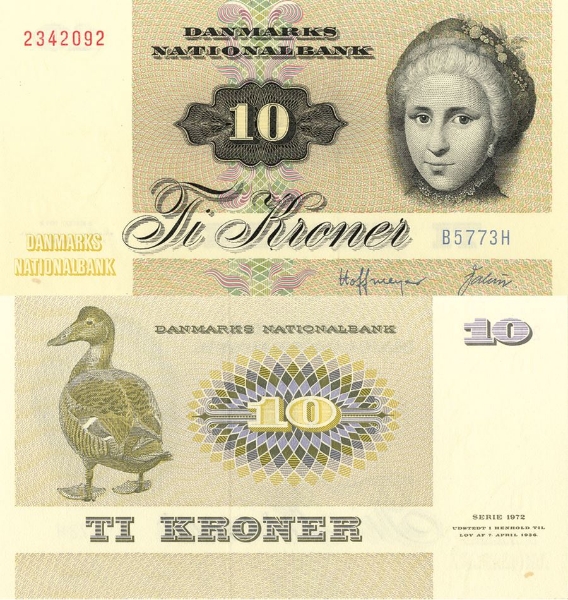
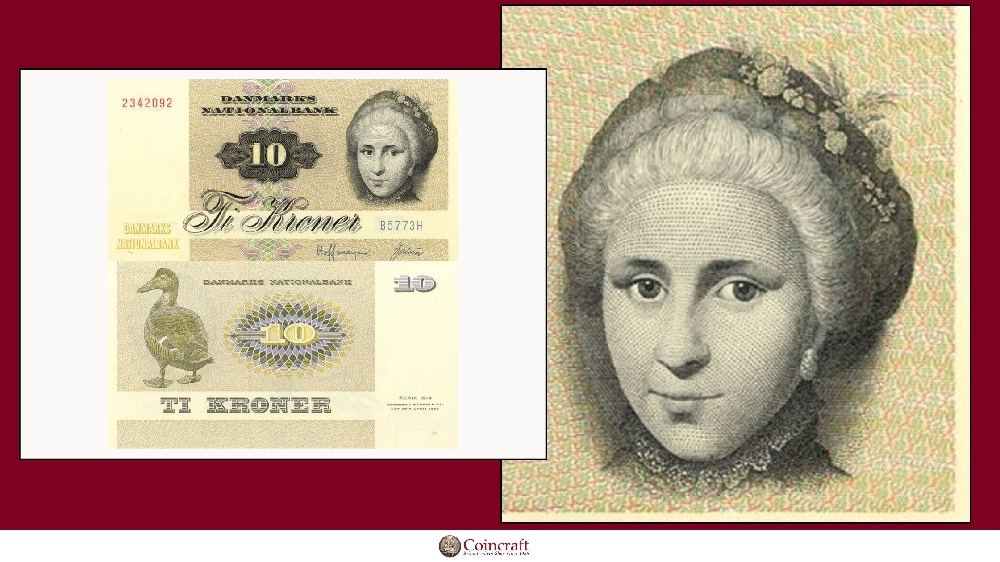
If you handled money in Denmark during the late 1970s, you might remember a specific olive-green 10-krone note. On it was a woman with a gentle expression, holding a fan, looking straight at you with a gaze that seemed to bridge centuries. Her name was Cathrine Sophie Kirchhoff, and unlike the royals she shared wallet space with, she wasn’t a queen or a politician. She was a Councillor’s wife who became an accidental icon of Danish culture.
Let’s dive into the story of how an 18th-century middle-class woman became a 20th-century national treasure.
Key Takeaways
A National Face: Cathrine Sophie Kirchhoff was the face of the Danish 10-krone banknote (1972 series) issued between 1975 and 1980.
The Masterpiece: Her fame comes from a stunning 1768 portrait by Jens Juel, Denmark’s leading portrait painter of the 18th century.
Status Symbol: As the wife of a Councillor of State (Etatsraad), she represented the rising influence of the bourgeoisie (middle class) in a time traditionally dominated by nobility.
The "Edderfugl" Note: The banknote she appeared on is affectionately known by collectors as the "Edderfugl" (Eider duck) note because of the bird featured on the reverse side.
The Woman Behind the Fan
While history hasn’t left us with a diary or a biography written in her own hand, we know exactly who Cathrine Sophie was in the context of her time. Born Cathrine Sophie Christensen, she lived in Copenhagen during a vibrant era of cultural and economic growth.
She married Johan Henrik Kirchhoff, a man of significant standing who held the title of Etatsraad (Councillor of State). This title wasn't just a fancy label; it meant her family was part of the upper echelons of the civil service—the emerging "new money" or intellectual elite that was beginning to rival the old aristocracy in influence.¹
But Cathrine Sophie didn't just fade into history as "someone's wife." She became the subject of one of the finest paintings of her era, immortalizing her independence and charm.
The Masterpiece that Started It All
In 1768, a young and incredibly talented artist named Jens Juel painted Cathrine Sophie. Juel is often called the father of Danish portraiture, known for making his subjects look human, breathing, and real, rather than stiff and statuesque.
The portrait, which now hangs in the Statens Museum for Kunst (National Gallery of Denmark) in Copenhagen, is a masterpiece of subtlety. In it, Cathrine Sophie is depicted holding a fan—a common accessory of the time, but held with a casual grace that suggests a relaxed confidence.²
Why This Painting Matters
Before this era, portraits were largely reserved for kings and counts. By painting Cathrine Sophie—a member of the civil bourgeoisie—Jens Juel was signaling a shift. The middle class was arriving. She looks directly at the viewer, not with the haughty sneer of a monarch, but with a warm, approachable intelligence. It is this "human" quality that likely captivated the designers at Denmark's National Bank centuries later.
From Canvas to Currency
Imagine waking up 200 years after your death to find your face in the pocket of every person in your country. That is essentially what happened to Cathrine Sophie.
In 1972, Danmarks Nationalbank (The National Bank of Denmark) decided to launch a new series of banknotes. They wanted to move away from generic symbols and celebrate Danish art and nature. For the 10-krone note, they chose Jens Juel’s portrait of Cathrine Sophie on the front (obverse) and a female Eider duck (Edderfugl) by artist Johannes Larsen on the back.³
The note was officially issued on 8 April 1975. For five years, Cathrine Sophie was exchanged for milk, bread, and bus tickets across Denmark. She became a literal household face.
However, her time in circulation was relatively short. Inflation meant that the 10-krone note was eventually replaced by a coin, and the note was withdrawn on 11 March 1980. Today, it is a beloved collector's item, reminding Danes of a time when art history was something you could carry in your wallet.⁴
FAQs
1. Is Cathrine Sophie Kirchhoff famous for anything other than the painting? Historically, no. She was a private citizen, the wife of a state official. Her fame is almost entirely posthumous, resulting from the artistic brilliance of her portrait and its subsequent use on the national currency.
2. Where can I see the original painting? You can visit the Statens Museum for Kunst (National Gallery of Denmark) in Copenhagen. The painting is titled Cathrine Sophie Kirchhoff, f. Christensen and is dated 1768.
3. Is the banknote still worth anything? While it is no longer legal tender (it was demonetized and replaced by a coin), the 1972 series 10-krone note is a popular item for numismatists (currency collectors). In good condition, it is worth more than its face value to collectors.
References
Statens Museum for Kunst (n.d.). Cathrine Sophie Kirchhoff, f. Christensen. [online] Available at: https://open.smk.dk [Accessed 5 Jan. 2026].
MeisterDrucke (n.d.). Cathrine Sophie Kirchhoff, née Christensen by Jens Juel. [online] Available at: https://www.meisterdrucke.ie [Accessed 5 Jan. 2026].
Danmarks Nationalbank (2024). Historical banknotes. [online] Available at: https://www.nationalbanken.dk [Accessed 5 Jan. 2026].
Numista (2024). 10 Kroner (Painting and Animal) - Denmark. [online] Available at: https://en.numista.com [Accessed 5 Jan. 2026].