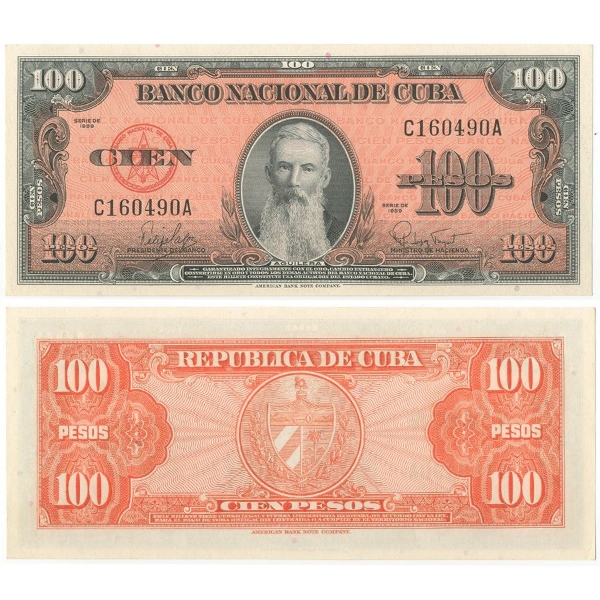
Picture Source of Carlos Manuel de Céspedes: Wikipedia
 - WCU0802 .jpg)
The Father of Cuba: The Life and Legacy of Carlos Manuel de Céspedes
Introduction
Picture this: It’s 1868. You are a wealthy landowner in Cuba, born into comfort, educated in the finest schools of Europe, and you have everything to lose. Most people in your position would keep their heads down and enjoy their wealth. But Carlos Manuel de Céspedes wasn't most people.
Known today as the Padre de la Patria (Father of the Country), Céspedes is the man who lit the fuse on Cuban independence. He didn't just talk about freedom; he put his entire life, fortune, and family on the line for it. If you’ve ever wondered who kicked off the fight against Spanish rule in Cuba, you’re about to meet him.
Key Takeaways
The Grito de Yara: On October 10, 1868, Céspedes initiated the first major war for Cuban independence.
A Radical Act: He was the first major landowner to free his slaves and invite them to fight alongside him as brothers.
First President: He served as the first President of the Republic of Cuba in Arms.
The Ultimate Sacrifice: He lost his wealth, his son, and eventually his life to the cause, dying in a remote skirmish after being deposed by his own government.
The Early Years: More Than Just a Rich Kid
Born on April 18, 1819, in Bayamo, Carlos Manuel de Céspedes came from a prominent family dedicated to sugar production. He wasn't just a local farm boy, though. He was incredibly well-educated, earning a law degree from the University of Havana before traveling to Spain to continue his studies.^1^
While in Europe, he didn't just hit the books. He traveled through France, Germany, and Italy, becoming a polyglot and getting a front-row seat to the revolutionary movements sweeping across the continent. It’s said that these travels opened his eyes. He saw nations fighting for their identity and sovereignty, and he began to wonder: Why not Cuba? When he returned home in 1844, he purchased La Demajagua, a sugar plantation. But he was already plotting something much bigger than a harvest.^2^
The Spark: The Grito de Yara
The morning of October 10, 1868, is perhaps the most famous morning in Cuban history. Céspedes knew the Spanish authorities were onto his conspiratorial activities, so he decided to strike first.
He gathered his slaves at his plantation, La Demajagua, and rang the slave bell—usually a sound that meant hard labor was about to begin. But this time, the message was different.
He announced that they were all free men. In a move that stunned the island's elite, he invited these newly freed men to join him in the fight for independence, declaring, "Citizens, up until this moment you have been my slaves. From now on, you are as free as I am."^3^ This event, known as the Grito de Yara (Cry of Yara), marked the start of the Ten Years' War.
It wasn't an immediate victory, though. In his first real skirmish at Yara, his small army was decimated. Legend has it that with only 12 men left, someone told him all was lost. Céspedes reportedly replied, "There are still twelve men left; they are enough to achieve the independence of Cuba."^4^
The Ten Years' War and The Presidency
Céspedes wasn't just a general; he was a statesman. In April 1869, at the Guáimaro Assembly, the revolutionaries wrote a constitution and elected Céspedes as the first President of the Republic of Cuba in Arms. He wanted total independence and the gradual abolition of slavery—a radical platform for the time.^1^
However, leading a revolution is messy. Céspedes favored a strong, centralized military leadership to win the war quickly, while other patriots, like Salvador Cisneros Betancourt and the House of Representatives, wanted more civilian control. These internal political squabbles would eventually prove to be his undoing.^5^
A Father's Sacrifice
There is a heartbreaking story that cements his title as the "Father of the Country." The Spanish captured his son, Oscar, and sent Céspedes a message: surrender, and your son lives. Continue fighting, and he dies.
Céspedes’ response echoes through history. He refused to surrender the independence of his nation for one life, famously stating, "Oscar is not my only son, I am the father of all the Cubans who have died for the Revolution."^6^ Oscar was executed, a tragedy that hardened Céspedes' resolve but broke his heart.
The Tragic Downfall
Politics can be as deadly as war. The internal disagreements within the revolutionary government reached a boiling point in 1873. The House of Representatives deposed Céspedes as President. It was a humiliating blow. He was stripped of his escort and forced to move to San Lorenzo, a remote area in the Sierra Maestra mountains.^2^
The Spanish troops eventually tracked him down on February 27, 1874. Despite being deposed and isolated, he didn't go down without a fight. He died in combat, fighting alone against a Spanish column, revolver in hand. He fell down a ravine, a tragic end for the man who had started it all.^5^
Frequently Asked Questions (FAQs)
Q1: Did Carlos Manuel de Céspedes win the war against Spain? A: No, he did not live to see the end of the war. The Ten Years' War (1868–1878) eventually ended in a stalemate with the Pact of Zanjón, which did not grant immediate independence. However, his actions laid the necessary groundwork for the eventual independence of Cuba in 1902.^1^
Q2: Why is he called the "Padre de la Patria"? A: He is called the Father of the Country because he initiated the independence movement and because of his refusal to surrender his cause to save his biological son, Oscar, declaring himself the father of all Cubans fighting for freedom.^6^
Q3: Was he the only leader of the revolution? A: No, there were other significant figures like Ignacio Agramonte, Máximo Gómez, and Antonio Maceo. However, Céspedes was the initiator and the first political head of the movement.^5^
References
Britannica, T. Editors of Encyclopaedia (2024). Carlos Manuel de Céspedes. [online] Encyclopedia Britannica. Available at: https://www.britannica.com/biography/Carlos-Manuel-de-Cespedes [Accessed 09 Dec. 2025].
Wikiwand (2024). Carlos Manuel de Céspedes. [online] Wikiwand. Available at: https://www.wikiwand.com/en/articles/Carlos_Manuel_de_Cespedes [Accessed 09 Dec. 2025].
History of Cuba (n.d.). The Cry of Yara. [online] Historyofcuba.com. Available at: http://www.historyofcuba.com [Accessed 09 Dec. 2025].
Kiddle Encyclopedia (2025). Carlos Manuel de Céspedes Facts for Kids. [online] kids.kiddle.co. Available at: https://kids.kiddle.co/Carlos_Manuel_de_C%C3%A9spedes [Accessed 09 Dec. 2025].
Fact Monster (n.d.). Céspedes, Carlos Manuel de. [online] Factmonster.com. Available at: https://www.factmonster.com/encyclopedia/history/latin-america/cuba-bios/c-spedes-carlos-manuel-de-1819-74-cuban-revolutionist [Accessed 09 Dec. 2025].
Sierra Maestra (2024). Céspedes: de padre de un hijo a padre de un pueblo. [online] Sierramaestra.cu. Available at: https://www.sierramaestra.cu [Accessed 09 Dec. 2025].