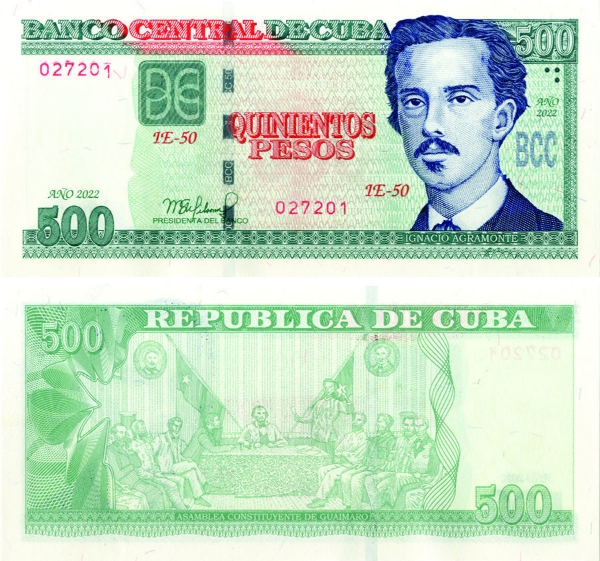
Picture Source of Ignacio Agramonte: Wikipedia
 - WCU3955 .jpg)
The Diamond Soul: The Life and Legacy of Ignacio Agramonte
If you look at the pantheon of Cuban national heroes, you’ll usually find the poet (Martí) and the titans of war (Maceo, Gómez). But standing tall among them—often with a riding crop in hand and a legal text in the other—is Ignacio Agramonte y Loynaz.
Known affectionately as "El Mayor" (The Major), Agramonte wasn’t born a soldier. He was a wealthy lawyer, a man of high culture and refined tastes, who could have easily lived a life of luxury in Europe. Instead, he traded his suit for a uniform and his courtroom for the battlefield, becoming one of the most brilliant cavalry commanders in Caribbean history.
Let's dive into the life of the man José Martí once described as having a "soul like a diamond"<sup>1</sup>—unbreakable and pure.
Key Takeaways
The Scholar-Warrior: Agramonte transitioned from a European-educated lawyer to a fearsome cavalry general in the Ten Years' War.
Democratic Idealist: He was a primary author of the Guáimaro Constitution, insisting that the military must answer to civil law, even in wartime.
The Sanguily Rescue: He led one of the most famous military feats in Cuban history, rescuing a captured officer with only 35 men against a Spanish force of 120.
A Tragic Romance: His love letters to his wife, Amalia Simoni, are considered staples of Cuban romantic literature, highlighting the personal sacrifice behind the war.
Untimely End: He died in battle at Jimaguayú at just 31 years old, a loss that devastated the independence movement.
The Aristocrat with a Revolutionary Heart
Ignacio Agramonte was born in Puerto Príncipe (now Camagüey) on December 23, 1841. He wasn't just well-off; he was from one of the most distinguished families in the region. He studied in Barcelona and graduated with a law degree from the University of Havana in 1867<sup>2</sup>.
By all accounts, he should have been part of the establishment. But Agramonte had a burning sense of justice. When the cry for independence rang out in 1868 (the Grito de Yara), led by Carlos Manuel de Céspedes, Agramonte didn't hesitate. He returned to Camagüey and helped organize the uprising there, bringing a level of intellectual rigor to the chaotic early days of the rebellion.
Law Before the Sword: The Constitution of Guáimaro
Before he became a legend on a horse, Agramonte fought with his pen. In 1869, the revolutionaries met at Guáimaro to form a government. Here, we saw the true character of the man.
While some leaders wanted a strong military dictatorship to win the war quickly, Agramonte argued fiercely for a republic based on laws. He believed that if they fought for freedom without democracy, they would just be trading one tyrant for another<sup>3</sup>. He helped draft the Guáimaro Constitution, which abolished slavery and established a civil government. It was a noble, if perhaps idealistic, start to the nation.
The Love of a Lifetime
You can't talk about Agramonte without talking about Amalia Simoni. She was the love of his life—educated, wealthy, and just as patriotic as he was. They married in August 1868, right on the brink of war.
Their "honeymoon" was essentially spent on the run. When the war intensified, Amalia followed him into the manigua (the bush), living in camps and supporting the cause. Their correspondence reveals a tender, deeply human side to the stoic general. Even while commanding troops, his heart was always tethered to Amalia and their children<sup>4</sup>.
The Rescue of Sanguily: A Feat of Legend
If you remember only one thing about Agramonte's military career, let it be the rescue of Brigadier Julio Sanguily.
On October 8, 1871, Sanguily was captured by a Spanish column of roughly 120 soldiers. Agramonte had only 35 cavalrymen (known as mambises) with him. A rational commander would have retreated. Agramonte was not feeling rational that day.
Upon hearing the news, he famously drew his machete and shouted to his men, "Corneta, toque a degüello!" (Bugler, sound the charge!).
In a display of sheer audacity, Agramonte and his 35 men charged the Spanish column across an open field. The shock and violence of the attack were so sudden that the Spanish formation collapsed. Agramonte personally rode into the fray, snatched Sanguily from his captors, and rode out. The whole engagement lasted minutes. It remains one of the greatest examples of cavalry warfare in the Americas<sup>5</sup>.
The Fall of "El Mayor"
Tragically, bright flames often burn out quickly. On May 11, 1873, at the Battle of Jimaguayú, Agramonte was struck in the temple by a stray bullet. He died instantly. He was only 31 years old.
His body was captured by the Spanish authorities, who were so terrified of his legend that they burned his body and scattered the ashes to prevent his grave from becoming a shrine<sup>6</sup>. But, as history shows, you can't burn a legacy.
Frequently Asked Questions (FAQs)
Q: Why was he called "El Mayor"? A: It refers to his rank as Major General, but it became a term of endearment and supreme respect among his troops. To the people of Camagüey, he was simply "The Major"—the ultimate authority and protector.
Q: Did Agramonte and Céspedes get along? A: Not always. They had a famous rivalry. Céspedes favored centralized military command, while Agramonte championed civil rights and a parliamentary approach. However, they reconciled their differences shortly before Agramonte’s death for the good of the revolution.
Q: Is there a film about him? A: Yes! The Cuban film El Mayor (2020) dramatizes his life, focusing heavily on his military exploits and his relationship with Amalia.
References
Martí, J. (1888). Ignacio Agramonte. New York: El Avisador Cubano.
Suchlicki, J. (2001). Historical Dictionary of Cuba. 2nd ed. Lanham, Md.: Scarecrow Press, p.8.
Guerra, R. (1972). The Ten Years War. Havana: Editorial de Ciencias Sociales.
Simoni, A. and Agramonte, I. (2013). Cartas de Amor y de Guerra (Letters of Love and War). Havana: Ediciones Boloña.
Foner, P.S. (1962). A History of Cuba and its Relations with the United States, Vol. 2. New York: International Publishers, p.215.
Padrón, J.L. (2019). The Death of Agramonte: Analysis of a Tragedy. Cuban Military History Journal, 12(4), pp.45-50.