
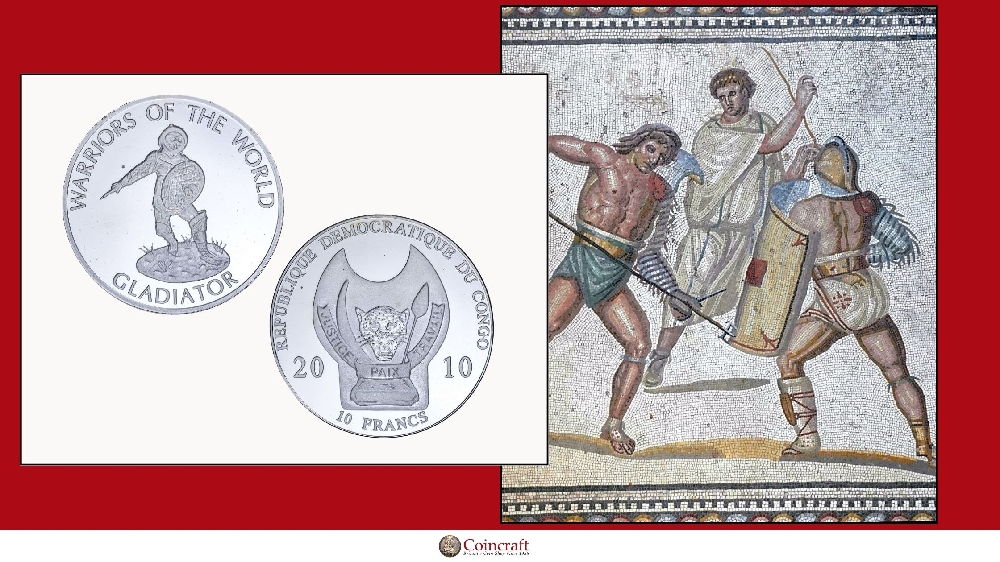
Picture Source of a Gladiator: Wikipedia
Introduction to Gladiators in Ancient Rome
The grandeur of Ancient Rome is often depicted through its architectural marvels, political structures, and cultural practices. Among these, the spectacle of gladiators stands out as a symbol of Roman entertainment and societal norms. Gladiators were more than just combatants; they were an integral part of Roman tradition, offering insights into the values and priorities of one of history's most powerful empires.
Gladiators were typically slaves, prisoners of war, or condemned criminals, thrown into an arena to fight for their lives. These brutal contests were a form of public spectacle, providing entertainment to Roman citizens and serving as a means of social control. While the violence of these encounters might seem barbaric today, gladiatorial games held significant cultural importance in Ancient Rome, reflecting the society's fascination with power, bravery, and endurance.
Understanding the legacy of gladiators requires exploring their origins, the roles they played within Roman society, and the enduring impact they have had on modern culture. This exploration reveals not just the lives of these valiant fighters, but also the intricacies of Roman civilisation itself.
What is a Gladiator? Definition and Origin
The term "gladiator" originates from the Latin word "gladius," meaning sword. Gladiators were specialised fighters in Ancient Rome, trained to entertain the public through combat. These individuals were part of a highly structured lifestyle, often fighting to the death in arenas for the amusement of Roman citizens. Their origins can be traced back to the Etruscans, who believed in honouring the dead through combat.
Initially, gladiatorial contests were part of funeral rites, intended to appease the spirits of the deceased. Over time, these battles evolved into a form of entertainment, detached from their funerary roots. The first recorded gladiatorial games took place in 264 BC, at the funeral of Junius Brutus Pera, where three pairs of gladiators fought. This event marked the beginning of a tradition that would become a staple of Roman culture.
Gladiators were not limited to a single background. While many were slaves or prisoners of war, some were volunteers seeking fame and fortune. This diversity among gladiators added layers to their societal perception, as they were both revered and reviled, caught between admiration for their skills and disdain for their status.
The Life of a Gladiator: Training and Preparation
Becoming a gladiator was not a simple task; it required rigorous preparation and training. Gladiators were housed in "ludi," or schools, where they were subjected to harsh routines to hone their combat skills. These schools were managed by a "lanista," who was responsible for overseeing the training and discipline of the fighters.
Training was comprehensive, focusing on physical conditioning, weaponry skills, and tactical strategies. Gladiators were taught to excel in various forms of combat, adapting to different fighting styles and weapons. The environment in these training schools was brutal, as the primary aim was to prepare gladiators for survival in the arena. Despite the harsh conditions, gladiators formed a sense of camaraderie, bound by their shared experiences and the constant threat of death.
The preparation also involved mental conditioning. Gladiators had to cultivate a mindset of resilience and courage, essential traits for facing the life-and-death struggles in the arena. The life of a gladiator was perilous, but it offered the possibility of fame and, for some, freedom. Victorious gladiators could earn their liberty, a tantalising prospect that motivated many to endure the rigours of their training.
Types of Gladiators: Different Classes and Their Weapons
Gladiators were not a homogenous group; they could be classified into various types, each with distinct roles and weapons. Understanding these classifications highlights the diversity within gladiatorial contests and the strategic elements that characterised these events.
Murmillo: Known for their heavy armour and large rectangular shields, Murmillos often fought with a gladius. Their style was reminiscent of Roman legionaries, making them a crowd favourite.
Thraex: Inspired by Thracian warriors, Thraex gladiators wielded a small round shield and a curved sword known as a sica. Their armour was lighter, allowing for greater agility in combat.
Retiarius: Uniquely equipped with a net and trident, Retiarius gladiators relied on speed and skill to ensnare and attack their opponents. They were the least armoured, enhancing the drama of their encounters.
Secutor: Often pitted against the Retiarius, Secutores wore helmets with small eye holes to protect against the net. Their combat style was aggressive, designed to close in on their opponent quickly.
These classes of gladiators not only provided variety in the arena but also allowed for different narratives and rivalries to develop, captivating the Roman audiences. The diversity of gladiators demonstrated the sophistication of Roman entertainment, where each battle was a carefully curated spectacle.
The Role of Gladiators in Roman Society
Gladiators held a paradoxical position within Roman society. On one hand, they were celebrated as heroes, embodying the virtues of strength, bravery, and endurance. Their performances drew massive crowds, including the Roman elite, who revelled in the spectacle of combat. Gladiatorial games were public events, often sponsored by politicians seeking to gain favour with the populace, thus intertwining these contests with the political fabric of Rome.
On the other hand, gladiators were also seen as social outcasts, often originating from the lowest rungs of society. Their status as slaves or criminals meant they were denied the rights and privileges enjoyed by Roman citizens. Despite their popularity, they were reminders of Rome's harsh social hierarchy and the brutal realities of life for many.
The dual perception of gladiators highlights the complexities of Roman culture, where admiration and disdain coexisted. Gladiators were both entertainers and tools of political propaganda, used to distract and placate the masses while reinforcing the power structures of the empire.
Gladiatorial Games: Events, Venues, and Spectators
The gladiatorial games were grand events, meticulously organised to captivate and entertain. The most famous venue for these spectacles was the Colosseum in Rome, an architectural marvel capable of seating tens of thousands. Built to host various public spectacles, including gladiatorial contests, it became synonymous with Roman entertainment.
Events in the arena were not solely about combat; they were elaborate affairs that included mock naval battles, wild animal hunts, and executions. These spectacles were designed to display the might and resources of Rome, reinforcing its dominance and cultural supremacy. The games were often accompanied by lavish ceremonies, adding to the grandeur and appeal.
Spectators of gladiatorial games came from all walks of life, from common citizens to emperors. The arena was a microcosm of Roman society, where the social hierarchy was temporarily suspended as everyone united in their thirst for entertainment. The enthusiasm of the crowds and the atmosphere of the games underscored the centrality of gladiatorial contests in Roman life.
Famous Gladiators: Notable Figures and Their Stories
Throughout history, certain gladiators have left an indelible mark, their stories immortalised in Roman lore. Among these figures, Spartacus stands as the most renowned. A Thracian who led a massive slave uprising against Rome, Spartacus became a symbol of resistance and courage. His rebellion, though ultimately crushed, highlighted the potential for gladiators to challenge the status quo.
Another notable figure was Flamma, a Syrian gladiator famed for his prowess in combat. Despite being offered freedom multiple times, Flamma chose to remain a gladiator, captivated by the glory and honour of the arena. His dedication to his craft and repeated victories earned him a place in Roman history.
The tales of these and other gladiators illustrate the complexity of their lives and the varied motivations that drove them. Whether seeking freedom, fame, or simply survival, their stories continue to resonate, offering a glimpse into the human aspects behind the brutal facade of gladiatorial combat.
The Decline of Gladiatorial Combat: Reasons and Impact
The decline of gladiatorial combat was influenced by several factors, signalling a shift in Roman society and its values. One key reason was the rise of Christianity, which opposed the bloodthirsty nature of the games. As Christianity gained prominence, the moral opposition to such spectacles grew, leading to increased pressure to abolish them.
Economic considerations also played a role in the decline. The cost of organising gladiatorial games was substantial, and as the Roman Empire faced economic challenges, the financial burden of these events became unsustainable. The diminishing resources and changing priorities of the empire led to a gradual reduction in the frequency and scale of the games.
The eventual cessation of gladiatorial combat marked a significant cultural transition. The decline reflected broader changes within Roman society, as new values and ideologies began to take root. While the games faded into history, their legacy persisted, leaving an enduring impact on the cultural and historical narrative of Rome.
Gladiators in Modern Culture: Influence on Film and Literature
The allure of gladiators has transcended time, finding a place in modern culture through film, literature, and art. Their stories of bravery, defiance, and survival continue to captivate audiences, serving as inspiration for countless works of fiction and non-fiction.
Films such as "Gladiator" (2000), starring Russell Crowe, have brought the world of ancient gladiators to contemporary audiences, blending historical elements with dramatic storytelling. This film, among others, has contributed to the romanticised portrayal of gladiators, emphasising their heroism and the grandeur of the Roman Empire.
In literature, gladiators have been depicted in various narratives, from historical novels to graphic novels, each offering a unique perspective on their lives and struggles. The enduring fascination with gladiators highlights their symbolic power as representatives of human resilience and the complexities of societal constructs.
The Enduring Legacy of Gladiators
The legacy of gladiators remains a powerful testament to the complexities of Ancient Rome. They were warriors, entertainers, and symbols of societal values, embodying the contradictions of Roman culture. Their influence extends beyond the arenas, leaving a lasting impact on history and modern culture.
As we reflect on the role of gladiators, we uncover not only the harsh realities of their existence but also the enduring human spirit that transcends time. Their stories continue to resonate, reminding us of the intricate tapestry of history and the timeless allure of courage in the face of adversity.
Explore the rich history of Ancient Rome and its gladiators further. Dive into a world where history meets drama, and discover the stories that shaped an empire. Your journey into the past awaits—immerse yourself today!