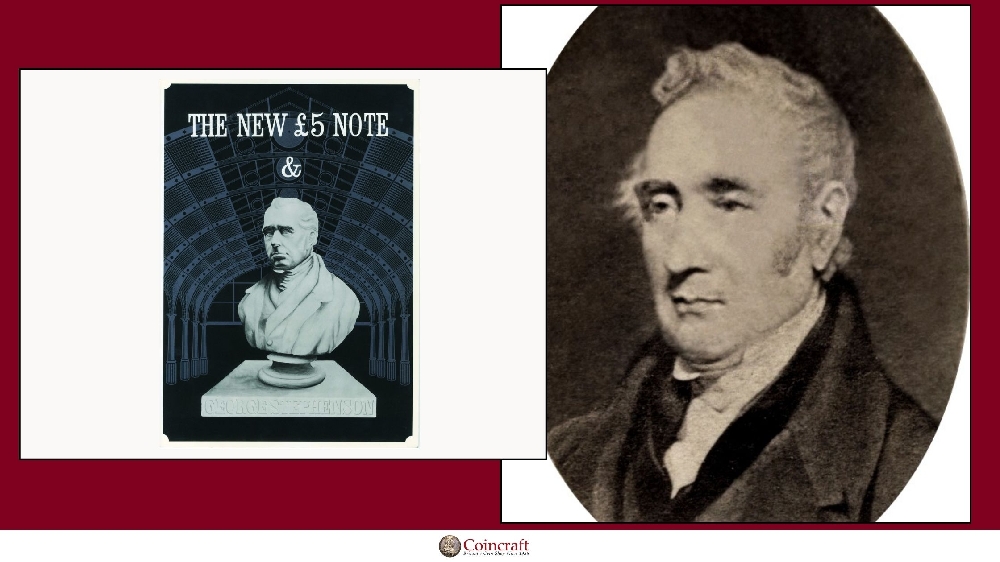
Picture Source of George Stephenson: Wikipedia
The Engine That Could: Meet George Stephenson, the Father of Railways
A world without trains, could we imagine it? No subway commutes, no scenic rail journeys, and certainly no Hogwarts Express! It’s hard to picture, right? Well, we have one man to thank for setting the world on track (pun intended). Meet George Stephenson, a self-made engineering genius who rose from humble beginnings to become the "Father of Railways."
Born in a small coal mining village in Northern England, George didn’t exactly have a head start. In fact, he didn't learn to read until he was 18! But what he lacked in formal education, he made up for with curiosity and sheer grit. Let’s take a journey through the life of the man who changed how the world moves.
Key Takeaways
The "Father of Railways": George Stephenson is celebrated globally for pioneering the rail industry and making train travel a reality for the masses.
The Rocket Man: Along with his son Robert, he built the famous Rocket locomotive, which won the legendary Rainhill Trials in 1829.
A Safety Pioneer: Before trains, he invented the "Geordie Lamp," a safety lamp for miners that sparked a massive rivalry with famous scientist Humphry Davy.
Setting the Standard: The track width he used (4 feet 8 1/2 inches) is still the standard gauge used by most railways around the world today.
Self-Made Genius: Born into poverty and illiterate until adulthood, his life is a true testament to the power of self-education and perseverance.
Humble BeginningsGeorge was born in 1781 in Wylam, Northumberland, just a stone's throw from Newcastle. His father was a fireman for a colliery pumping engine, so you could say steam was in his blood from day one. Growing up in a poor mining family meant school wasn't an option. Instead, George started working young, herding cows and eventually following his dad into the mines.¹
But George wasn't just a laborer; he was a tinkerer. He was fascinated by the engines at the mine. He would take them apart and put them back together just to see how they ticked. Realizing he needed to understand the manuals to learn more, he paid for night classes to learn reading and writing at the age of 18. Talk about dedication!
The spark in the Dark: The "Geordie Lamp"
Before he became a railway legend, George was already saving lives. Coal mines in the early 1800s were dangerous places, prone to deadly explosions caused by naked flames igniting underground gases.
In 1815, George invented a safety lamp that would allow miners to see without triggering an explosion. Around the same time, the famous scientist Sir Humphry Davy invented a similar lamp. A huge controversy erupted over who did it first! While the scientific elite backed Davy, the local miners trusted "Geordie’s lamp" because they trusted George.² To this day, people from Newcastle are nicknamed "Geordies," and some say it's thanks to this very lamp.
Full Steam Ahead: The Locomotive Pioneer
George didn't invent the steam engine—that credit goes to guys like Newcomen and Watt—but he was the one who put it on wheels and made it practical. In 1814, he built his first locomotive, Blücher, which could haul 30 tons of coal uphill. It was slow and heavy, but it worked.³
His big break came with the Stockton and Darlington Railway in 1825. This was the first public railway to use steam locomotives, and George was the chief engineer. Crowds gathered to watch as his engine, Locomotion No. 1, chugged along. It was a chaotic, exciting spectacle that proved trains weren't just science fiction.
The Rainhill Trials and The Rocket
If there’s one moment that cemented George's legacy, it was the Rainhill Trials of 1829. The directors of the upcoming Liverpool and Manchester Railway weren't sure if they should use steam engines or stationary pulling cables. So, they held a competition.
George and his son, Robert (a brilliant engineer in his own right), entered their masterpiece: the Rocket. It was yellow, sleek, and fast. While other competitors broke down or ran out of steam, the Rocket reached the dizzying speed of 30 mph!⁴ It blew the competition away—quite literally—and convinced the world that steam locomotives were the future of travel.
A Lasting Legacy
George Stephenson died in 1848, but his fingerprints are all over the modern world. The next time you step onto a train, look at the tracks. The distance between the two rails is likely 4 feet 8 1/2 inches (1,435 mm). That’s "Stephenson’s Gauge," the standard he set almost 200 years ago.⁵
From a boy who couldn't read to a man who connected the world, George Stephenson’s story is a reminder that it’s never too late to learn, and that one good idea can truly change history.
FAQs
Q: Did George Stephenson invent the train? A: Not exactly. He didn't invent the very first steam engine or the first moving locomotive (Richard Trevithick did that). However, George was the one who made them commercially successful and practical for public transport. He improved the technology enough to build the first public inter-city railway line.
Q: Was the Rocket the first train ever built? A: No, but it was the most advanced of its time. It brought together several new technologies (like a multi-tubular boiler) that became the template for almost all steam engines that followed. Think of it as the "iPhone" of steam engines—not the first phone, but the one that changed the game.
Q: Did he really learn to read when he was an adult? A: Yes! He began attending night school at the age of 18 to learn reading, writing, and arithmetic because he realized he needed these skills to understand engineering manuals and advance his career.
References
North East Museums (n.d.) The Stephensons - Railway Pioneers. Available at: https://www.northeastmuseums.org.uk (Accessed: 28 January 2026).
Institution of Mechanical Engineers (2015) Geordie Lamp. Available at: https://imechearchive.wordpress.com (Accessed: 28 January 2026).
Network Rail (n.d.) George Stephenson (1781–1848). Available at: https://www.networkrail.co.uk (Accessed: 28 January 2026).
Science and Industry Museum (2018) Stephenson's Rocket, Rainhill and the rise of the locomotive. Available at: https://www.railwaymuseum.org.uk (Accessed: 28 January 2026).
Britannica, T. Editors of Encyclopaedia (2025) George Stephenson. Available at: https://www.britannica.com (Accessed: 28 January 2026).