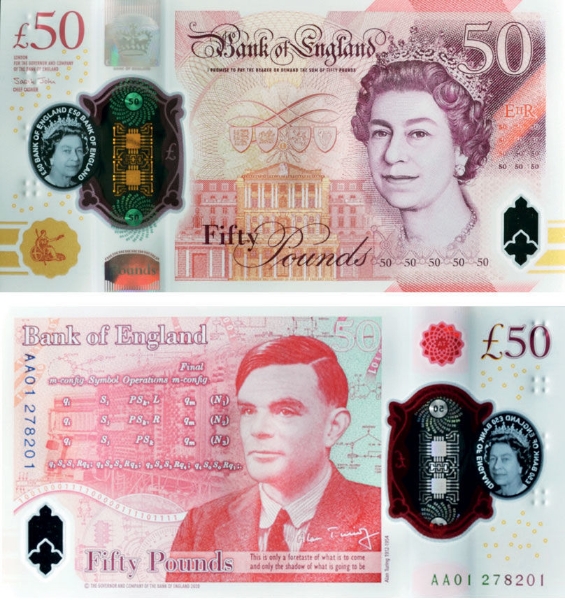
Picture Source of Alan Turing: Wikipedia
 .jpg)
Introduction to Alan Turing's Life and Legacy
Alan Turing, a name synonymous with brilliance, innovation, and resilience, stands as a monumental figure in the annals of computing history. Often hailed as the father of modern computing, Turing's contributions have left an indelible mark on both theoretical and applied fields of computer science. His work not only laid the groundwork for the digital age but also helped shape the course of the 20th century.
Turing's life, though tragically short, was filled with groundbreaking achievements that continue to influence contemporary technology and thought. From his pioneering efforts during World War II to his profound theoretical insights, Turing's legacy is a tapestry of intellectual triumph and personal struggle. Understanding his life is essential to appreciating the full scope of his genius.
The story of Alan Turing is not just one of academic excellence; it is also a narrative of overcoming adversity and societal prejudice. His journey reflects the challenges faced by many who dared to think differently, ultimately leading to a world where innovation is limited only by one’s imagination.
The Early Years of Alan Turing
Alan Mathison Turing was born on 23 June 1912, in Maida Vale, London, to a family of modest means. From a young age, Turing exhibited a remarkable aptitude for mathematics and logic, often engaging in complex problem-solving activities that surpassed the understanding of his peers. His unique perspective and intellectual curiosity were evident even in his formative years.
Turing's education was a testament to his exceptional capabilities. He attended Sherborne School, where his talent in mathematics began to shine. Despite facing challenges in a system that did not always appreciate his unconventional methods, Turing persevered, laying a solid foundation for his later work. His early exposure to scientific texts and theories further fueled his passion for understanding the world through numbers and logic.
The intellectual blossoming that began in Turing's youth continued to flourish during his time at King’s College, Cambridge. Here, he delved deeper into the realms of mathematics and cryptography, forging connections with some of the brightest minds of his generation. This period of academic enrichment was crucial, as it set the stage for the revolutionary contributions he would later make.
Turing's Contributions to Mathematics and Logic
Alan Turing's contributions to mathematics and logic are both profound and far-reaching, establishing him as a central figure in these disciplines. His work in 1936, which introduced the concept of a "universal machine" — now known as the Turing Machine — was groundbreaking. This theoretical construct provided a framework for understanding computational processes, laying the groundwork for modern computer science.
Turing’s insights extended beyond the realms of pure mathematics. He explored the intricate connections between logic and computation, contributing to the field of algorithmic information theory. His work aimed to answer fundamental questions about the nature of computation and the limits of what machines can achieve. By doing so, Turing not only advanced mathematical theory but also laid the foundation for the development of programmable computers.
In addition to his theoretical pursuits, Turing applied his mathematical expertise to practical problems, most notably in the field of cryptography. His work on breaking the Enigma code during World War II demonstrated the practical implications of his theories and underscored the power of mathematics as a tool for solving real-world challenges. Through these achievements, Turing solidified his position as a pioneer in both mathematical theory and its application.
The Role of Alan Turing in World War II
During World War II, Alan Turing played a pivotal role in the Allied war effort, particularly through his work at Bletchley Park, the United Kingdom's principal decryption establishment. His primary contribution was in the development of the Bombe, an electromechanical device designed to decipher the Enigma-encrypted messages used by the German military. Turing’s ingenuity in this endeavour significantly accelerated the decryption process, providing the Allies with critical intelligence.
The impact of Turing's work during the war cannot be overstated. By breaking the Enigma code, he and his colleagues at Bletchley Park provided the Allied forces with a strategic advantage that many historians believe shortened the war by several years, potentially saving millions of lives. His efforts in cryptanalysis exemplified the intersection of theoretical knowledge and practical application, making a tangible difference in the course of history.
Despite his monumental contributions, Turing's wartime efforts remained classified for many years, denying him the recognition he rightly deserved during his lifetime. It was only decades later that the full extent of his contributions came to light, highlighting his critical role in one of history's most significant global conflicts. His work during this period remains a testament to the profound impact of intellectual prowess in times of crisis.
The Development of the Turing Machine
The concept of the Turing Machine, introduced in 1936, is one of Alan Turing’s most significant contributions to computer science. This theoretical device was designed to perform any conceivable mathematical computation if it could be represented as an algorithm. The Turing Machine provided a simple yet powerful model for understanding the principles of computation, forming the basis for the development of modern computers.
Turing's machine was not intended as a practical computing device but as a thought experiment to explore the limits of what machines could compute. It consisted of an infinite tape and a head that could read and write symbols on the tape, following a set of predefined rules. This abstract representation allowed Turing to demonstrate that any computation could be reduced to a series of simple operations, a concept that underpins the architecture of contemporary computers.
The Turing Machine has had lasting implications for the fields of computer science and artificial intelligence. It introduced the idea of a "universal machine" capable of simulating any other machine's operations, a concept that has influenced the development of general-purpose computers. Turing's insights into algorithmic processes continue to inform our understanding of computation and have inspired generations of computer scientists.
Turing's Impact on Computer Science
Alan Turing's influence on the field of computer science is both foundational and enduring. His theoretical work laid the groundwork for the development of digital computers, influencing both the design and functionality of modern computing systems. Turing's ideas on the universality of computation have shaped the way we think about machines and their capabilities, driving innovation in technology.
One of Turing's most significant contributions was the concept of a stored-program computer, which he outlined in his 1945 report on the Automatic Computing Engine (ACE). This idea, which proposed that a machine could store and execute its own instructions, was revolutionary and became a cornerstone of modern computer architecture. Turing's vision of a machine capable of performing a wide range of tasks through reprogrammable instructions paved the way for the versatile computers we use today.
Beyond his technical contributions, Turing also explored the philosophical implications of computation, contemplating the potential for machines to exhibit intelligent behaviour. His ideas have spurred ongoing research into artificial intelligence, a field that continues to evolve and expand. Turing's legacy in computer science is not only reflected in the technology he helped create but also in the questions he posed about the nature of intelligence and the future of human-machine interaction.
The Turing Test and Its Significance
The Turing Test, conceived in 1950, is one of Alan Turing's most well-known contributions to the field of artificial intelligence. This test was designed to address the question, "Can machines think?" by evaluating a machine's ability to exhibit intelligent behaviour indistinguishable from that of a human. The Turing Test remains a fundamental benchmark in assessing the progress of AI research.
In its original form, the test involves an interrogator who communicates with both a human and a machine through a computer interface, without knowing which is which. If the interrogator cannot reliably distinguish between the two, the machine is said to have passed the test, demonstrating its capacity for human-like intelligence. This simple yet profound concept has sparked decades of debate and research within the AI community.
The significance of the Turing Test extends beyond its practical applications; it challenges our understanding of intelligence and the nature of consciousness. By proposing a criterion for machine intelligence, Turing encouraged researchers to explore the boundaries of what machines can achieve. The test remains a touchstone for discussions about AI ethics, the potential for machines to replicate human thought, and the future of human-computer interaction.
Recognition and Legacy of Alan Turing
Despite his groundbreaking contributions, Alan Turing's work was not fully recognised during his lifetime. It was only years later that his achievements gained the recognition they deserved. Today, Turing is celebrated as a visionary who laid the foundations for modern computing, with numerous awards and accolades posthumously honouring his legacy.
In 2009, the British government issued a formal apology for the way Turing was treated, acknowledging his vital contributions to science and his unjust persecution. This marked a turning point in public awareness of Turing's impact, leading to increased efforts to honour his memory and contributions. Monuments, memorials, and biographical works have since emerged, highlighting the importance of his work.
Turing's legacy continues to inspire new generations of scientists, mathematicians, and thinkers. His life and work stand as a testament to the power of human intellect and the enduring impact of innovation. As computing technology advances, Turing's insights remain relevant, reminding us of the potential for machines to transform our world and the importance of fostering a culture that values creativity and diversity.
Alan Turing's Personal Struggles and Challenges
Alan Turing's life was marked by personal struggles and challenges, many of which stemmed from the societal attitudes of his time. As an openly gay man in a period when homosexuality was criminalised in Britain, Turing faced significant discrimination and persecution. His arrest and subsequent conviction for "gross indecency" in 1952 had a profound impact on his life and career.
Following his conviction, Turing was subjected to chemical castration as an alternative to imprisonment, a punishment that highlighted the severe injustices faced by the LGBTQ+ community. This experience took a heavy toll on Turing, affecting both his personal and professional life. Despite these adversities, he continued to work on pioneering projects, demonstrating remarkable resilience and dedication.
Turing's untimely death in 1954, ruled as suicide, was a tragic end to a life filled with promise and achievement. His personal struggles serve as a poignant reminder of the importance of inclusivity and acceptance in society. The recognition of Turing’s genius and the acknowledgment of the injustices he faced have sparked important conversations about human rights and the need for systemic change.
The Enduring Influence of Alan Turing
Alan Turing's enduring influence on the fields of mathematics, computer science, and artificial intelligence is a testament to his visionary genius. His theoretical insights and practical contributions continue to shape the technological landscape, driving innovation and expanding our understanding of computation and intelligence.
Turing's legacy extends beyond his technical achievements, inspiring a broader appreciation for diversity in thought and the importance of nurturing environments that encourage creativity and innovation. His life is a powerful reminder of the potential for individuals to effect profound change, even in the face of adversity.
As we continue to explore the possibilities of technology and artificial intelligence, Turing's work remains a guiding light, reminding us of the potential for machines to transform society. His legacy challenges us to envision a future where technology enhances human capabilities and fosters a more inclusive and equitable world.