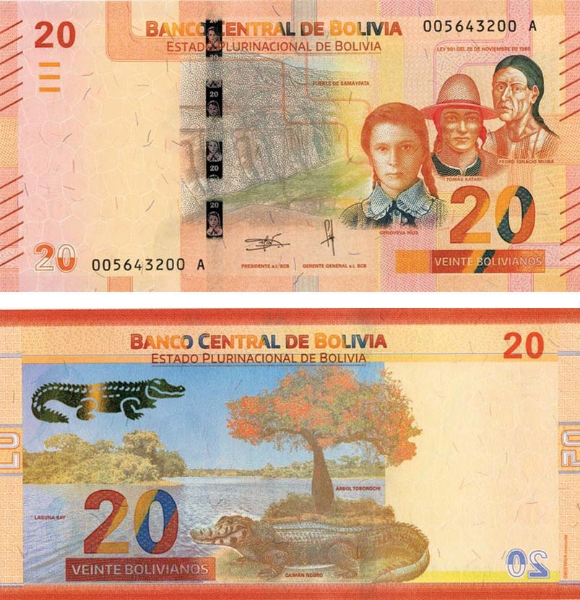
Picture Source of Pedro Ignacio Muiba: Banco De Central Bolivia
 - WBO1098 .jpg)
Pedro Ignacio Muiba: Bolivia’s Forgotten Revolutionary Hero
In the pantheon of Latin American revolutionary leaders, certain names like Simón Bolívar, José de San Martín, and Bernardo O’Higgins shine brightly in history books. Yet countless other brave individuals who fought for freedom remain largely unknown outside their homelands. One such revolutionary hero is Pedro Ignacio Muiba, an indigenous leader whose courage and resistance against Spanish colonial rule helped shape Bolivia’s path to independence.
Early Life in Colonial Moxos
Pedro Ignacio Muiba was born on June 13, 1784, in Santísima Trinidad, in what was then the Viceroyalty of Río de la Plata under Spanish colonial rule (now part of Bolivia’s Beni Department). He belonged to the Mojeño indigenous group, one of the native peoples of Bolivia’s Amazon basin region.
Muiba’s early years were shaped by the complex colonial system established in the region. The area of Moxos (or Mojos) had been under Jesuit influence until their expulsion in 1767, after which the indigenous communities faced increasingly harsh treatment from Spanish administrators. Despite these circumstances, Muiba received Catholic education and instruction from Jesuit missionaries, becoming fluent in multiple languages.
His multilingual abilities—he reportedly spoke six languages including Movima, Canichana, Baure, Itonama, Cayubaba, and his native Mojo (Trinitario)—elevated him to the position of interpreter or “lenguaraz.” This role gave him unique insight into both colonial administration and the struggles of his people, eventually helping him establish leadership among the indigenous communities of the region.
The Revolutionary Uprising
The early 1800s marked a period of growing revolutionary sentiment throughout Spanish America. News of independence movements and uprisings in various parts of the continent gradually reached even remote regions like Moxos.
According to historical accounts, Muiba learned of the revolutionary movements happening elsewhere in the Viceroyalty, particularly the May Revolution of 1809 in Chuquisaca (now Sucre). Inspired by these events and driven by the increasing oppression faced by indigenous people under the Spanish governor Pedro Pablo de Urquijo, Muiba decided to take action.
On November 9, 1810, Muiba led an uprising against Spanish authority in Trinidad. The rebellion quickly gained momentum, and by the following day, the Spanish governor was forced to seek refuge in a church as the rebellion openly challenged colonial rule. On November 11, the uprising received reinforcements when José Bopi, another indigenous leader, arrived with 200 armed men from Loreto to support Muiba’s cause.
During this revolutionary moment, Muiba reportedly made his famous declaration in the public square of Trinidad: “The King of Spain is dead! We will be free by our own command. The lands are ours by mandate of our ancestors, from whom the Spaniards took them.”
This powerful statement encapsulated the indigenous perspective on colonization and their right to self-determination—themes that would resonate throughout Latin American independence movements.
Legacy and Historical Significance
Though Muiba’s rebellion was ultimately suppressed when Governor Urquijo escaped with reinforcements and returned to crush the uprising, the revolutionary’s brave stand left an indelible mark on Bolivian history. Muiba is believed to have died around 1811, possibly executed following the failure of the uprising.
While his rebellion did not immediately achieve independence for the region, it represented an important early resistance movement by indigenous peoples against colonial rule, predating Bolivia’s eventual independence in 1825.
Today, Pedro Ignacio Muiba’s legacy is honored in modern Bolivia. His image appears on the 20 boliviano banknote, alongside other revolutionary figures, reflecting his importance to the national identity. Unlike the European-descended criollo elites who led many independence movements, Muiba represents the often-overlooked indigenous contribution to Latin American independence struggles.
Why Muiba Matters Today
The story of Pedro Ignacio Muiba remains relevant for several reasons:
Indigenous Resistance: Muiba’s uprising highlights the active role indigenous peoples played in resistance against colonialism, challenging narratives that focus exclusively on criollo leadership.
Cultural Pride: As a multilingual indigenous leader educated in colonial institutions but loyal to his people’s interests, Muiba embodied cultural resilience in the face of assimilation pressures.
Regional Identity: For Bolivia’s Beni Department and the Amazon region, Muiba represents a source of regional pride and historical significance.
Historical Recovery: The increasing recognition of figures like Muiba reflects ongoing efforts throughout Latin America to recover and celebrate previously marginalized historical actors.
In a region where currency often features familiar political figures, Bolivia stands out for commemorating revolutionary heroes like Pedro Ignacio Muiba on its banknotes. This choice reflects a nation still connecting with its complex, multilayered past—one where indigenous leaders like Muiba fought bravely for freedom and dignity long before formal independence was achieved.
As we continue to reexamine history through more inclusive lenses, the story of Pedro Ignacio Muiba reminds us that revolution and resistance have always come in many forms, from many voices, across the diverse landscapes of Latin America.