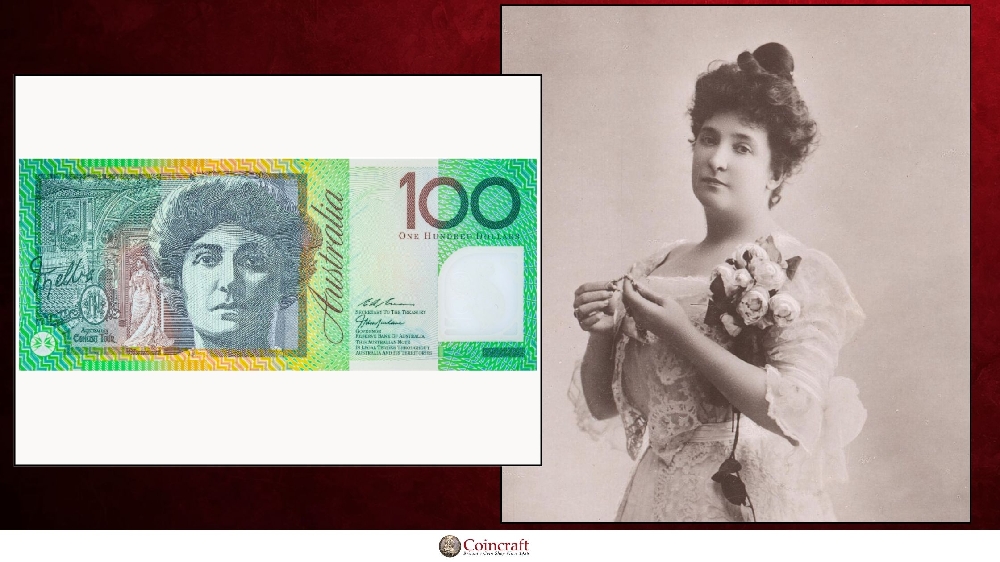
Picture Source of Dame Nellie Melba: Wikipedia
Dame Nellie Melba: Australia's First Global Superstar
Long before the era of Hollywood actors and pop musicians, Australia’s first internationally recognized superstar was an operatic soprano. Dame Nellie Melba (1861–1931) possessed a voice of astonishing purity and agility, propelling her from the suburbs of Melbourne to the grandest stages of Europe and the Americas. For nearly four decades, she reigned as the undisputed prima donna of London's Covent Garden. Beyond her vocal brilliance, Melba was a ruthless businesswoman, a pioneering recording artist, a generous philanthropist, and a cultural icon whose legacy is immortalized in culinary history, Australian idioms, and the nation’s currency.
Key Facts
Birth Name: Helen Porter Mitchell
Born: May 19, 1861, Richmond, Melbourne, Victoria.
Died: February 23, 1931, Sydney, New South Wales.
Stage Name Origin: "Melba" was chosen as a tribute to her home city of Melbourne.
Voice Type: Lyric coloratura soprano.
Major Honors: Dame Commander of the Order of the British Empire (DBE) in 1918; elevated to Dame Grand Cross (GBE) in 1927.
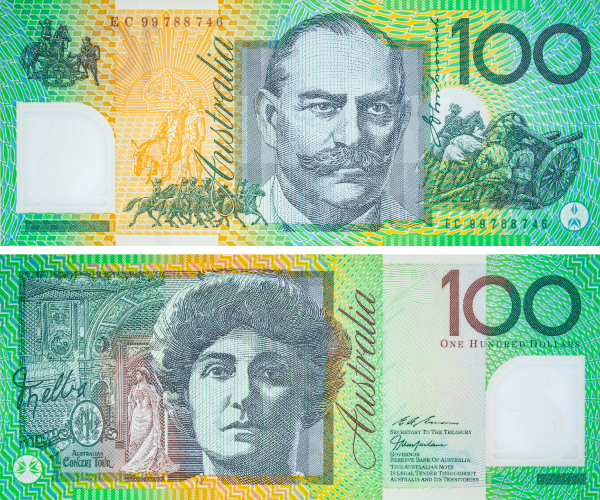
Currency: Featured on the obverse of the Australian $100 banknote (alongside Sir John Monash on the reverse).
Key Takeaways
The Ultimate Cultural Ambassador: Melba was the first Australian to achieve unquestionable global supremacy in classical music, proving to the world that the young colonial nation could produce high culture [1, 2].
Pioneer of Personal Branding: She wielded immense power over her career, demanding unprecedented performance fees, dictating casting choices, and fiercely protecting her public image in a male-dominated industry [3].
A Culinary Muse: Her fame was so pervasive that legendary French chef Auguste Escoffier invented two globally recognized dishes in her honor: Peach Melba and Melba Toast [4].
A Philanthropic Force: During World War I, she utilized her immense fame to raise vast sums for war charities, which directly led to her being made a Dame Commander of the Order of the British Empire [2, 5].
Historical Narrative: From Melbourne to the World Stage
Early Life and a Disastrous Marriage
Born Helen Porter Mitchell in 1861 in Richmond, a suburb of Melbourne, she was the eldest of seven children in a strict but musical Scottish-heritage family. Her father, David Mitchell, was a highly successful building contractor. Young "Nellie" demonstrated precocious musical talent, learning to play the piano and pipe organ, and singing in local church choirs. However, in the conservative Victorian era, a professional theatrical career was considered highly inappropriate for a woman of respectable standing [1].
In 1882, following the death of her mother, Nellie traveled with her father to Queensland. There, she met and married Charles Nesbitt Frederick Armstrong, a gentleman with aristocratic ties but violent tendencies and poor financial prospects. The couple moved to a remote sugar plantation in tropical Queensland. The marriage was disastrous. Enduring torrential rain, isolation, and an increasingly abusive husband, Nellie lasted just two months before returning to Melbourne, bringing her infant son, George, with her. The separation was permanent, though they did not officially divorce until 1900. Free from the constraints of her marriage, Nellie decided to pursue singing professionally [2, 3].
The Making of "Melba" in Europe
In 1886, Nellie accompanied her father to London, hoping to secure a foothold in the musical world. Her initial reception was terribly disappointing; prominent British conductors and critics dismissed her. Undeterred, she traveled to Paris to audition for Mathilde Marchesi, the most renowned vocal teacher of the 19th century.
Upon hearing Nellie sing, Marchesi famously rushed out of the room to tell her husband, "I have found a star!" [1]. Marchesi immediately took Nellie under her wing, refining her vocal technique and preparing her for the operatic stage. It was Marchesi who advised Nellie to adopt a suitable stage name. To honor her hometown, Helen Mitchell became "Nellie Melba."
In 1887, she made her professional operatic debut at the Théâtre de la Monnaie in Brussels, singing the role of Gilda in Verdi’s Rigoletto. The performance was an absolute sensation. Melba’s voice—described as remarkably even throughout its two-and-a-half-octave range, with a silvery, pure tone and effortless agility—captivated the European elite [2].
Conquering Covent Garden and the World
In 1888, Melba debuted at the Royal Opera House, Covent Garden, in London. While her initial performance in Lucia di Lammermoor was moderately received, she returned the following year in Romeo and Juliet (co-starring the legendary tenor Jean de Reszke) and established a dominance over Covent Garden that would last for the rest of her career. She became the favorite singer of Queen Victoria and later King Edward VII [3].
By the 1890s, Melba was the most famous and highly paid soprano in the world. She conquered the Metropolitan Opera in New York and toured extensively across Europe and North America. Her repertoire focused primarily on French and Italian romantic operas, excelling as Mimi in Puccini’s La Bohème (a role she studied with Puccini himself), Marguerite in Faust, and Violetta in La Traviata.
Melba was notorious for her diva persona. She was a brilliant, ruthless negotiator who demanded to be paid in gold before she stepped onto the stage. She insisted on top billing, controlled who sang alongside her, and refused to perform if her dressing room was not kept at a specific temperature. Yet, beneath the arrogant exterior was a woman of intense discipline who practiced relentlessly and maintained total professional control over her voice [3, 4].
Escoffier and the Culinary Tributes
Melba's fame extended far beyond the opera house, intersecting with the high society of the Gilded Age. While she was staying at the Savoy Hotel in London in 1892 (or 1893), the hotel's legendary culinary director, Auguste Escoffier, attended one of her performances in Wagner’s Lohengrin, which features a majestic swan boat.
To honor her, Escoffier created a dessert consisting of fresh peaches served over vanilla ice cream, originally presented in an ice sculpture of a swan, topped with spun sugar. He later refined the dish by adding raspberry purée, naming it Pêche Melba (Peach Melba). A few years later, in 1897, when Melba was feeling unwell and requested a very crisp, thin slice of bread, Escoffier created a dry, thinly sliced toast for her. This became known globally as "Melba Toast" [4].
World War I, Philanthropy, and Returning Home
When the First World War broke out in 1914, Melba was deeply affected. She threw her considerable energy into fundraising for the war effort. She organized concerts, auctioned off her own belongings, and toured tirelessly across North America and Australia, raising an estimated £100,000 (a staggering fortune at the time) for the Red Cross and other charities. In recognition of her extraordinary philanthropic work, King George V created her a Dame Commander of the Order of the British Empire (DBE) in 1918 [2, 5].
As she grew older, Melba spent more time in Australia. She built a grand home, Coombe Cottage, in Coldstream, Victoria. She also became a dedicated teacher at the Melbourne Conservatorium of Music, striving to elevate the standard of musical education in her home country. She was notoriously strict but fiercely protective of her students, often paying for the tuition of those who could not afford it [1].
The Endless Farewells and Legacy
Dame Nellie Melba found it incredibly difficult to step away from the stage. During the 1920s, she announced her retirement and conducted a series of highly publicized, emotional "farewell" concerts across Europe and Australia. However, she kept returning for "just one more" performance. This spawned the famous Australian idiom, "More comebacks than Nellie Melba," used to describe someone who repeatedly announces their departure but fails to actually leave [5].
She gave her final performances in Australia in 1928. In 1931, at the age of 69, Melba died in Sydney from septicaemia, which had developed after a facial surgery in Europe. Her passing was mourned globally, and her funeral in Melbourne was a major state event.
Today, her legacy is firmly entrenched in the Australian cultural consciousness. As the face of the Australian $100 note, she sits opposite another defining figure of her era, General Sir John Monash. From the opera stages of London to the dining tables of the world, Dame Nellie Melba remains one of the most formidable and successful cultural exports in Australian history.
Frequently Asked Questions (FAQs)
Who is on the Australian $100 banknote? The Australian $100 note features Dame Nellie Melba on the obverse (front) and General Sir John Monash on the reverse. Both figures were instrumental in shaping Australia's global identity in the late 19th and early 20th centuries—Melba in the arts, and Monash in engineering and military leadership.
What is the origin of Peach Melba and Melba Toast? Both dishes were created by the legendary French chef Auguste Escoffier while he was working at the Savoy Hotel in London. He created Peach Melba (peaches, vanilla ice cream, and raspberry purée) to honor her performance in the opera Lohengrin. He later invented Melba Toast—a very thin, crisp, dry toast—when the singer was unwell and required something light for her stomach.
What does the phrase "More comebacks than Nellie Melba" mean? This is a popular Australian and British idiom used to describe a person who repeatedly announces their retirement or departure, only to return time and time again. It originates from the 1920s, when Melba performed a lengthy series of "farewell" concerts over several years but continually found reasons to return to the stage.
Did Dame Nellie Melba leave behind any recordings? Yes. Although she initially distrusted the new technology of the gramophone, she began recording in 1904. Her recordings, mostly made for the Gramophone & Typewriter Company (later HMV) and the Victor Talking Machine Company, provide a valuable historical record of her pure tone and vocal agility, even if the primitive acoustic recording methods could not capture the full power of her voice.
References
Davidson, J. (1986). "Melba, Dame Nellie (1861–1931)". Australian Dictionary of Biography, Volume 10. National Centre of Biography, Australian National University.
Blainey, A. (2008). I Am Melba: A Biography. Black Inc. (A comprehensive and highly acclaimed modern biography of the singer).
Radic, T. (1986). Melba: The Voice of Australia. Macmillan. (Examines her career trajectory and her impact on Australian cultural identity).
James, K. (2002). Escoffier: The King of Chefs. Hambledon and London. (Details the culinary history and relationship between Escoffier and Melba at the Savoy).
National Museum of Australia. (n.d.). Dame Nellie Melba. Retrieved from NMA.gov.au. (Details her WWI fundraising efforts and the cultural impact of her farewell tours).