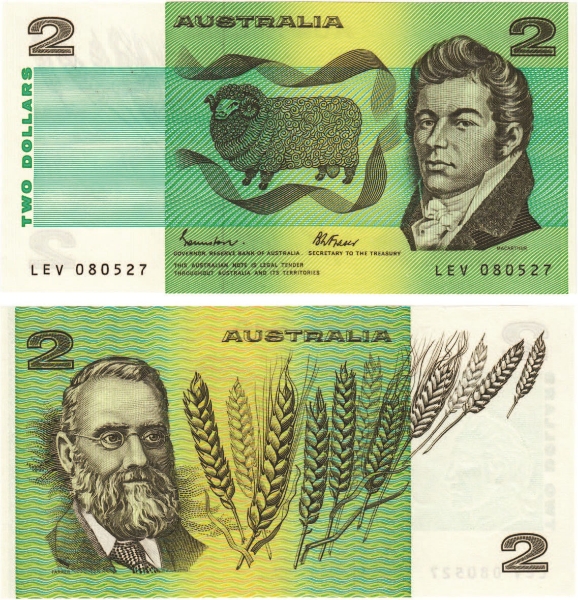
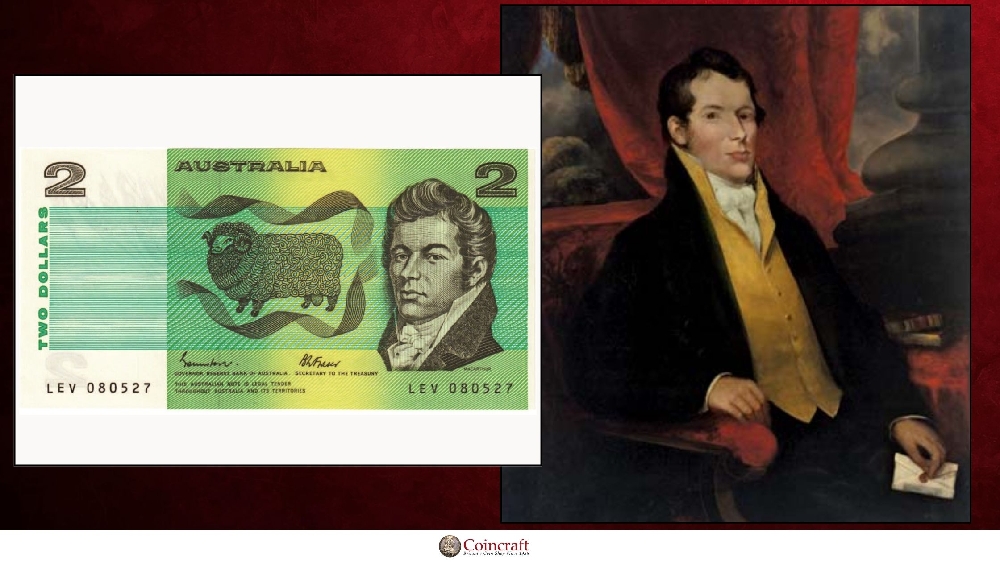
Picture Source of John Macarthur: Wikipedia
John Macarthur: Architect of Australian Wool and Rebellion
John Macarthur (1767–1834) remains one of the most polarizing and influential figures in early Australian history. He was simultaneously a visionary entrepreneur who laid the economic foundations of the Australian nation and a ruthless, combative oligarch who actively undermined the authority of successive colonial governors, culminating in the only successful military coup in Australian history. Macarthur’s legacy is defined by two primary pillars: the establishment of the Australian fine-wool industry and his instigation of the 1808 Rum Rebellion [3, 4].
Key Facts
Born: 1767, near Plymouth, Devon, England.
Died: April 10, 1834, Camden, New South Wales, Australia.
Spouse: Elizabeth Macarthur (née Veale), married in 1788. She managed his vast estates during his extended political exiles.
Military Rank: Lieutenant (later promoted to Captain) in the New South Wales Corps.
Primary Estates: Elizabeth Farm (Parramatta) and Camden Park (the Cowpastures).
Major Achievement: Pioneered the Australian fine-wool export industry by importing and selectively breeding premium Spanish Merino sheep.
Historical Notability: The principal instigator of the 1808 Rum Rebellion, which successfully deposed Governor William Bligh.
Key Takeaways
Economic Transformation: Macarthur was instrumental in transitioning New South Wales from a reliant penal settlement into a profitable, capitalist economy centered on export.
Political Disruption: His uncompromising pursuit of commercial dominance and his fierce clashes with naval governors highlight the intense early struggles between military/capitalist monopolies and British colonial authority.
The "Invisible" Partner: While John Macarthur receives historical credit as the visionary, the practical success, day-to-day management, and selective breeding of the Merino flocks were largely executed by his wife, Elizabeth, during his long periods of exile in England.
A Complicated Legacy: He represents the archetype of the Australian "squattocracy"—individuals whose immense ambition and ruthlessness built the nation's agricultural backbone while actively subverting its legal frameworks.
Early Life and Arrival in New South Wales
Born near Plymouth, England, in 1767, Macarthur was the son of an immigrant Scottish tailor. Ambitious and acutely aware of his modest social standing, he sought upward mobility through the British Army. In 1789, he secured a commission as a lieutenant in the newly formed New South Wales Corps—a regiment raised specifically to garrison the nascent penal colony of Sydney. He arrived in Sydney in 1790 on the Second Fleet vessel Scarborough, accompanied by his wife, Elizabeth, and their infant son [4].
Upon his arrival, the colony was on the brink of starvation [1]. However, Macarthur quickly recognized that New South Wales offered unprecedented opportunities for those with capital, influence, and a willingness to exploit the system. In 1793, he received a grant of 100 acres at Parramatta, which he named Elizabeth Farm. Here, he began his foray into agriculture, utilizing assigned convict labor to clear the land and establish a thriving mixed farm.
By the late 1790s, the officers of the New South Wales Corps had established a monopolistic grip on the colony's economy [5]. They controlled the import of goods—most notably rum (spirits)—which functioned as the colony's primary currency. Macarthur became one of the central figures in this military oligarchy, amassing considerable wealth through trade and expanding his landholdings.
The Genesis of the Fine-Wool Industry
Macarthur’s most enduring contribution to Australia was his recognition that the colony required a staple export to become economically viable, and that fine wool was the ideal commodity. Unlike timber or grain, wool was non-perishable, had a high value-to-weight ratio, and was in immense demand by the booming textile mills of industrializing Britain.
While others in the colony possessed sheep, they were primarily kept for meat and produced coarse, hairy fleeces. Macarthur, however, pursued selective breeding for fine wool [2]. In 1797, he purchased Spanish Merino sheep from a flock that had been imported from the Cape of Good Hope. He crossbred these with finer-wooled sheep from Bengal and Ireland, meticulously culling his flocks to improve fleece quality.
In 1801, following a duel with his commanding officer, William Paterson, Macarthur was sent back to England to face court-martial. He turned this potential disaster into a triumph. The charges were dropped, and Macarthur utilized his time in London to lobby British politicians and textile manufacturers. He presented samples of his Australian wool to experts, proving that the colony could produce fleeces rivaling the finest Spanish wool. Consequently, he secured the backing of the British government, returning to Sydney in 1805 with a massive grant of 5,000 acres in the fertile Cowpastures region (Camden Park) and a small flock of premium Merinos from King George III's royal flock at Kew [2].
Conflict with Authority and the Rum Rebellion
Macarthur possessed a volatile, litigious, and arrogant temperament. He viewed the colonial governors—naval officers tasked with running a penal settlement—as impediments to the commercial rights of free settlers and capitalists. This fundamental ideological clash resulted in bitter feuds with Governors John Hunter and Philip Gidley King, both of whom attempted, and failed, to break the monopoly of the New South Wales Corps [5].
The conflict reached its zenith during the administration of Governor William Bligh, who arrived in 1806. Bligh, famous for the mutiny on the Bounty, was a strict disciplinarian ordered by the Colonial Office to crush the rum traffic and curb the power of the military elite. Bligh and Macarthur were natural enemies; neither man was prone to compromise [3].
Tensions escalated through a series of legal disputes, culminating in the Parramatta affair. A convict had stowed away on a schooner part-owned by Macarthur. When the ship returned to Sydney, Bligh’s administration ordered the forfeiture of a £900 bond and seized the vessel. Macarthur retaliated by abandoning the ship and refusing to provision its crew, forcing them ashore in violation of port regulations [3].
When Bligh ordered Macarthur to appear before a magistrate, Macarthur was arrested and brought to trial in January 1808. The trial collapsed when Macarthur accused the Judge-Advocate, Richard Atkins, of extreme bias. Bligh subsequently threatened to charge the officers of the court with treason. In response, on January 26, 1808, Macarthur drafted a petition urging Major George Johnston, commander of the New South Wales Corps, to arrest the Governor. Johnston marched the regiment to Government House, deposed Bligh, and placed him under house arrest [3].
For the next eighteen months, Macarthur was the de facto civilian administrator of the colony, operating under the military junta.
Exile and the Role of Elizabeth Macarthur
The British government could not ignore a military coup. In 1809, they dispatched Governor Lachlan Macquarie with a regular army regiment to restore order. The New South Wales Corps was recalled. Macarthur sailed to England to support Major Johnston during his court-martial. While Johnston was cashiered from the military, Macarthur, as a civilian, avoided formal trial but was forced into exile; the British government barred him from returning to New South Wales for eight years, fearing his presence would ignite further instability [1, 4].
It is during this extended exile (1809–1817) that the survival and ultimate success of the Macarthur empire rested entirely on the shoulders of his wife, Elizabeth. She was a highly capable estate manager. For nearly a decade, she oversaw the expansion of Camden Park, managed hundreds of convict laborers, navigated the unpredictable colonial market, and, most importantly, directed the selective breeding program of the Merino flocks. The commercial triumph of Australian wool in the 1820s was as much the result of Elizabeth’s pragmatic, steady management as it was of John’s initial vision [2].
Later Years and Legacy
Macarthur was finally permitted to return to Australia in 1817, on the condition that he refrain from participating in public affairs. He largely adhered to this, retreating to Camden Park to focus on his vast agricultural enterprises, which now included viticulture and horse breeding alongside wool.
By the 1820s, his early vision had been realized. Australian wool exports were booming, making Macarthur one of the wealthiest men in the Southern Hemisphere. However, his final years were marred by severe mental decline. He became increasingly paranoid, convinced that his family and friends were conspiring against him. In 1832, he was officially declared a lunatic and placed under restraint at Camden Park, where he died in 1834 [4].
John Macarthur's historical footprint is undeniable. He forced the British government to view New South Wales not merely as a distant prison, but as a colony with vast economic potential. He pioneered the pastoral industry that would define the Australian economy for the next century and a half ("riding on the sheep's back"). Yet, his legacy is intrinsically tied to his ruthless pursuit of self-interest, his exploitation of the penal system, and his subversion of legal authority. He remains the archetype of the powerful, uncompromising Australian pastoralist [2, 4].
References
Atkinson, A. (1997). The Europeans in Australia: A History. Volume 1: The Beginning. Oxford University Press.
Ellis, M. H. (1955). John Macarthur. Angus & Robertson. (A classic, detailed, though somewhat sympathetic biographical account of Macarthur's life and commercial pursuits).
Evatt, H. V. (1938). Rum Rebellion: A Study of the Overthrow of Governor Bligh by John Macarthur and the New South Wales Corps. Angus & Robertson. (A critical legal and historical analysis heavily favoring Governor Bligh).
Steven, M. (1967). "Macarthur, John (1767–1834)". Australian Dictionary of Biography, National Centre of Biography, Australian National University.
Tink, A. (2009). Lord Sydney: The Life and Times of Tommy Townshend. Australian Scholarly Publishing. (Provides context on the early administration of the colony and the power dynamics Macarthur exploited).