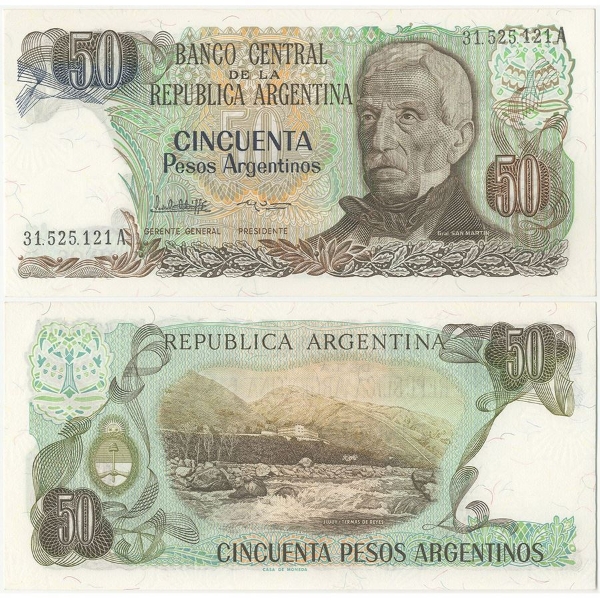
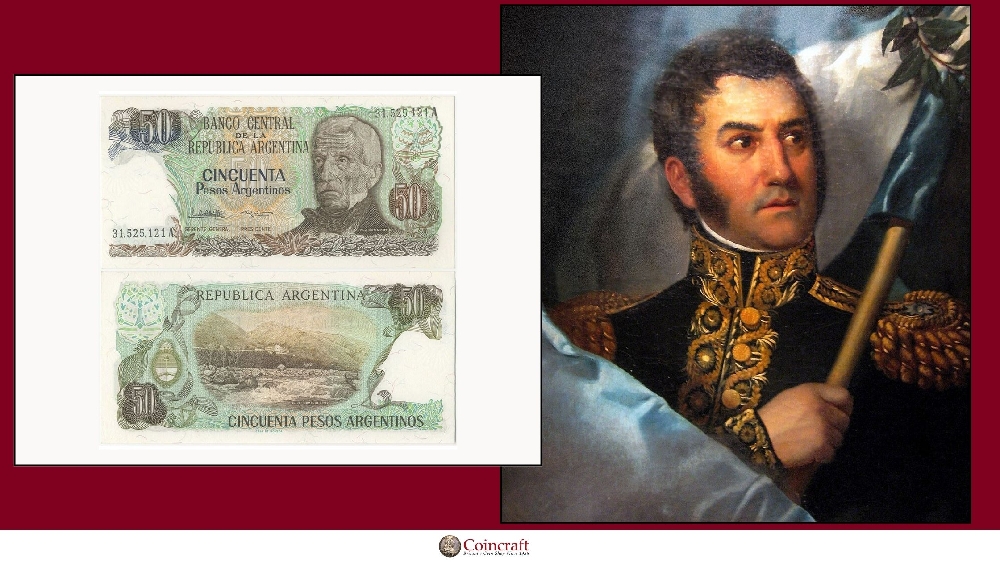
Picture Source of General José de San Martín: Wikipedia
The Liberator of the South: The Life and Legacy of José de San Martín
When we think of the great liberators of the Americas, names like George Washington or Simón Bolívar often jump to mind. But tucked into the heart of South American history is a man whose tactical brilliance and humility were so profound that he is known simply as El Libertador in Argentina. José de San Martín was the mastermind behind some of the most daring military maneuvers in history, yet he died in quiet exile, far from the nations he helped birth.
Key Takeaways
Tactical Genius: He executed the "Crossing of the Andes," a military feat often compared to Hannibal’s crossing of the Alps.
Continental Vision: He realized that for Argentina to be truly free, the Spanish strongholds in Chile and Peru also had to be dismantled.
Selfless Leadership: After liberating Peru, he voluntarily stepped down and handed his army to Simón Bolívar to avoid a civil war between their factions.
Professionalism: He transformed rag-tag militias into the "Regiment of Mounted Grenadiers," one of the most disciplined units in the wars of independence.
From Spanish Officer to Revolutionary
Born in 1778 in Yapeyú (modern-day Argentina), San Martín moved to Spain at a young age. He wasn't born a rebel; in fact, he spent over twenty years serving in the Spanish Royal Army¹. He fought with distinction against the forces of Napoleon, earning his stripes in the Peninsular War. However, as the sparks of independence began to fly in his homeland, his loyalties shifted. In 1812, he resigned his commission in Spain and sailed for Buenos Aires to offer his services to the fledgling United Provinces of the Río de la Plata².
Building an Army from Scratch
Upon arrival, San Martín realized the revolutionary forces were disorganized. He didn't just want soldiers; he wanted professionals. He founded the Regiment of Mounted Grenadiers, instilling a strict code of conduct and European military tactics³. His first major victory at the Battle of San Lorenzo was brief, but it signaled that a new kind of leader had arrived.
The Impossible Feat: The Crossing of the Andes
San Martín knew that attacking the Spanish through the mountainous region of Upper Peru (Bolivia) was a suicide mission. Instead, he proposed a radical "Plan of the Continental Sabotage"⁴. He would cross the treacherous Andes Mountains, liberate Chile, and then launch a naval invasion of Peru—the heart of Spanish power in South America.
In January 1817, he led approximately 5,000 men, 10,000 mules, and 1,600 horses across the freezing peaks of the Andes. Many thought it was impossible. They suffered from altitude sickness and extreme cold, but they emerged on the other side to surprise the Royalists at the Battle of Chacabuco⁵. This victory, followed by the decisive Battle of Maipú in 1818, effectively ended Spanish rule in Chile.
The Liberation of Peru and the Great Mystery
San Martín didn't stop there. He secured a fleet and sailed north, declaring the independence of Peru in Lima on July 28, 1821⁶. He was named the "Protector of Peru," but he was a soldier, not a politician.
The most famous turning point in his life occurred in 1822 at the Guayaquil Conference. He met with Simón Bolívar, the liberator of the North. We don't know exactly what they said behind closed doors—there are no transcripts—but we know the result: San Martín realized that their two egos and two armies could not coexist without conflict⁷. In an act of unparalleled humility, he resigned his command, left Peru, and eventually went into self-imposed exile in France, leaving Bolívar to finish the final campaigns.
Final Years and Legacy
San Martín spent his remaining years in Europe, largely ignored by the governments he helped create, until his death in 1850. It wasn't until decades later that his body was returned to Buenos Aires and he was recognized as the "Father of the Fatherland"⁸. Today, his legacy isn't just one of military victory, but of the moral integrity to put the independence of a continent above personal power.
FAQs
Why is José de San Martín called the 'Saint of the Sword'? This nickname refers to his combined military prowess and his high moral character. Unlike many leaders of his time, he refused to take political power for himself and lived a life of relative poverty in exile.
What was the 'Logia Lautaro'? This was a secret society founded by San Martín and other revolutionaries. Its primary goal was to coordinate the independence of Latin America and establish democratic, liberal governments based on Enlightenment principles⁹.
References
Lynch, J. (2009) San Martin: Argentine Soldier, American Hero. New Haven: Yale University Press. Link
Galasso, N. (2000) Seamos libres y lo demás no importa nada: vida de San Martín. Buenos Aires: Colihue.
Metford, J.C.J. (1950) San Martín the Liberator. London: Blackwell.
Pasquali, P. (1999) San Martín: La fuerza de la misión y la soledad de la gloria. Buenos Aires: Planeta.
Robertson, W.S. (1918) Rise of the Spanish-American Republics as Illustrated in the Lives of Their Liberators. New York: D. Appleton and Company. Link
Abad de Santillán, D. (1965) Historia Argentina. Buenos Aires: TEA (Tipográfica Editora Argentina).
Bushnell, D. and Macaulay, N. (1994) The Emergence of Latin America in the Nineteenth Century. Oxford: Oxford University Press.
Mitre, B. (1887) Historia de San Martín y de la emancipación sudamericana. Buenos Aires: La Nación. Link
Pigna, F. (2004) Los mitos de la historia argentina. Buenos Aires: Norma.