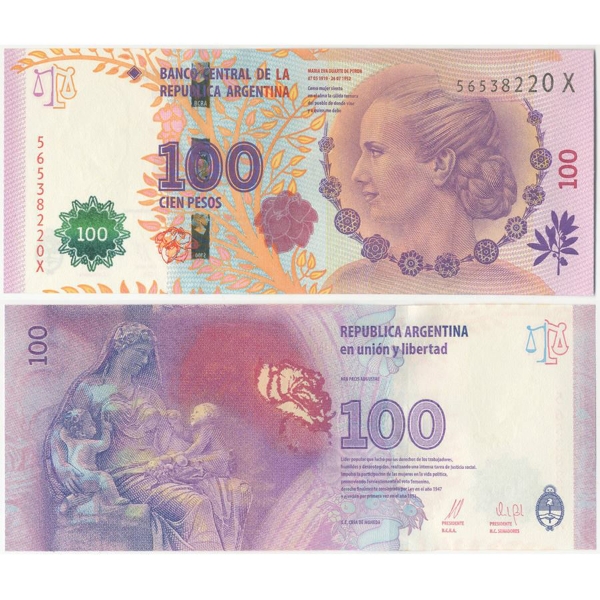
Picture Source of María Eva Duarte de Perón or simply Eva Peron: Wikipedia

The Unfiltered Story of Eva Perón: Argentina’s Iconic "Evita"
At exactly 8:25 PM on July 26, 1952, Argentina ground to a halt. The official radio broadcaster’s voice trembled as he announced that María Eva Duarte de Perón, the "Spiritual Leader of the Nation," had passed away at the tender age of 33¹. What followed was a spectacle of grief so intense, so theatrical, and so prolonged that it resembled a religious event more than a national funeral. For weeks, millions of working-class Argentines queued in freezing rain just to kiss her glass coffin.
Who was this woman who commanded such frantic devotion, yet simultaneously provoked deep, venomous hatred from her country's elite? To some, she was "Evita," a living saint who built hospitals and fed the starving. To others, she was a calculating, power-hungry demagogue who helped steer Argentina toward an authoritarian dictatorship. Stripping away both the saintly myth and the Broadway caricatures, her real story is a masterclass in survival, ambition, and the raw power of connection.
Key Takeaways
Poverty to Power: Born illegitimate and raised in grinding poverty, Eva moved to Buenos Aires at age 15 and clawed her way up to become one of Argentina’s most successful radio actresses before entering politics².
The Voice of the "Shirtless Ones": She became the ultimate champion of the descamisados (the working-class poor), bypassing traditional charity systems to build massive social infrastructure³.
A Feminist Force (On Her Own Terms): Eva was the driving force behind the passage of Argentina’s women’s suffrage law in 1947 and founded the Female Peronist Party⁴.
A Polarizing, Eternal Legacy: Even death could not quiet her story. Her embalmed body was stolen by a terrified military regime in 1955 and hidden in Europe for 16 years to prevent her from remaining a rallying symbol⁵.
From the Dirt to the Airwaves: Early Life and Ambition
Eva Perón was not born into privilege. In fact, she began her life on the absolute margins of Argentine society. Born on May 7, 1919, in the dusty, rural village of Los Toldos, she was the youngest of five illegitimate children born to Juana Ibarguren and Juan Duarte, a wealthy landowner⁶. When Duarte died, his legal family barred Juana and her children from attending the funeral—a public humiliation that burned a deep resentment toward the wealthy classes into young Eva's psyche.
Grinding poverty followed the family to the town of Junín. Seeking an escape from her bleak prospects, 15-year-old Eva packed a single suitcase in 1934 and headed to the bustling metropolis of Buenos Aires with a singular, desperate goal: to become an actress⁷.
For years, she lived in cheap boarding houses, surviving on coffee and bread while taking minor, forgettable roles in traveling theater companies. Her break finally came in the early 1940s, not on the silver screen, but through the radio waves. Her voice, husky and full of emotion, made her a household name in popular radio-soap operas. By 1943, she was co-owner of a radio company, earning a handsome salary, and leading the newly formed Argentine Radio Syndicate⁸. She had survived the city; now, she was ready to conquer it.
A Meeting of Minds and Movements: Entering Politics
In January 1944, a catastrophic earthquake leveled the Argentine city of San Juan, killing thousands. Colonel Juan Domingo Perón, a rising star in the military government who headed the Ministry of Labor, organized a massive charity gala at Buenos Aires' Luna Park stadium to raise relief funds. It was there that the 24-year-old radio actress met the 48-year-old widower and colonel⁹.
The chemistry—both romantic and political—was instantaneous. Eva recognized in Juan a man who could change the country; Juan saw in Eva an incredibly charismatic communicator who could connect with the masses in a way no traditional military officer ever could.
Their partnership faced its first major test in October 1945. Threatened by Juan Perón's growing popularity with the working class, military rivals arrested him. In response, a massive, spontaneous wave of hundreds of thousands of workers—lovingly dubbed the descamisados ("the shirtless ones")—marched on the Plaza de Mayo on October 17, demanding his release¹⁰. The military backed down, Juan was freed, and he and Eva married in a private ceremony just days later. When Juan ran for the presidency in 1946, Eva did something unprecedented for an Argentine political wife: she campaigned actively at his side, using her radio show to speak directly to the working poor. Juan won in a landslide¹¹.
Reinventing the First Lady: Power Without a Portfolio
Once inside the presidential palace (the Casa Rosada), Eva utterly redefined what it meant to be a First Lady. She had no official government title, yet she effectively ran the ministries of health and labor.
When the traditional, high-society charity organization—the Sociedad de Beneficencia—refused to elect Eva as their honorary chair because of her illegitimate background and past acting career, she simply bypassed them. She systematically stripped their government subsidies and founded her own organization: the Eva Perón Foundation in 1948¹².
This was no mere vanity project. Funded by "voluntary" contributions from trade unions, corporate taxes, and national lotteries, the Foundation built:
Over 1,000 schools across Argentina.
World-class hospitals and specialized clinics.
Shelters for single mothers, orphanages, and retirement homes.
Recreational facilities for working-class children.
Eva spent up to 18 hours a day in her office, personally handing out cash, sewing machines, toys, and medical supplies to the thousands of poor people who lined up outside her door. She hugged the sick, kissed lepers, and listened to their grievances¹³. For the descamisados, she was no longer just a politician’s wife; she was a living savior.
However, her critics saw a darker side. They pointed out that the Foundation’s accounting was completely opaque, that businesses were coerced into donating under threat of being shut down by government inspectors, and that anyone who opposed her faced swift political exile or censorship.
Suffrage, the Rainbow Tour, and the Feminist Paradox
In 1947, Eva embarked on a high-profile "Rainbow Tour" of Europe, visiting Spain, France, Italy, and the Vatican¹⁴. Decked out in jaw-dropping Christian Dior gowns and priceless jewels, she was a diplomatic sensation, shoring up international support for her husband’s regime while presenting herself as the glamorous face of a modern Argentina.
Back home, she turned her formidable energy toward women's rights. While Eva explicitly rejected traditional feminism—arguing that a woman's ultimate fulfillment came from motherhood and supporting her husband—she was the single most powerful force behind the passage of Law 13,010, which granted Argentine women the right to vote in 1947¹⁵.
To ensure this new voting bloc supported the regime, she founded the Female Peronist Party in 1949. By organizing women at the neighborhood level across the entire country, she mobilized half a million women into the political sphere for the first time. In the 1951 presidential election, women voted for the first time in Argentina’s history, delivering a massive 63% majority to Juan Perón¹⁶.
The Stolen Vice Presidency and a Tragic End
By 1951, Eva Perón was at the absolute peak of her power. The CGT (the national labor union coalition) nominated her to run as Vice President alongside her husband for the upcoming election. The thought of an illegitimate, former actress holding the constitutional successor role to the presidency sent shockwaves of fury through the Argentine military and the traditional wealthy elite.
As the political pressure mounted, Eva’s body was harboring a silent, deadly enemy. She was diagnosed with advanced cervical cancer. Pale, emaciated, and weighing barely 80 pounds, she stood before a crowd of over two million adoring supporters on August 22, 1951, during the famous "Cabildo Abierto"¹⁷. The crowd begged her to accept the nomination, but just nine days later, in a heartbreaking national radio broadcast, she officially withdrew her candidacy.
She passed away on July 26, 1952. Her death plunged Argentina into a state of collective hysteria.
The Posthumous Odyssey: A Body in Exile
Even in death, Eva Perón could not rest. Her body was meticulously embalmed by Dr. Pedro Ara to preserve her lifelike appearance indefinitely. But in 1955, a violent military coup overthrew Juan Perón.
Terrified that her corpse would become a rallying symbol for a working-class counter-revolution, the new military dictatorship stole her body from the CGT headquarters. For years, the corpse was moved secretly from place to place within Buenos Aires. Eventually, in 1957, they smuggled it to Italy under a fake name, burying her in a modest grave in Milan under the pseudonym "María Maggi"¹⁸.
It wasn't until 1971 that the military finally returned her remains to Juan Perón, who was living in exile in Madrid. When Juan returned to Argentina and was re-elected president in 1973, Eva's body eventually followed. Today, she lies buried deep underground in a secure, steel-reinforced family crypt in the Recoleta Cemetery in Buenos Aires—ironically, the resting place of the very wealthy elite she spent her entire life fighting¹⁹.
Frequently Asked Questions
Why was she called "Evita"?
"Evita" is a Spanish diminutive meaning "Little Eva." While she used "Eva Perón" for official state business and high-society events, she encouraged the working class and the poor to call her "Evita." It symbolized her approachable, maternal, and intimate connection with the ordinary people of Argentina.
Did Eva Perón ever meet Che Guevara?
Despite their famous interactions in Andrew Lloyd Webber's musical Evita, there is no historical evidence that Eva Perón and Che Guevara ever met. Guevara was a young medical student traveling South America during the peak of Perón’s power, and their paths never crossed. The musical uses Che as a theatrical narrator to represent her ideological opposition.
What caused Eva Perón's death?
Eva Perón died of cervical cancer. Ironically, she was the first Argentine to undergo chemotherapy (which was administered secretly), but the treatment was unsuccessful because the cancer was detected too late.
References
Archives of Women's Political Communication. (n.d.). María Eva Duarte de Perón. Iowa State University. Available at: https://awpc.cattcenter.iastate.edu/directory/eva-peron [Accessed 19 May 2026].
Britannica Kids. (n.d.). Eva Perón. Students | Britannica Kids | Homework Help. Available at: https://kids.britannica.com/students/article/Eva-Per%C3%B3n/312942 [Accessed 19 May 2026].
Wikipedia. (2026). Eva Perón. Available at: https://en.wikipedia.org/wiki/Eva_Per%C3%B3n [Accessed 19 May 2026].
Encyclopaedia Britannica. (2026). Eva Perón: Biography, Musical, Death, Funeral, & Facts. Available at: https://www.britannica.com/biography/Eva-Peron [Accessed 19 May 2026].
EBSCO Research Starters. (2025). Eva Perón | History | Research Starters. Available at: https://www.ebsco.com/research-starters/history/eva-peron [Accessed 19 May 2026].
Wikipedia. (2026). Eva Perón - Early Life. Available at: https://en.wikipedia.org/wiki/Eva_Per%C3%B3n#Early_life [Accessed 19 May 2026].
Britannica Kids. (n.d.). Eva Perón - Early Life. Available at: https://kids.britannica.com/kids/article/Eva-Per%C3%B3n/631714 [Accessed 19 May 2026].
Archives of Women's Political Communication. (n.d.). María Eva Duarte de Perón - Acting Career. Available at: https://awpc.cattcenter.iastate.edu/directory/eva-peron [Accessed 19 May 2026].
EBSCO Research Starters. (2025). Eva Perón - Early relationship with Juan Perón. Available at: https://www.ebsco.com/research-starters/history/eva-peron [Accessed 19 May 2026].
Wikipedia. (2026). Eva Perón - Rise to Power. Available at: https://en.wikipedia.org/wiki/Eva_Per%C3%B3n#Rise_to_power [Accessed 19 May 2026].
Encyclopaedia Britannica. (2026). Eva Perón - Political Rise. Available at: https://www.britannica.com/biography/Eva-Peron [Accessed 19 May 2026].
Britannica Kids. (n.d.). Eva Perón - Foundation. Available at: https://kids.britannica.com/students/article/Eva-Per%C3%B3n/312942 [Accessed 19 May 2026].
EBSCO Research Starters. (2025). Eva Perón - Charitable Activities. Available at: https://www.ebsco.com/research-starters/history/eva-peron [Accessed 19 May 2026].
Wikipedia. (2026). Eva Perón - European Tour. Available at: https://en.wikipedia.org/wiki/Eva_Per%C3%B3n#European_tour [Accessed 19 May 2026].
Wikipedia. (2026). Eva Perón - Female Peronist Party and women's suffrage. Available at: https://en.wikipedia.org/wiki/Eva_Per%C3%B3n#Female_Peronist_Party_and_women's_suffrage [Accessed 19 May 2026].
Archives of Women's Political Communication. (n.d.). María Eva Duarte de Perón - Women's Suffrage. Available at: https://awpc.cattcenter.iastate.edu/directory/eva-peron [Accessed 19 May 2026].
Wikipedia. (2026). Eva Perón - 1952 presidential election. Available at: https://en.wikipedia.org/wiki/Eva_Per%C3%B3n#1952_presidential_election [Accessed 19 May 2026].
Encyclopaedia Britannica. (2026). Eva Perón - Death and Aftermath. Available at: https://www.britannica.com/biography/Eva-Peron [Accessed 19 May 2026].
Britannica Kids. (n.d.). Eva Perón - Burial. Available at: https://kids.britannica.com/kids/article/Eva-Per%C3%B3n/631714 [Accessed 19 May 2026].