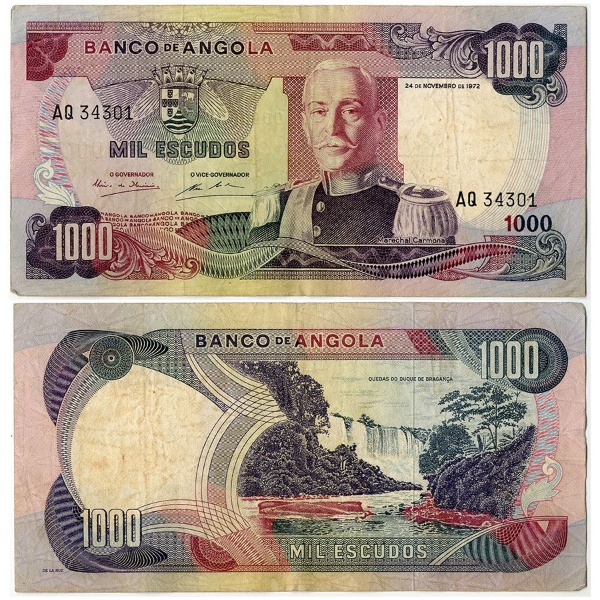
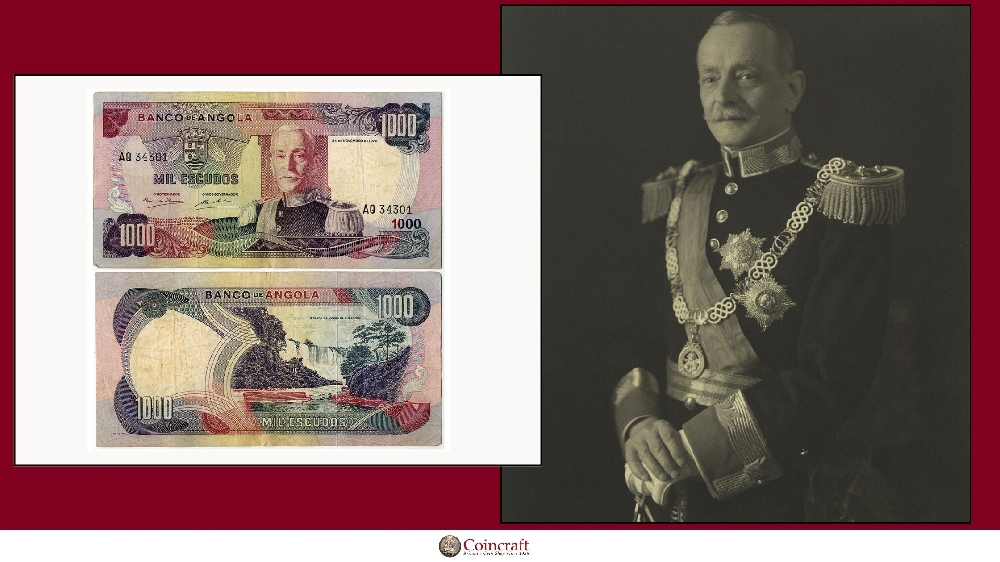
Picture Source of Marechal Carmona: Wikipedia
The Man Behind the Uniform: A Look at Marechal Carmona
When we look back at the history of 20th-century Portugal, one name often sits quietly in the shadow of the dictator António de Oliveira Salazar. However, António Óscar de Fragoso Carmona—better known as Marechal Carmona—was the foundational pillar upon which the Portuguese Estado Novo (New State) was built. Serving as the President of Portugal for an astounding 25 years, he provided the military legitimacy and stability that allowed the regime to endure for decades. Let’s dive into the life of the soldier who became the longest-serving president in Portuguese history.
Key Takeaways
Architect of Stability: Carmona was a central figure in the May 28, 1926, military coup that ended the unstable First Republic.
Longest Tenure: He served as the President of Portugal from 1926 until his death in 1951, providing a sense of continuity for the nation¹.
The Salazar Partnership: While Carmona held the title of President, he famously appointed Salazar as Minister of Finance and later Prime Minister, effectively delegating executive power while retaining the prestige of the military².
National Symbol: He was promoted to the rank of Marshal (Marechal) in 1947, a title reflecting his status as a national patriarch rather than just a politician³.
From the Barracks to the Palace
António Óscar Carmona was born in Lisbon in 1869 into a family with deep military roots. Naturally, he followed the path of his ancestors, graduating from the Military Academy and rising steadily through the ranks. Unlike many of his contemporaries who were embroiled in the chaotic political bickering of the First Republic, Carmona was seen as a professional soldier first. He wasn't a loud revolutionary; he was a man of order and discipline⁴.
By the early 1920s, Portugal was in a state of constant flux—governments were falling almost monthly, and the economy was in tatters. This instability paved the way for the military to step in. In 1926, Carmona played a decisive role in the coup that swept away the Republic, and by July of that year, he had assumed the role of Prime Minister and soon after, the Presidency⁵.
The Rise of the Estado Novo
One of Carmona’s most significant acts was recognizing that the military alone couldn't fix Portugal's deep financial woes. In 1928, he turned to a quiet, austere economics professor named António de Oliveira Salazar. Carmona gave Salazar wide-ranging powers over the national budget, a move that eventually led to the creation of the Estado Novo⁶.
Throughout the 1930s and 40s, a unique dynamic emerged: Carmona was the "Chief of State," the respected military figurehead who unified the armed forces, while Salazar was the "Head of Government," the intellectual driving the policy. Even though Salazar held the real power, he technically served at the pleasure of President Carmona. It was a partnership of convenience and mutual necessity that kept the regime afloat through the challenges of World War II⁷.
A Legacy of "Order"
To his supporters, Carmona was the man who saved Portugal from the "anarchy" of the early 20th century. To his critics, he was the military shield that protected a repressive dictatorship. Regardless of the viewpoint, his influence was undeniable. He was elected President four times (often running unopposed), and his death in 1951 marked the end of an era⁸.
Even in his later years, Carmona remained a beloved figure within the military. His promotion to Marshal in 1947 was less about new duties and more about honoring the man who had become a living symbol of the Portuguese state. When he passed away in April 1951, he was given a state funeral of unprecedented proportions, reflecting his status as the "Grandfather of the Nation"⁹.
Frequently Asked Questions
1. Was Marechal Carmona more powerful than Salazar? Technically, as President, Carmona had the power to dismiss Salazar. However, in practice, Salazar held the executive and legislative reins. Carmona focused on maintaining the loyalty of the military, which was the regime's backbone¹⁰.
2. How did Carmona view World War II? Carmona, alongside Salazar, navigated a complex path of neutrality. He was instrumental in ensuring Portugal maintained its historic alliance with Britain while simultaneously avoiding a German invasion or a domestic uprising¹¹.
3. Where is Marechal Carmona buried? His remains are held in the National Pantheon (Panteão Nacional) in Lisbon, an honor reserved for the most significant figures in Portuguese history¹².
References
Britannica, T. Editors of Encyclopaedia (2023). António Óscar de Fragoso Carmona. [online] Encyclopedia Britannica. Available at: https://www.britannica.com/biography/Antonio-Oscar-de-Fragoso-Carmona.
Kay, H. (1970). Salazar and Modern Portugal. London: Eyre & Spottiswoode.
Wheeler, D.L. and Opello, W.C. (2010). Historical Dictionary of Portugal. 3rd ed. Lanham: Scarecrow Press.
Meneses, F.R. de (2009). Salazar: A Political Biography. Enigma Books.
Gallagher, T. (2020). Salazar: The Dictator Who Refused to Die. London: Hurst & Company.
Oliveira, C.R. (2015). Presidents of the Portuguese Republic. Lisbon: Museum of the Presidency.
Egerton, F.C.C. (1943). Salazar, Rebuilder of Portugal. London: Hodder & Stoughton.
Payne, S.G. (1973). A History of Spain and Portugal. Vol. 2. Madison: University of Wisconsin Press.
Ribeiro, M. (2004). The Portuguese Military and the State. Journal of Contemporary History.
Wiarda, H.J. (1977). Corporatism and Development: The Portuguese Experience. Amherst: University of Massachusetts Press.
Lochery, N. (2011). Lisbon: War in the Shadows of the City of Light, 1939-1945. PublicAffairs.
Panteão Nacional (2022). Honorary Tombs: Oscar Carmona. [online] Available at: http://www.panteaonacional.gov.pt/.