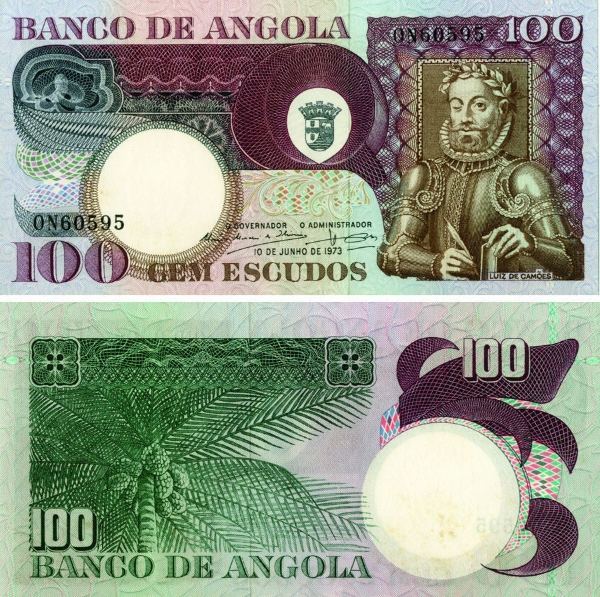
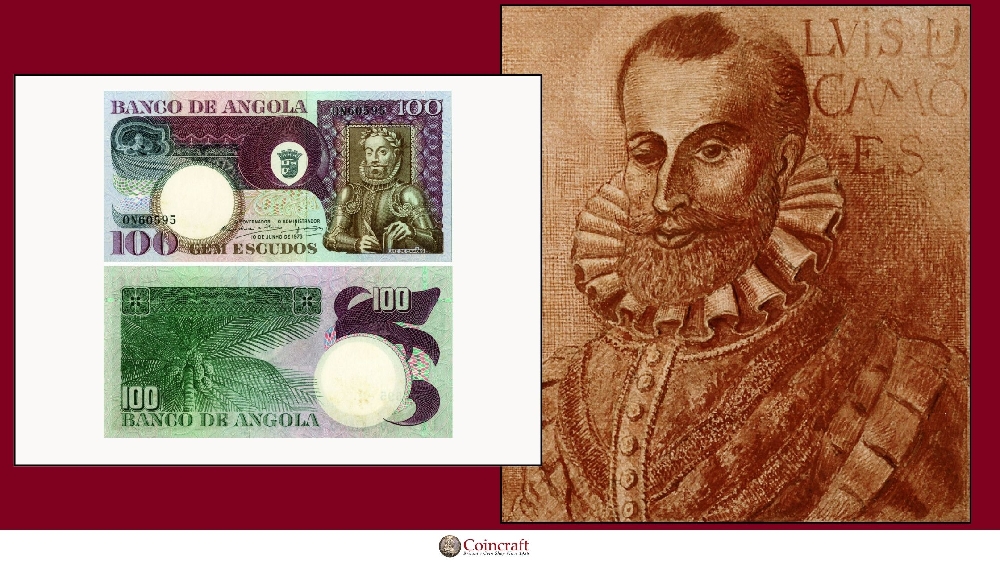
Picture Source of Luis de Camoes: Wikipedia
Luis de Camões: The One-Eyed Bard Who Defined a Nation
If you’ve ever strolled through the streets of Lisbon, you’ve likely felt the lingering spirit of Luis de Camões. Often regarded as Portugal's greatest poet—their version of Shakespeare or Dante—Camões wasn't just a man of words; he was a man of intense action. His life was a whirlwind of forbidden romances, bloody battles, and exotic travels that spanned from the Atlantic to the shores of China. He lived the very "Age of Discovery" that he immortalized in his writing, proving that sometimes, the pen and the sword are held by the same hand.
Key Takeaways
National Icon: He is the author of Os Lusíadas (The Lusiads), the national epic of Portugal which celebrates the country's maritime explorations[1].
Soldier-Poet: He lost his right eye while fighting against the Moors in Ceuta, North Africa[2].
Survivor: Legend has it that he survived a shipwreck in the Mekong Delta by swimming with one arm while holding his manuscript above the water with the other[3].
Linguistic Legacy: His influence was so profound that Portuguese is often referred to as "the language of Camões."
Tragic End: Despite his genius, he died in poverty in Lisbon just as Portugal was losing its independence to Spain[4].
The Early Years: A Restless Spirit
Luis de Camões was likely born around 1524, though the exact date and location remain a subject of debate among historians, with Lisbon and Coimbra being the top contenders[1]. He came from a family of minor nobility, which allowed him to receive a solid classical education, likely at the University of Coimbra. It was here that he mastered Latin and immersed himself in the myths of Greece and Rome—knowledge that would later provide the backbone for his epic poetry.
However, young Luis wasn't exactly the "stay-at-home student" type. His early life in Lisbon was marked by a reputation for being a bit of a swashbuckler. He was known for his sharp wit and even sharper temper, frequently getting into brawls and pursuing scandalous love affairs with ladies of the court[2].
A Life of Conflict and Exile
Camões’ life took a hard turn toward the military when his lifestyle led to a period of exile from the royal court. He joined the Portuguese military and served in Ceuta (modern-day Morocco). It was during a skirmish there that a stray fragment cost him his right eye[2]. This physical mark became a defining feature of his portraits for centuries to come.
Upon returning to Lisbon, his luck didn't improve. After wounding a palace official in a street fight during a religious festival, he was imprisoned. He was only released on the condition that he serve the crown in the East Indies[3]. In 1553, he set sail for Goa, beginning an odyssey that would last nearly two decades.
The Mekong Shipwreck and the Masterpiece
His years in the East were a mix of administrative duties, further military service, and heavy writing. While stationed in Macau, he began composing his magnum opus, Os Lusíadas. However, trouble followed him there too; he was accused of financial irregularities and ordered back to Goa.
On the return voyage, his ship was wrecked at the mouth of the Mekong River[3]. The story goes that he managed to swim to shore, losing all his possessions but keeping the damp manuscript of his epic poem held high above the waves. This moment has become one of the most famous legends in literary history, symbolizing the triumph of art over catastrophe.
The Return to Lisbon and "The Lusiads"
Camões finally made it back to Lisbon in 1570, weary and penniless. In 1572, he published Os Lusíadas. The poem is a brilliant fusion of history and mythology, centering on Vasco da Gama’s first voyage to India but expanding to tell the entire history of the Portuguese people[1]. King Sebastian was impressed enough to grant the poet a small pension, but it was hardly enough to keep him out of poverty.
The Final Curtain
The end of Camões’ life mirrored the decline of the Portuguese Empire he so loved. He died on June 10, 1580, in Lisbon, succumbing to the plague[4]. He was buried in a mass grave, though his remains were later symbolically moved to the Jerónimos Monastery. Coincidentally, he died just as Portugal fell under Spanish rule, leading him to famously remark on his deathbed that he was happy to die not just in his country, but with it.
FAQs
Why is Luis de Camões compared to Shakespeare?
Like Shakespeare, Camões refined and elevated his national language. His work, particularly The Lusiads, provided a shared cultural identity for Portuguese speakers across the globe[1].
Did he actually swim with his manuscript?
While historical records of the shipwreck exist, the detail about him swimming with the manuscript in one hand is considered by many to be a romanticized legend, though it remains a central part of his national mythos[3].
What is "Camões Day"?
Portugal’s National Day is celebrated on June 10th, the anniversary of his death, honoring his contribution to the Portuguese language and culture.
References
Britannica (2023). Luís de Camões | Portuguese Poet. [Online] Available at: https://www.britannica.com/biography/Luis-vaz-de-Camoes
UNESCO (2024). The Lusiads by Luís de Camões. [Online] Available at: https://www.unesco.org/en/memory-world/lusiads
Bowra, C.M. (1945). From Virgil to Milton. London: Macmillan & Co.
Portugal.com (2022). Luis de Camões: Portugal’s Greatest Poet. [Online] Available at: https://www.portugal.com/history-and-culture/luis-de-camoes-portugals-greatest-poet/