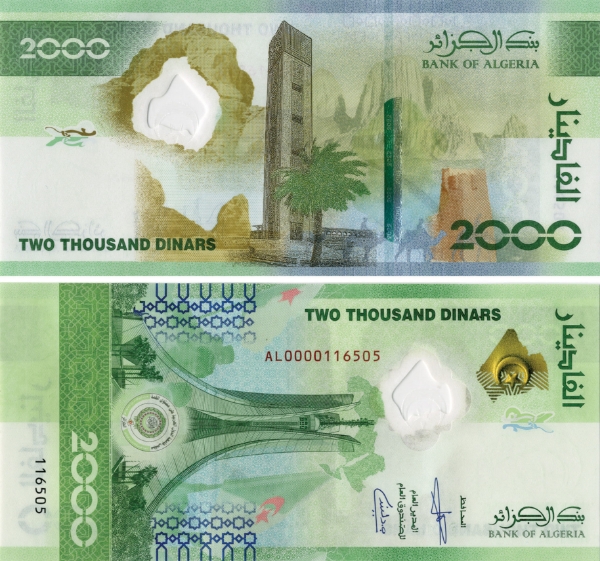
 - WAL1750.jpg)
Picture Source of Great Mosque of Algiers (Djamaa el Djazaïr): Wikipedia
Reaching for the Heavens: A Journey to the Great Mosque of Algiers (Djamaa el Djazaïr)
Imagine standing on the edge of the Mediterranean Sea, the salty breeze on your face, looking up—way, way up—at a gleaming white tower that seems to pierce the very clouds. Welcome to the Bay of Algiers, the home of the colossal Djamaa el Djazaïr, or the Great Mosque of Algiers.
It’s not just a place of worship; it’s a statement. As a biography blogger who loves diving into the stories behind the stone, I was absolutely floored when I started digging into the details of this modern marvel. Whether you're an architecture nerd, a history buff, or just someone who loves travel trivia, this mosque has a story that demands to be heard. It is a symbol of Algeria’s resilience, faith, and ambition, blending centuries of Islamic tradition with futuristic engineering.
Key Takeaways
Before we dive deep into the history and hallways, here are the headline-grabbing facts you need to know:
World’s Tallest Minaret: Standing at a staggering 265 meters (870 feet), it dwarfs every other minaret on the planet.^1
Massive Capacity: The entire complex can accommodate up to 120,000 worshippers, making it the largest mosque in Africa and the third-largest in the world.^2
Seismic Super-Structure: Located in a seismically active zone, it sits on a sophisticated isolation system designed to withstand a magnitude 9.0 earthquake.^3
Cultural Hub: It’s not just for prayer; the complex includes a library with a million books, a museum, and a research center.^4
A Long Journey: Commissioned by former President Abdelaziz Bouteflika, it took over a decade of construction, delays, and controversy before its official inauguration in 2024.^5
A Vision of Grandeur
Every great building starts with a dream, and for the Great Mosque of Algiers, that dream was ambitious, to say the least. The project was the brainchild of former President Abdelaziz Bouteflika, who wanted to create a national monument that would outshine everything else in the region—quite literally.
Construction officially kicked off in August 2012, but this wasn't a quick build. It was a massive international collaboration. The design came from the brilliant minds at KSP Jürgen Engel Architekten (a German firm), while the heavy lifting was done by the China State Construction Engineering Corporation (CSCEC).^6 It’s a fascinating blend of German engineering precision, Chinese construction might, and Algerian soul.
Although construction was technically wrapped up around 2019, the doors didn't swing open immediately for everyone. It was a soft opening, followed by a grand, official inauguration by President Abdelmadjid Tebboune in February 2024.^5 It felt like the whole world was watching to see if this "mega-mosque" would live up to the hype. Spoiler alert: it did.
An Architectural Marvel
Walking into the prayer hall is like stepping into a forest of light and stone. The sheer scale is hard to wrap your head around. The hall covers 22,000 square meters and is supported by 618 octagonal columns.^1
The Devil is in the Details
It’s not just big; it’s beautiful. The architects didn't skimp on the artistry.
Calligraphy: There are 6 kilometers of Quranic calligraphy laser-engraved throughout the building. Yes, you read that right—kilometers!^1
The Chandelier: Hanging from the center is a jaw-dropping chandelier. We're talking about something that weighs nearly 10 tons, glitters with over 300,000 Swarovski crystals, and is plated in 24-karat gold.^7 It’s a centerpiece that demands attention.
The Minaret: Touching the Sky
If the prayer hall is the heart of the mosque, the minaret is its spirit. At 265 meters, it is officially the tallest building in Africa.^1 But it’s not just a hollow tower. This "lighthouse" comprises 37 floors and includes an observation deck at the top that offers a breathtaking panoramic view of the turquoise Mediterranean and the sprawling city of Algiers. It also houses a museum dedicated to Algerian history, turning the climb into a journey through time.^4
Engineering Against the Elements
Now, here is the part that really impressed me. Algiers is known for its seismic activity, which makes building a skyscraper-sized tower a risky business.
To solve this, engineers devised a brilliant solution. The mosque floats on a system of seismic isolators—specifically, a combination of sliding bearings and hydraulic dampers.^3 Think of it as a giant shock absorber system for a building. If the ground shakes, the mosque can slide and shift independently, protecting the structure from earthquakes as powerful as a magnitude 9.0. It’s a masterpiece of modern safety engineering hidden beneath the marble and prayer rugs.
Significance and Controversy
No biography is complete without a little drama, right? The Great Mosque wasn't built without its critics.
The Cost: With a price tag estimated between $900 million and $1.5 billion, many argued that the money could have been better spent on hospitals or schools, especially during tough economic times.^8
The Location: Critics also worried about the location, citing the seismic risks, though the engineers clearly took that challenge personally and crushed it.
Despite the naysayers, today the mosque stands as a source of immense pride. It’s a cultural beacon, housing a research center and a library ready to hold a million books, signaling a return to the golden age of Islamic scholarship.^1
FAQs
1. Is the Great Mosque of Algiers the largest in the world? Not quite! It is the third-largest in the world by area, sitting behind the Great Mosque of Mecca and the Prophet's Mosque in Medina. However, it is the largest in Africa.^2
2. Can tourists visit the mosque? Yes! While the main prayer hall is a sacred space for worship, the complex is designed as a cultural destination. Visitors can explore the grounds, the library, and the museum in the minaret. It’s becoming a major draw for international tourism.^5
3. Why is the minaret so tall? It was designed to be a landmark visible from all over Algiers, serving as a symbolic "lighthouse" for the faith. At 265 meters, it also serves a functional purpose, housing a museum and observation decks.^4
References
Wikipedia (2025). Djamaa el Djazaïr. Available at: en.wikipedia.org/wiki/Djamaa_el_Djazaïr [Accessed 5 Feb. 2026].
Global Construction Review (2024). 16 years in the making, Algeria’s giant mosque officially opens. Available at: globalconstructionreview.com [Accessed 5 Feb. 2026].
Scribd (n.d.). Seismic Isolation of Djamaa El Djazir Mosque in Algiers. Available at: scribd.com [Accessed 5 Feb. 2026].
Mosqpedia (n.d.). Great Mosque of Algiers (Djamaa El Djazaïr). Available at: mosqpedia.org [Accessed 5 Feb. 2026].
Al-Monitor (2024). What we know about Algeria’s mega mosque, the largest in Africa. Available at: al-monitor.com [Accessed 5 Feb. 2026].
Heinen Doors (n.d.). Great Mosque of Algiers. Available at: heinen-doors.com [Accessed 5 Feb. 2026].
Vice Lighting (n.d.). Grand Mosque Algeria. Available at: vicelighting.com [Accessed 5 Feb. 2026].
VOA Africa (2024). Algeria Inaugurates Africa's Largest Mosque After Years of Political Delays. Available at: voaafrica.com [Accessed 5 Feb. 2026].