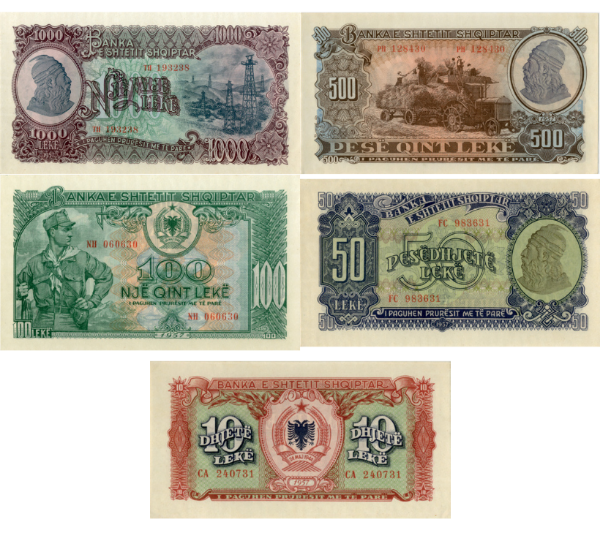
Picture Source of a Partizan Soldier: Wikipedia
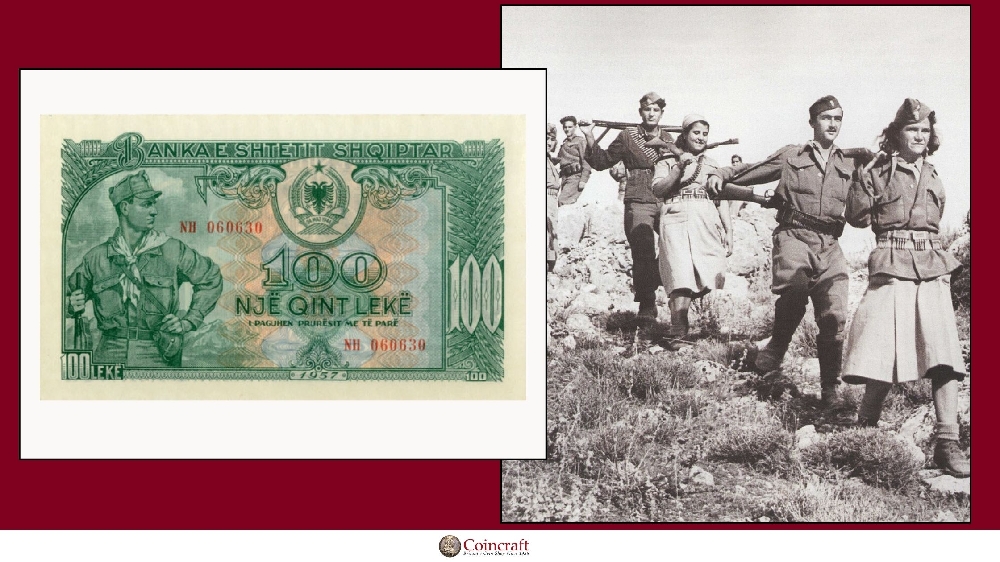
The Partisan Soldier: History's Shadow Warriors
When we imagine a soldier, we typically picture a uniformed figure marching in lockstep within a regimented army. But history is equally shaped by a different kind of fighter: the Partisan. Living in the grey zone between civilian and soldier, the Partisan is the "shadow warrior" of military history—a member of an irregular force fighting against a foreign occupier or an oppressive regime from within occupied territory. This article explores the biography of this unique combatant, whose weapons are not just rifles, but secrecy, sabotage, and the support of the local population.
Key Takeaways
Defined by Resistance: A Partisan is essentially a member of an irregular military force formed to oppose control of an area by a foreign power or an army of occupation.
The Power of "The Party": The term derives from the Latin pars (part) and initially referred to a commander of a detachment or "party" of light troops, before evolving to mean a fighter belonging to a specific resistance movement.
Asymmetric Tactics: Lacking the strength for open battle, Partisans rely on hit-and-run tactics, sabotage of supply lines, and intelligence gathering to harass superior regular armies.
A Legal Grey Zone: The status of Partisans under international law has historically been complex, balancing the right of people to resist invasion against the requirements of lawful combat (such as carrying arms openly).
The Origins: From "Small War" to National Defense
While the concept of irregular warfare is as old as conflict itself, the "Partisan" as we know him began to take shape in the 18th and 19th centuries. Initially, the term referred to leaders of small detachments sent to harass the enemy—a tactic known in French as petite guerre (small war).
However, the Partisan truly entered the public imagination during the Napoleonic Wars. In Spain, irregular fighters (giving rise to the word guerrilla) bled the French army dry. In Russia, Partisan rangers like the famous poet-soldier Denis Davydov led cavalry detachments that tormented Napoleon’s retreating Grand Armée in 1812. These were not just bandits; they were patriots fighting a "People’s War" alongside regular forces¹.
The American Civil War: The Partisan Ranger
In the United States, the Partisan took on a unique legal form during the Civil War with the passage of the Partisan Ranger Act by the Confederacy in 1862. Leaders like John S. Mosby (The "Gray Ghost") commanded units that operated behind Union lines.
Unlike the desperate resistance fighters of later eras, these Rangers were often uniformed soldiers who operated independently of the main army. They specialized in lightning raids on supply trains and communication outposts. However, their existence was controversial; regular army generals often viewed them as undisciplined, and the Union debated whether to treat them as prisoners of war or common criminals².
The World War II Archetype
The 20th Century, specifically World War II, cemented the modern image of the Partisan soldier. As Axis powers occupied vast swathes of Europe and Asia, resistance movements sprang up in nearly every conquered nation.
The Soviet Union: Soviet partisans formed a massive, state-directed force operating in the forests of Belarus and Ukraine, disrupting German rail lines and forcing the Wehrmacht to divert frontline troops to rear-area security³.
Yugoslavia: As previously noted, Tito’s Partisans evolved into a full conventional army, liberating their own country.
Western Europe: The French Maquis and Italian Partigiani utilized the complex terrain of mountains and rural farmlands to hide from Fascist patrols, aiding Allied intelligence and sabotaging infrastructure.
For the WWII Partisan, life was a desperate struggle for survival. They lived in forest bunkers or mountain caves, dependent on the local population for food. Discovery meant death, not just for the fighter, but often for their families and villages due to brutal reprisal policies⁴.
Tactics of the Invisible
The Partisan soldier does not fight to hold ground; they fight to make the ground ungovernable. Their primary utility is force multiplication. By blowing up a single railway bridge, a handful of Partisans can stop a division of tanks from reaching the front.
They rely on ambush and intelligence. Because they are often locals, Partisans know every cave, shortcut, and sympathizer in the region. They act as the eyes and ears for regular Allied forces, providing targeting data that a conventional army could never gather on its own.
The Legal Dilemma: Soldier or Criminal?
One of the most fascinating aspects of the Partisan biography is their legal status. For centuries, occupiers executed irregular fighters as "bandits" or "terrorists."
The Geneva Conventions eventually stepped in to provide a framework. To be considered a lawful combatant (and thus entitled to Prisoner of War status upon capture), a Partisan generally must:
Be commanded by a person responsible for their subordinates.
Have a fixed distinctive sign recognizable at a distance (like an armband).
Carry arms openly.
Conduct operations in accordance with the laws and customs of war.
Historically, meeting these criteria was difficult for undercover resistance fighters, leading to tragic consequences where captured Partisans were summarily executed without trial⁵.
Frequently Asked Questions (FAQs)
Q: What is the difference between a Partisan and a Guerrilla? A: The terms are often used interchangeably. However, "Guerrilla" (Spanish for "little war") is a broad term for irregular warfare tactics. "Partisan" often implies a specific political allegiance (a "party") or a connection to a national resistance movement supporting a regular army.
Q: Did Partisans wear uniforms? A: It varied. In the American Civil War, Partisan Rangers often wore uniforms. In WWII, Soviet and Yugoslav partisans wore makeshift uniforms with distinctive caps (like the Titovka). French and Italian resistance fighters often wore civilian clothes with armbands to identify themselves during combat operations.
Q: Are Partisans considered terrorists? A: Historically, occupying powers often label Partisans as terrorists to delegitimize them. The distinction usually lies in the target: Partisans primarily target military assets and occupying forces, whereas terrorists intentionally target civilians to spread fear.
References
Wikipedia. (n.d.). Partisan (military). Available at: https://en.wikipedia.org/wiki/Partisan_(military) [Accessed 8 Dec. 2025].
Wikipedia. (n.d.). Partisan Ranger Act. Available at: https://en.wikipedia.org/wiki/Partisan_Ranger_Act [Accessed 8 Dec. 2025].
Warfare History Network. (n.d.). Soviet Partisans: The Rag-Tag Scourge. Available at: https://warfarehistorynetwork.com [Accessed 8 Dec. 2025].
Encyclopedia.com. (n.d.). Partisan Warfare. Available at: https://www.encyclopedia.com [Accessed 8 Dec. 2025].
ICRC. (n.d.). Geneva Convention (III) on Prisoners of War, 1949. Available at: https://ihl-databases.icrc.org [Accessed 8 Dec. 2025].