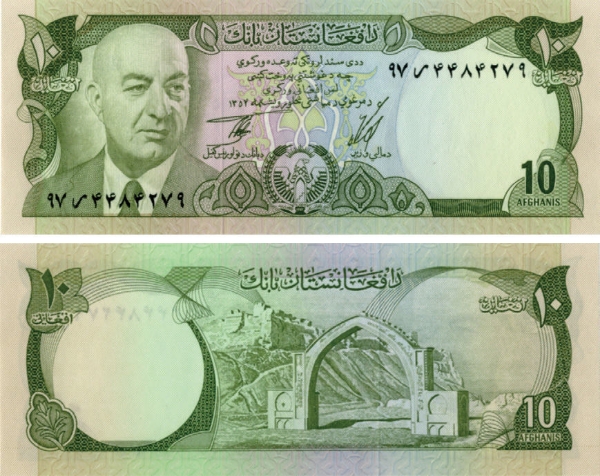
.jpg)
Picture Source of Mohammad Daud: Wikipedia
Introduction to Mohammad Daoud Khan
Mohammad Daoud Khan stands as a pivotal figure in the history of Afghanistan, remembered for his revolutionary leadership and vision for modernisation. As the first President of the Republic of Afghanistan, his influence extended beyond mere political manoeuvres. He was a man whose ideals and actions shaped the nation's trajectory during a transformative period. Through his decisive leadership, Daoud Khan left an indelible mark on Afghan society, politics, and its approach to modernisation.
His life and career are emblematic of a leader who sought to bring about significant changes while grappling with the complexities intrinsic to Afghan society. With a background steeped in both military and aristocratic traditions, Daoud Khan possessed a unique perspective on governance, which he utilised to implement reforms aimed at strengthening Afghanistan's socio-political fabric. His legacy is one that invites both admiration and scrutiny, as the outcomes of his policies continue to influence Afghan politics to this day.
Understanding Mohammad Daoud Khan's impact requires delving into the various facets of his life and leadership. From his early beginnings to his eventual role as a statesman, each phase of his career offers insights into the motivations and challenges he encountered. This exploration allows us to appreciate the nuances of his leadership style and the profound effects his policies had on the Afghan state.
Early Life and Education of Mohammad Daoud Khan
Daoud Khan was born into the prominent Musahiban family in Kabul on July 18, 1909. His upbringing was marked by privilege and the expectations that come with being part of an influential dynasty. This environment provided him with access to quality education and a broad understanding of Afghan political dynamics from an early age. His formative years were spent in a milieu that valued both tradition and modern thinking, which later influenced his approach to governance.
His education was a blend of military training and formal schooling, preparing him for a career in public service. Attending the Amaniya High School in Kabul, Daoud Khan developed a keen interest in political science and military strategy. His intellectual pursuits were complemented by practical military training, which he received at the Military Academy in Kabul. This dual focus on academics and military preparedness equipped him with a comprehensive skill set that would later serve him in his political career.
The early years of Mohammad Daoud Khan's life were pivotal in shaping his worldview. The mix of traditional Afghan values and modern education instilled in him a deep sense of duty towards his country. His upbringing and education laid the foundation for his future roles, as he sought to navigate the complexities of Afghan politics with an eye towards reform and modernisation. These formative experiences were instrumental in his rise to power and his subsequent efforts to transform Afghanistan.
Political Rise and Leadership
Mohammad Daoud Khan's political ascent began with his appointment as the Governor of Kandahar in 1935, a position that allowed him to showcase his leadership capabilities. His tenure was marked by efforts to improve infrastructure and promote developmental initiatives, reflecting his commitment to progress. This role was a stepping stone that propelled him into the national political arena, where he continued to advocate for modernisation and reform.
In 1953, Daoud Khan's political journey took a significant turn when he was appointed Prime Minister of Afghanistan. During his decade-long premiership, he implemented a series of ambitious policies aimed at transforming the nation's economic and social landscape. His leadership was characterised by a drive to modernise Afghanistan, with a focus on infrastructure development, educational reforms, and economic diversification. These initiatives underscored his vision to propel Afghanistan into a new era of prosperity and stability.
Daoud Khan's leadership style was both authoritative and reformist, blending traditional Afghan governance with modern political strategies. His ability to navigate the intricacies of Afghan politics and his commitment to reform earned him respect and support from various quarters. However, his assertive approach also led to tensions with other political actors, setting the stage for future challenges. His tenure as Prime Minister was a testament to his dedication to Afghan progress, laying the groundwork for his eventual presidency.
Key Policies and Reforms Implemented
During his time in power, Mohammad Daoud Khan enacted several key policies and reforms that aimed to transform Afghanistan's socio-economic landscape. One of his primary focuses was on economic development, recognising it as a cornerstone for national progress. He initiated various infrastructure projects, including road construction and industrial development, which were pivotal in enhancing connectivity and economic activity across the country.
Agricultural reform was another critical area of focus for Daoud Khan. Understanding the importance of agriculture to Afghanistan's economy, he implemented measures aimed at modernising farming practices and improving productivity. These efforts included the introduction of new farming technologies, the establishment of agricultural cooperatives, and the promotion of cash crops. Such initiatives were intended to bolster rural economies and enhance food security, reflecting his commitment to improving the livelihoods of Afghan citizens.
In addition to economic reforms, Daoud Khan championed educational advancement as a means to foster national development. He expanded educational opportunities, particularly for women, recognising the transformative power of education in driving social change. By investing in education, he sought to create a skilled workforce capable of supporting Afghanistan's modernisation efforts. These reforms were instrumental in laying the foundation for a more educated and progressive society, aligning with his vision for a modern Afghanistan.
Daoud Khan's Role in Afghan Modernisation
Mohammad Daoud Khan played a pivotal role in steering Afghanistan towards modernisation, a vision that shaped much of his policy agenda. His leadership was marked by a commitment to transforming Afghanistan into a modern state, capable of navigating the challenges of the 20th century. This vision was reflected in his efforts to diversify the economy, improve infrastructure, and promote social development.
One of Daoud Khan's significant contributions to modernisation was his focus on infrastructure development. Recognising the importance of connectivity for economic growth, he prioritised the construction of roads, bridges, and communication networks. These projects not only facilitated trade and commerce but also helped integrate remote regions into the national economy, fostering a sense of unity and shared purpose among Afghan citizens.
Social modernisation was another key aspect of Daoud Khan's agenda, as he sought to create an inclusive society that embraced progress while respecting Afghan traditions. His policies aimed at expanding educational access and promoting women's rights were steps towards achieving this goal. By advocating for gender equality and educational advancement, he laid the groundwork for social change, encouraging a more progressive outlook among the Afghan populace. His efforts in these areas were crucial in shaping Afghanistan's path towards modernity.
Challenges Faced During His Leadership
Despite his ambitious vision for Afghanistan's future, Mohammad Daoud Khan's leadership was fraught with challenges. Navigating the complex political landscape of Afghanistan required deft political manoeuvring and a willingness to confront entrenched opposition. This period was marked by internal and external pressures that tested his resolve and leadership capabilities.
Internally, Daoud Khan faced resistance from traditional power structures and conservative elements within Afghan society. His push for modernisation and reform was often met with scepticism and opposition from those who viewed his policies as a threat to established norms. Balancing the demands of modernisation with the need to maintain stability and appease traditional leaders was a delicate task, one that required astute political acumen.
Externally, Afghanistan's geopolitical position presented its own set of challenges. The Cold War context meant that Daoud Khan had to navigate complex relationships with both the Soviet Union and the United States. Maintaining Afghan sovereignty and independence while balancing superpower influences was a constant struggle, requiring strategic diplomacy and careful negotiation. These challenges underscored the difficulties inherent in leading Afghanistan during a period of significant change and global tension.
The Coup of 1978 and Its Aftermath
The coup of 1978 marked a turning point in Afghan history, bringing an abrupt end to Mohammad Daoud Khan's leadership. On April 27, 1978, a communist-led coup, known as the Saur Revolution, overthrew Daoud Khan's government, resulting in his assassination along with many members of his family. This event ushered in a new era of political instability and violence, with long-lasting implications for Afghanistan's future.
The aftermath of the coup was characterised by chaos and upheaval, as the new communist regime struggled to consolidate power amidst widespread resistance. The political landscape of Afghanistan underwent a dramatic transformation, with the Soviet-backed government implementing radical reforms that alienated many traditional and religious segments of society. This period of turmoil set the stage for the Soviet invasion in 1979, further exacerbating the country's instability and conflict.
The coup and its aftermath had profound implications for Afghanistan and its people. The loss of Daoud Khan's leadership left a vacuum that was filled by competing factions, each vying for control and influence. The resulting power struggles and external interventions plunged Afghanistan into decades of conflict and suffering. The events of 1978 serve as a stark reminder of the fragility of political stability and the far-reaching consequences of abrupt regime changes.
Legacy of Mohammad Daoud Khan in Afghan History
Mohammad Daoud Khan's legacy in Afghan history is a complex interplay of reform, ambition, and the challenges of leadership. His vision for a modern Afghanistan—characterised by economic development, social progress, and political reform—remains an enduring aspect of his legacy. While his policies laid the groundwork for significant advancements, the abrupt end to his rule and the subsequent chaos highlight the precarious nature of political power.
Daoud Khan's contributions to Afghan society are evident in the infrastructure projects and social reforms initiated during his tenure. These efforts not only facilitated economic growth but also improved the quality of life for many Afghans. His commitment to education and gender equality was particularly noteworthy, as these initiatives helped shift societal attitudes towards progress and inclusion. Despite the challenges he faced, his vision for a modern Afghanistan continues to inspire those who seek to build a stable and prosperous nation.
However, Daoud Khan's legacy is also marked by the controversies and difficulties that accompanied his leadership. His centralised approach to governance and the tensions it created with traditional power structures illustrate the complexities of implementing reform in a society deeply rooted in tradition. The events leading to and following the 1978 coup serve as a reminder of the delicate balance between ambition and stability, a balance that Daoud Khan navigated with varying degrees of success.
Influence on Contemporary Afghan Politics
The influence of Mohammad Daoud Khan on contemporary Afghan politics is both profound and multifaceted. His vision of modernisation and reform continues to resonate with Afghan leaders and policymakers who seek to build a stable and prosperous nation. His emphasis on economic development, social progress, and national unity remains relevant in today's political discourse, as Afghanistan grapples with ongoing challenges.