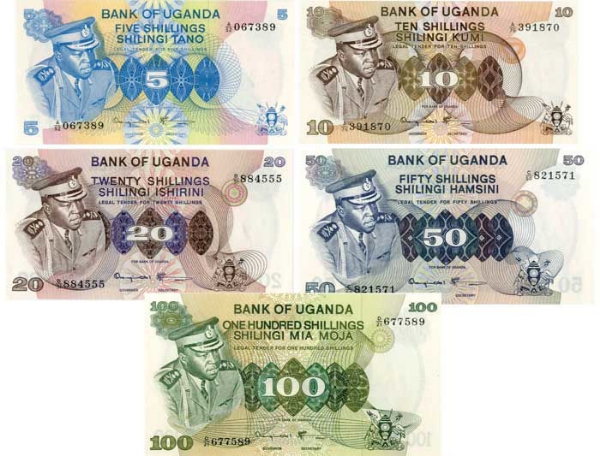
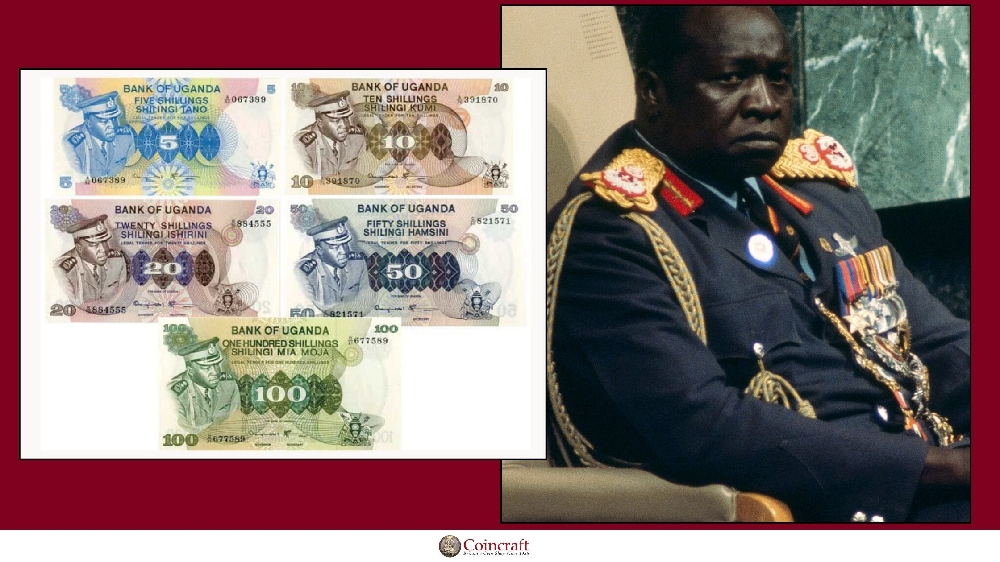
Picture Source of Idi Amin: Wikipedia
The Last King of Scotland: Who Was Idi Amin?
When we think of history’s most notorious figures, certain names instantly spring to mind. But few are as complex, terrifying, and strangely charismatic as Idi Amin Dada. Known as the "Butcher of Uganda," Amin wasn't just a distant dictator; he was a larger-than-life character who commanded the world's attention—often for all the wrong reasons.
Imagine a man who could charm you with a smile one minute and order a brutal execution the next. That was the reality of Uganda in the 1970s. But how did a former boxing champion and military cook rise to become one of Africa's most feared rulers? Let’s dive into the story of the man who declared himself the "Conqueror of the British Empire."
Key Takeaways
From Cook to Commander: Amin started his career as a humble assistant cook in the British colonial army before skyrocketing through the ranks.
A Brutal Legacy: His eight-year rule is estimated to have cost the lives of anywhere between 100,000 and 500,000 people.
Economic Collapse: In 1972, Amin famously expelled Uganda's entire Asian population, a move that decimated the country's economy.
The "Last King": Known for his bizarre titles, he eventually declared himself the King of Scotland (among many other things).
A Quiet End: Despite his violent reign, Amin died peacefully in exile in Saudi Arabia, never facing justice for his crimes.
The Gentle Giant? Early Life and Military Beginnings
It’s hard to pin down exactly when or where Idi Amin was born—most historians settle on roughly 1925 in the Koboko district of Uganda¹. Standing at a towering 6 feet 4 inches, Amin was physically imposing from a young age.
Before he was a dictator, he was actually a star athlete. Believe it or not, he held the title of Uganda's light heavyweight boxing champion for nine straight years (1951–1960)². He was also a keen rugby player and swimmer. In 1946, he joined the King's African Rifles (KAR), the British colonial army, starting at the very bottom as an assistant cook.
He didn't stay in the kitchen for long. Amin quickly impressed his superiors with his strength and loyalty, fighting for the British against the Mau Mau rebels in Kenya. He was a soldier's soldier—charismatic, hardworking, and ruthless when necessary. By the time Uganda gained independence in 1962, he had become one of the few native officers in the army³.
The Coup: Seizing the Reins
Amin didn't just stumble into power; he took it. He had formed a close (but shaky) alliance with Uganda’s first Prime Minister, Milton Obote. Together, they maneuvered through the chaotic early years of independence. However, the friendship soured as Obote began to suspect Amin of corruption and plotting against him.
On January 25, 1971, while Obote was away attending a conference in Singapore, Amin made his move. He launched a military coup, seizing control of the radio station and airport⁴.
At first, the Ugandan people cheered! They were tired of Obote's corruption and saw Amin as a man of the people—a soldier who would bring stability. He even promised to hold free elections and step down soon. Spoiler alert: he did neither.
The Reign of Terror (1971–1979)
The honeymoon phase didn't last. Amin’s rule quickly turned into a nightmare. He ruled by decree, meaning his word was law, and he set up intelligence squads like the State Research Bureau (SRB) to hunt down anyone he considered a threat.
The Asian Expulsion
One of the most defining moments of his presidency came in August 1972. Amin claimed he had a dream where God told him to expel the Asian population from Uganda. He gave the country's 80,000 Ugandans of Asian descent (mostly Indians and Pakistanis) just 90 days to leave⁵.
These people owned most of the businesses and formed the backbone of the economy. When they were forced out, the economy didn't just stumble; it collapsed. Shops emptied, inflation soared, and ordinary Ugandans suffered immensely.
"The Butcher of Uganda"
Behind the scenes, things were even darker. Amin targeted political opponents, journalists, and even entire ethnic groups (specifically the Acholi and Lango tribes) that supported the former president. Bodies were often dumped into the Nile River to be eaten by crocodiles because the grave diggers couldn't keep up⁶.
Eccentricity on the World Stage
While his people suffered, Amin became a strange sort of celebrity in the West. He was known for his wild, unpredictable behaviour. He sent telegraphs mocking Queen Elizabeth II and President Nixon. He eventually bestowed upon himself a title that is almost too long to tweet:
"His Excellency, President for Life, Field Marshal Al Hadji Doctor Idi Amin Dada, VC, DSO, MC, Lord of All the Beasts of the Earth and Fishes of the Seas and Conqueror of the British Empire in Africa in General and Uganda in Particular."
It was laughable to the outside world, but for Ugandans, it was a terrifying display of his unchecked ego.
The Downfall and Exile
Amin’s luck finally ran out in 1978. In an attempt to distract from problems at home, he ordered an invasion of neighboring Tanzania. This was a massive mistake. The Tanzanian President, Julius Nyerere, counter-attacked, joined by Ugandan exiles who had fled Amin's rule.
On April 11, 1979, the capital city of Kampala fell. Amin fled the country, first to Libya and finally to Saudi Arabia⁷. The Saudis gave him sanctuary on the condition that he stayed out of politics.
For the next two decades, the man who had terrorized a nation lived a quiet life in Jeddah. He was reportedly known locally as "Dr. Jaffa" because of his love for oranges. He died of kidney failure on August 16, 2003, never having stood trial for the atrocities committed under his watch⁸.
Frequently Asked Questions (FAQs)
Q: Did Idi Amin actually eat people? A: Rumors of cannibalism plagued Amin for years, with stories claiming he kept heads in his freezer. While he once famously remarked that human flesh was "too salty" for his taste, there is no concrete evidence to prove he was a cannibal. These stories likely stemmed from his own attempts to terrify his enemies or from sensationalist media⁹.
Q: How many people died under his rule? A: Due to the chaotic nature of his regime and the lack of official records, exact numbers are impossible to verify. However, international human rights organizations and historians estimate the toll to be between 100,000 and 500,000 people¹⁰.
Q: Is the movie The Last King of Scotland accurate? A: The 2006 film starring Forest Whitaker is a fictionalized drama based on a novel, not a strict documentary. While Whitaker’s portrayal captures Amin’s terrifying mood swings and charisma perfectly, the character of the Scottish doctor (Nicholas Garrigan) is fictional¹¹.
References
Britannica, The Editors of Encyclopaedia (2025) 'Idi Amin', Encyclopedia Britannica, available at: https://www.britannica.com/biography/Idi-Amin (Accessed: 18 December 2025).
History.com Editors (2009) 'Idi Amin', History.com, available at: https://www.history.com/articles/idi-amin (Accessed: 18 December 2025).
Study.com (n.d.) 'Idi Amin | Biography, Dictatorship & Death', available at: https://study.com/academy/lesson/idi-amin-dictator-death-biography.html (Accessed: 18 December 2025).
Ohio State University (n.d.) 'Idi Amin's Coup d'état, Uganda 1971', Origins, available at: https://origins.osu.edu (Accessed: 18 December 2025).
Faal, C. (2009) 'Idi Amin (1925-2003)', BlackPast.org, available at: https://blackpast.org/global-african-history/amin-dada-idi-1925-2003/ (Accessed: 18 December 2025).
World Vision (2014) 'Uganda genocide: A nightmare finally comes to an end', available at: https://www.worldvision.org/disaster-relief-news-stories/uganda-genocide-nightmare-finally-end (Accessed: 18 December 2025).
Wikipedia (2025) 'Idi Amin', available at: https://en.wikipedia.org/wiki/Idi_Amin (Accessed: 18 December 2025).
BBC News (2003) 'Obituary: Idi Amin', available at: http://news.bbc.co.uk (Accessed: 18 December 2025).
Olojede, D. (2003) 'Idi Amin, Murderous Dictator, Dies', New York Newsday.
Ullman, R.H. (1978) 'Human Rights and Economic Power: The United States Versus Idi Amin', Foreign Affairs.
Tunzelmann, A. (2009) 'The Last King of Scotland: history versus Hollywood', The Guardian, available at: https://www.theguardian.com (Accessed: 18 December 2025).