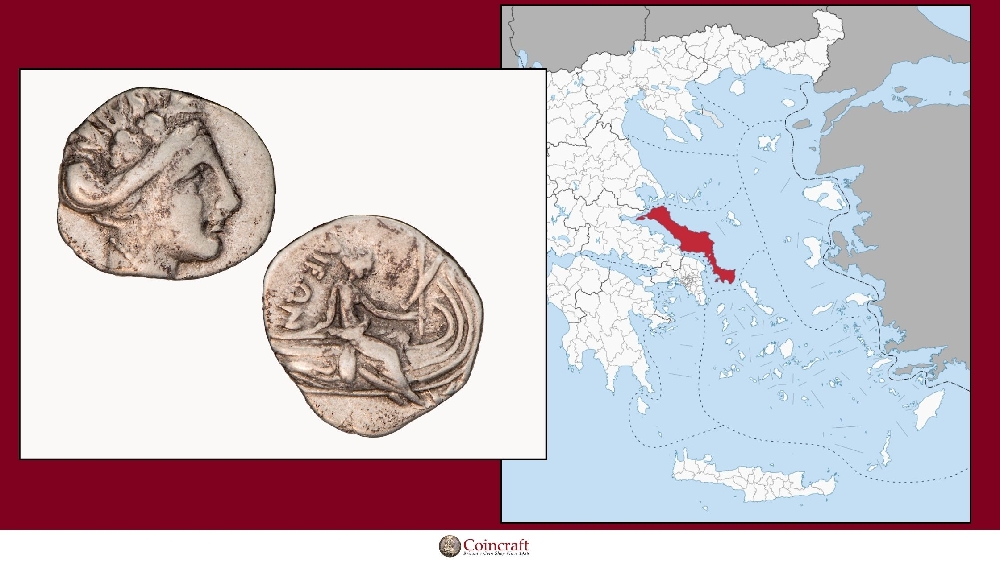
Picture Source of Histiaia on the island of Euboea: Wikipedia
Histiaia: Ancient Euboea’s Forgotten Maritime Marvel
When we think of ancient Greece, our minds usually immediately jump to the grand temples of Athens or the fierce warriors of Sparta. But if you zoom out and look at the sparkling waters of the Aegean Sea, you’ll find an island called Euboea, home to a city with a story so dramatic it could rival a modern-day soap opera.
That city is Histiaia. From its mythical origins and stunning ancient coinage to a brutal smackdown by one of history's most famous statesmen, Histiaia is a fascinating microcosm of the ancient Mediterranean world. So, grab your favorite beverage, settle in, and let's travel back a couple of millennia to uncover the vibrant, tumultuous life of Histiaia.
Key Takeaways
Strategic Seaport: Located on the lush northern coast of the Greek island of Euboea, Histiaia was a major maritime and economic hub in the ancient world.
The Wrath of Pericles: In 446 BC, the city led a bold rebellion against the Athenian Empire, resulting in the famous statesman Pericles expelling the locals and replacing them with Athenian settlers.
A Tale of Two Names: Following the Athenian takeover and colonization, the city was reborn and became widely known throughout antiquity as Oreos (or Oreus).
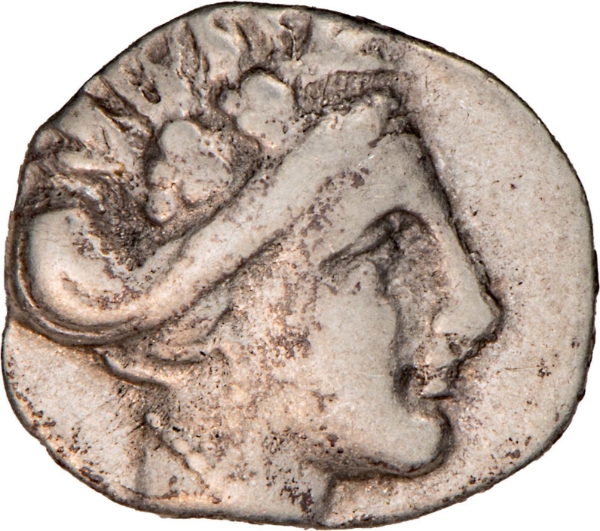
Rich Coinage: Histiaia produced stunning, widely circulated silver coins, often depicting the local nymph Histiaia and highlighting the city's naval prowess.
Setting the Scene: Where Myth Meets Reality
To really understand Histiaia, you have to know where it sat on the map. Picture the long, seahorse-shaped island of Euboea hugging the eastern coast of mainland Greece. Up in the northern part of this island, nestled by the river Callas and sitting proudly at the foot of Mount Telethrium, was Histiaia<sup>1</sup>. The location was an absolute goldmine for an ancient settlement. With rich agricultural land at its back and the sea at its doorstep, the city was practically destined for wealth.
Like any respectable ancient Greek city, Histiaia’s origins are wrapped in the comforting, hazy blanket of mythology. According to local lore, the city was named after the nymph Histiaia<sup>2</sup>. Some ancient traditions even linked the surrounding area to the legendary hunter Orion, claiming he was reared in this very region<sup>3</sup>. Whether you believe in nymphs or not, it’s clear that the earliest inhabitants felt their home was deeply touched by the divine.
The Golden Age and the Spark of Rebellion
As the centuries rolled on, Histiaia didn't just survive; it thrived. Through a process called synoecism—which is essentially a fancy historian term for smaller towns merging into one larger political powerhouse—Histiaia absorbed neighboring settlements. It grew into a bustling urban center complete with public spaces, theaters, and a booming maritime trade economy.
But with great wealth comes great political drama. By the 5th century BC, Histiaia found itself caught in the gravitational pull of Athens. Following the Persian Wars, Athens had formed the Delian League, ostensibly an alliance to protect Greece from future Persian attacks. However, it quickly morphed into the Athenian Empire, and Athens started treating its "allies" more like subjects, demanding heavy tributes.
Euboea was incredibly important to Athens. It was essentially the empire's breadbasket and a crucial naval shield<sup>4</sup>. So, when Athens started flexing its imperial muscles, the cities of Euboea—including our proudly independent Histiaia—started getting restless. By 446 BC, that restlessness boiled over into full-blown revolution. Histiaia and the rest of Euboea revolted, declaring they were done playing second fiddle to Athenian ambitions.
Enter Pericles (And the Birth of Oreos)
If you're going to revolt against Athens in the middle of the 5th century BC, you're going to have to deal with Pericles. And unfortunately for the Histiaeans, Pericles was not known for his gentle touch when it came to insubordination.
When news of the Euboean revolt reached Athens, Pericles immediately crossed over to the island with 50 ships and 5,000 soldiers. While he used diplomacy and bribery to handle threats in other regions, his treatment of Euboea—and Histiaia in particular—was famously ruthless. He crushed the rebellion and decided to make a terrifying example of Histiaia<sup>5</sup>.
The entire native population of the city was expelled from their homes. In their place, Pericles settled an Athenian cleruchy (a specialized type of colony where the settlers retained their Athenian citizenship) and distributed the fertile land among them<sup>5</sup>. To cement this ultimate hostile takeover, the city was rebranded. From that point on, it became widely known as Oreos (or Oreus)<sup>6</sup>. It’s a sobering reminder of how brutal ancient geopolitics could be; one day you're a thriving, independent hub, and the next, your people are exiled, and your city has a new name.
Life After Athens: Spartans, Macedonians, and Romans
Despite the trauma of 446 BC, the story of the city didn't end there. Oreos remained a vital strategic asset. During the devastating Peloponnesian War between Athens and Sparta, the city's loyalty was hotly contested. In 411 BC, when Euboea revolted against Athens again, Oreos was the only city on the island that remained loyal to Athens—mostly because it was still populated by those Athenian settlers!
Eventually, the tides of history washed over the city just as they did the rest of Greece. By 410 BC, the broader island of Euboea regained its independence. Later, the city fell under the sweeping conquests of Philip II of Macedon (Alexander the Great's father) in 338 BC, and eventually became incorporated into the sprawling Roman Republic in the 2nd century BC.
Through all these regime changes, the city's vibrant culture and economy endured. One of the most beautiful legacies Histiaia left behind is its coinage. During the 3rd and 2nd centuries BC, they minted exquisite silver tetrobols. These coins usually featured the crowned head of the nymph Histiaia on one side, and the nymph sitting on the stern of a galley ship on the other<sup>7</sup>. It was a beautiful, pocket-sized testament to a city that always looked to the sea for its survival, identity, and strength.
Today, if you visit the modern Greek village of Oreoi in northern Euboea, you are walking in the shadow of this incredible history. There's not a lot left above ground, but the stories of nymphs, rebellions, and ancient maritime empires are permanently etched into the landscape.
FAQs
Where are the ruins of ancient Histiaia located today? The ancient site is located near the modern coastal village of Oreoi on the northern coast of the Greek island of Euboea. While major towering ruins aren't present like in Athens, archaeological evidence and the layout of the landscape still mark the ancient city's footprint.
Why did the city's name change from Histiaia to Oreos? After Histiaia led a revolt against the Athenian Empire in 446 BC, the Athenian leader Pericles crushed the rebellion, expelled the native population, and established a colony of Athenian citizens. Following this forceful resettlement, the city was renamed Oreos (or Oreus).
What is Histiaia most famous for among historians today? Historically, it is most famous for its pivotal role in the Euboean revolt and the subsequent brutal crackdown by Pericles. Archaeologically and numismatically, it is renowned for its beautiful and widely circulated silver coins featuring the nymph Histiaia and naval imagery.
References
ToposText (n.d.) Histiaia (Euboea). Available at: https://topostext.org/place/389231PHis
Numis Forums (2023) Nymph Histiaia - Greek Coins. Available at: https://www.numisforums.com/topic/5545-nymph-histiaia/
Grokipedia (n.d.) Oreus. Available at: https://grokipedia.com/page/oreus
Oxford Reference (n.d.) Euboea. Available at: https://www.oxfordreference.com/display/10.1093/oi/authority.20110803095759943
History Discussion (2015) Change in Foreign Policy of Athens under Pericles. Available at: https://www.historydiscussion.net/history-of-greece/athens-under-pericles/change-in-foreign-policy-of-athens-under-pericles/5751
Wikipedia (2023) Oreus. Available at: https://en.wikipedia.org/wiki/Oreus
Ancient Coin Gallery (n.d.) Histiaia. Available at: http://www.ancientcoingallery.net/categories?Mint=Histiaia