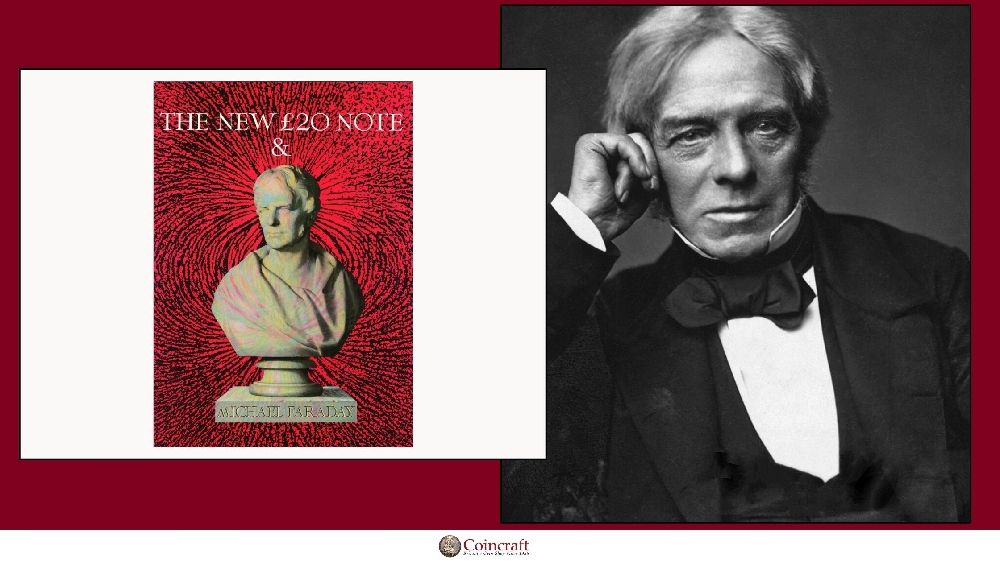
Picture Source of Michael Faraday: Wikipedia
The Spark That Changed the World: A Biography of Michael Faraday
Imagine, just for a moment, a world without electricity. No lights to flick on when the sun goes down, no buzzing smartphones in our pockets, no humming refrigerators, and certainly no internet to read this blog post on. It sounds almost prehistoric, doesn't it? Yet, without the curiosity and genius of one man—a humble bookbinder’s apprentice from London—this dark, quiet world might still be our reality today.
Meet Michael Faraday, the man often called the "Father of Electricity." But don't let the grand title fool you; his story isn't one of ivory towers and expensive universities. It’s a tale of poverty, grit, and an insatiable hunger for knowledge that literally lit up the world. Whether you're a science buff or just someone who appreciates the magic of a light switch, Faraday’s journey is one you need to know.
Key Takeaways
From Poverty to Preeminence: Faraday rose from a slum in London with only a basic education to become one of the most influential scientists in history.
The Power of Self-Education: He taught himself science by reading books he was supposed to be binding, proving that passion often outweighs privilege.
The Electric Revolution: His discovery of electromagnetic induction is the principle behind every electric generator and transformer used today.
Science for the People: He founded the famous "Christmas Lectures" at the Royal Institution to make science accessible to children and the general public.
Integrity Over Profit: A deeply religious and humble man, Faraday refused to patent his inventions or accept a knighthood, believing knowledge should serve humanity, not personal gain.
Humble Beginnings: The Boy Who Bound Books
Born on September 22, 1791, in Newington Butts (now part of South London), Michael Faraday didn't exactly have a head start in life. His father, James, was a blacksmith who suffered from poor health and struggled to find steady work. The family was often destitute; at times, their weekly food allowance was nothing more than a single loaf of bread.(1)
Formal education wasn't an option for a boy in his position. He learned the basics—reading, writing, and a bit of arithmetic—at Sunday school, but that was it. At the tender age of 14, to help support his family, Michael became an apprentice to George Riebau, a local bookbinder.(2)
But here's where the magic happened. While other apprentices were just gluing spines and stitching pages, Michael was reading them. He devoured everything that crossed his workbench, but he was particularly captivated by the entry on "Electricity" in the Encyclopædia Britannica. He didn't just read about experiments; he scraped together pennies to buy cheap supplies and performed them himself in the back of the shop.(3)
The Turning Point: A Ticket to Science
The universe has a funny way of opening doors. In 1812, a customer at the bookshop gave the 20-year-old Faraday a gift that would change history: tickets to hear Sir Humphry Davy lecture at the Royal Institution. Davy was the rock star of the scientific world at the time—famous, flamboyant, and brilliant.
Faraday didn't just attend; he was mesmerized. He took copious, detailed notes, later rewriting them neatly and binding them into a beautiful 300-page book. He sent this book to Davy as a job application.(3)
Whatever Davy thought of the gesture, he didn't hire Faraday immediately. But fate intervened when Davy temporarily blinded himself in a lab explosion and needed help. He remembered the eager bookbinder. In 1813, Faraday was hired as a chemical assistant at the Royal Institution.(3) He had his foot in the door, and he wasn't going to let it close.
The Spark of Genius: Discoveries That Defined an Era
Faraday's early years at the Royal Institution were spent mostly as a chemist (and he was a brilliant one!). In 1825, he discovered benzene, a chemical compound that is crucial to modern chemistry and industry.(4) But his true passion remained the mysterious force of electricity.
The First Electric Motor (1821)
In 1820, Danish physicist Hans Christian Ørsted discovered that an electric current could move a compass needle—proving that electricity and magnetism were linked. Faraday was fascinated. He set up an experiment with a magnet and a dangling wire. When he ran a current through the wire, it began to spin around the magnet. This was "electromagnetic rotation"—the first-ever electric motor.(5)
It was a simple device, but it proved that electrical energy could be converted into mechanical motion. Every fan, drill, and electric car today owes a debt to that spinning wire.
The Big One: Electromagnetic Induction (1831)
If the motor was a hit, his next discovery was the blockbuster. For years, scientists knew electricity could make magnetism (electromagnets). Faraday wondered: Could magnetism make electricity?
On August 29, 1831, he wrapped two coils of wire around an iron ring. He found that when he passed a current through one coil, a brief current appeared in the other—but only when the current started or stopped.(6)
He realized that a changing magnetic field creates electricity. He demonstrated this by moving a magnet in and out of a coil of wire, generating a steady current. This phenomenon, known as electromagnetic induction, is the operating principle behind the electric generator and the transformer.(6)
Basically, if you have power in your home right now, it's because a generator somewhere is spinning a magnet inside a coil of wire, doing exactly what Faraday discovered nearly 200 years ago.
A Legacy Beyond the Lab
Faraday wasn't just a lab rat; he was a communicator. He believed science belonged to everyone. In 1825, he initiated the Christmas Lectures at the Royal Institution, a series specifically designed for children.(8)
These lectures were spectacular shows, filled with bangs, flashes, and wonders. Faraday himself delivered 19 series of these lectures, the most famous being "The Chemical History of a Candle." The tradition continues to this day and is now broadcast on television every year.
Despite his fame, Faraday remained incredibly humble. A devout member of the Sandemanian church, a small Christian sect, he viewed his science as a way to explore God's creation.(9) He had no interest in power or money.
He refused a knighthood (preferring to remain plain "Mr. Faraday").
He turned down the Presidency of the Royal Society (twice!).
He refused to help the British government produce chemical weapons for the Crimean War, citing ethical grounds.(9)
By the early 1840s, Faraday’s health began to decline, and he suffered from memory loss, likely due to years of handling toxic chemicals like mercury and benzene. Yet, he continued to work and lecture until he could no longer do so. He died on August 25, 1867, at his house at Hampton Court, sitting in his favorite chair.(2)
Why He Matters Today
It is said that Albert Einstein kept a picture of three scientists on his study wall: Isaac Newton, James Clerk Maxwell, and Michael Faraday.(10) That puts him in pretty good company, don't you think?
Faraday didn't just discover things; he changed the very language of science. Terms we use daily—electrode, anode, cathode, ion—were coined by him (with help from his friend William Whewell).(7)
He showed us that you don't need a fancy degree to change the world—just curiosity, patience, and perhaps a little bit of wire. So, the next time you plug in your phone charger, take a second to whisper a quiet "thank you" to the bookbinder from London.
FAQs
1. Did Michael Faraday invent the lightbulb? No, he didn't invent the lightbulb itself (that credit usually goes to Edison or Swan), but he made it possible. Faraday discovered the principle of electromagnetic induction, which allowed for the generation of electricity on a large scale. Without his generators, lightbulbs would have had no power source to light them up!
2. Was Michael Faraday rich? Not at all. Despite being one of the most famous scientists of his day, Faraday had little interest in money. He came from a poor background and, due to his religious beliefs, often refused high-paying consultancy work or patents that he felt were unethical. He lived comfortably in his later years thanks to a pension and a house provided by the Queen, but he never amassed a fortune.(9)
3. What is a "Faraday Cage"? A Faraday Cage is a shield that blocks electromagnetic fields. Faraday discovered that an electrical charge stays on the outside of a conductor (like a metal box) and doesn't affect anything inside it. This is why you are safe from lightning inside a car (the metal frame acts as a cage) and why your microwave doesn't cook you while it's heating your food!(2)
References
Britannica, T. Editors of Encyclopaedia (2025) Michael Faraday. Available at: https://www.britannica.com/biography/Michael-Faraday (Accessed: 30 January 2026).
IET Archives (no date) Biographies: Michael Faraday. Available at: https://www.theiet.org/membership/library-and-archives/the-iet-archives/biographies/michael-faraday (Accessed: 30 January 2026).
Royal Institution (no date) Michael Faraday's research and work. Available at: https://www.rigb.org/explore-science/explore/collection/michael-faradays-research-and-work (Accessed: 30 January 2026).
Science History Institute (no date) Michael Faraday. Available at: https://www.sciencehistory.org/education/scientific-biographies/michael-faraday/ (Accessed: 30 January 2026).
Britannica, T. Editors of Encyclopaedia (2025) Michael Faraday - Inventions & Facts. Available at: https://www.britannica.com/biography/Michael-Faraday (Accessed: 30 January 2026).
IET Archives (no date) Michael Faraday and the discovery of electromagnetic induction. Available at: https://www.theiet.org/membership/library-and-archives/the-iet-archives/biographies/michael-faraday (Accessed: 30 January 2026).
Britannica, T. Editors of Encyclopaedia (2025) Laws of Electrolysis. Available at: https://www.britannica.com/biography/Michael-Faraday (Accessed: 30 January 2026).
Royal Institution (no date) History of the Christmas Lectures. Available at: https://www.rigb.org/christmas-lectures/history-christmas-lectures (Accessed: 30 January 2026).
Encyclopedia.com (2018) Michael Faraday. Available at: https://www.encyclopedia.com/people/science-and-technology/physics-biographies/michael-faraday (Accessed: 30 January 2026).
Kiddle (2025) Michael Faraday Facts for Kids. Available at: https://kids.kiddle.co/Michael_Faraday (Accessed: 30 January 2026).