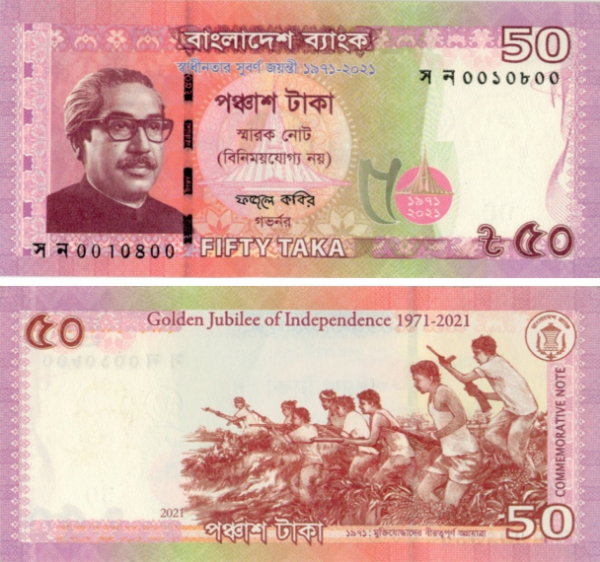
.jpg)
Picture Source of Sheikh Mujibur Rahman: Wikipedia
Introduction to Sheikh Mujibur Rahman
Sheikh Mujibur Rahman, often fondly referred to as "Bangabandhu" or "Friend of Bengal," was a monumental figure who played a pivotal role in the history of Bangladesh. Born on 17 March 1920, in Tungipara, a small village in the Gopalganj District, his life was marked by a relentless pursuit of justice and autonomy for his people. As the principal architect of Bangladesh's independence, Mujib's vision and tenacity laid the foundation for the nation's liberation from Pakistani rule.
Mujibur Rahman's influence extended far beyond the borders of Bangladesh. His leadership and ideals were recognised globally, earning him a place among the most significant political leaders of the 20th century. His speeches, most notably the historic 7th March address, rallied millions towards a unified goal of independence, setting the stage for a new era in South Asian politics. Through his life, Mujib demonstrated an unwavering commitment to his country, overcoming numerous challenges to secure a free and sovereign Bangladesh.
This article delves into the multifaceted life of Sheikh Mujibur Rahman, exploring his early beginnings, political activism, role in the liberation movement, and his lasting impact on Bangladesh and the wider world. His journey from a humble village boy to the first Prime Minister of an independent nation is a testament to his visionary leadership and dedication to his people's welfare.
Early Life and Education
Sheikh Mujibur Rahman's early years were characterised by a deep sense of empathy and concern for the underprivileged. Born into a modest family, he was the third child among six siblings. His father, Sheikh Lutfur Rahman, worked as a court clerk, while his mother, Sayera Khatun, was a homemaker. From a young age, Mujib exhibited qualities of leadership and compassion, which would later define his political career.
His education began at the local Gimadanga Primary School, followed by further studies at Gopalganj Missionary School. Despite facing health challenges, including a prolonged battle with eye problems, Mujib's determination to learn never wavered. His academic journey took him to the prestigious Islamia College (now Maulana Azad College) in Calcutta, where he pursued a degree in law and political science, laying the groundwork for his future political endeavours.
While at college, Mujib's interactions with fellow students and teachers sparked his interest in politics. He was deeply influenced by the contemporary socio-political movements and the struggle for Indian independence. These formative years were crucial in shaping his understanding of leadership, governance, and the importance of advocating for justice and equality, values that would guide him throughout his life.
Political Awakening and Activism
Mujibur Rahman's political journey began in earnest during his college years in Calcutta. He joined the All India Muslim Students Federation in 1940, marking the start of his active involvement in politics. His commitment to addressing the socio-economic issues faced by the Bengali Muslim community became apparent as he participated in various student-led movements and protests.
The partition of India in 1947 was a turning point for Mujib. It highlighted the stark socio-economic disparities between East and West Pakistan, galvanising his resolve to fight for the rights of the Bengali people. As a member of the newly formed Awami Muslim League, Mujib emerged as a vocal advocate for provincial autonomy, pushing for greater political and economic rights for East Pakistan.
Throughout the 1950s and 1960s, Mujib's activism intensified. He played a crucial role in the Language Movement of 1952, which demanded the recognition of Bengali as one of Pakistan's state languages. His leadership in this movement not only strengthened his political stature but also solidified his reputation as a fearless champion of Bengali identity and culture.
Role in the Bangladesh Liberation Movement
Sheikh Mujibur Rahman's role in the Bangladesh Liberation Movement was instrumental in the country's journey towards independence. As the leader of the Awami League, he formulated and articulated the Six-Point Movement in 1966, which called for greater autonomy for East Pakistan. These demands became the cornerstone of the Bengali nationalist struggle, rallying widespread support from the masses.
The 1970 general elections were a watershed moment for Mujib and the Awami League. Winning an overwhelming majority in East Pakistan, the party's success underscored the people's desire for self-determination. However, the refusal of the Pakistani government to transfer power led to escalating tensions, culminating in the brutal crackdown on 25 March 1971, known as Operation Searchlight.
Mujib's arrest by the Pakistani military did not deter the movement. Instead, it galvanised the Bengali population, igniting a full-scale War of Independence. His leadership, even in captivity, inspired countless freedom fighters and ordinary citizens to join the struggle. The nine-month-long war resulted in Bangladesh's formal emergence as an independent nation on 16 December 1971, a testament to Mujib's enduring vision and leadership.
Leadership as the First Prime Minister
Upon his release from Pakistani custody in January 1972, Mujibur Rahman returned to a hero's welcome in the newly independent Bangladesh. As the first Prime Minister, he faced the monumental task of rebuilding a war-torn nation. His leadership during this critical period was marked by efforts to establish democratic governance, reconstruct infrastructure, and address the humanitarian crisis left by the war.
Mujib's government focused on laying the foundation for a stable and prosperous Bangladesh. The drafting and adoption of the country's first constitution in 1972 was a significant achievement, enshrining the principles of democracy, secularism, socialism, and nationalism. These core tenets reflected Mujib's vision for a just and equitable society.
Despite facing numerous challenges, including political instability and economic hardships, Mujib's leadership was characterised by an unwavering commitment to his people's welfare. His policies aimed at land reforms, education, and healthcare were designed to uplift the impoverished and foster national unity. His tenure as Prime Minister set the stage for Bangladesh's long-term development and progress.
Vision for a New Bangladesh
Sheikh Mujibur Rahman's vision for Bangladesh was rooted in his deep-seated belief in social justice and equality. He envisioned a nation where every citizen, regardless of their socio-economic background, had access to basic rights and opportunities. His policies focused on eradicating poverty, promoting education, and ensuring health services for all, aiming to create a more equitable society.
Mujib's economic policies emphasised self-reliance and sustainable development. He advocated for agrarian reforms to boost agricultural productivity and improve the livelihoods of rural communities. His government's nationalisation of key industries sought to establish a balanced economy that prioritised the welfare of the people over profit.
Culturally, Mujib aimed to foster a sense of national identity and pride among Bangladeshis. He encouraged the promotion of Bengali language, literature, and arts as integral components of the country's heritage. Through his visionary leadership, Mujib aspired to build a progressive and inclusive nation, one that would stand resilient against external pressures and internal challenges.
Challenges Faced During His Tenure
Despite his visionary goals, Sheikh Mujibur Rahman faced numerous challenges during his tenure as Prime Minister. The aftermath of the Liberation War left Bangladesh with a devastated infrastructure, widespread poverty, and a humanitarian crisis. Rebuilding the nation from scratch required immense resources and international support, which were not always readily available.
Politically, Mujib's government grappled with internal dissent and opposition. The formation of the Bangladesh Krishak Sramik Awami League (BAKSAL) in 1975, aimed at creating a one-party state, was met with criticism and resistance. His efforts to consolidate power were seen by some as a departure from democratic principles, leading to tensions within the political landscape.
Economic difficulties further compounded the challenges faced by Mujib's administration. Natural disasters, such as the 1974 famine, exacerbated food shortages and economic instability. Despite these obstacles, Mujib's determination to steer the country towards stability and prosperity remained unwavering, although his time was tragically cut short before these goals could be fully realised.
Assassination and Its Impact on Bangladesh
The assassination of Sheikh Mujibur Rahman on 15 August 1975 was a devastating blow to the nation. A group of army officers orchestrated the coup, resulting in the brutal murder of Mujib and most of his family members. This tragic event plunged Bangladesh into political turmoil and marked the beginning of a series of military coups and authoritarian regimes.
Mujib's assassination left a vacuum in the country's leadership, destabilising the political landscape and disrupting the progress made towards building a democratic society. The subsequent years were characterised by political unrest and economic challenges, as successive governments struggled to establish stability and address the pressing needs of the population.
The impact of Mujib's assassination reverberated through the nation for decades. It underscored the fragility of Bangladesh's nascent democracy and highlighted the need for strong, visionary leadership to guide the country towards a brighter future. Despite the challenges, Mujib's legacy continued to inspire future generations to strive for the ideals he championed.
Legacy of Sheikh Mujibur Rahman
Sheikh Mujibur Rahman's legacy is deeply etched in the history of Bangladesh. As the Father of the Nation, his contributions to the country's independence and development remain unparalleled. His leadership during the Liberation Movement and his vision for a prosperous, equitable Bangladesh continue to inspire countless individuals across the nation and beyond.
Mujib's ideals of democracy, secularism, and social justice are enshrined in the country's constitution and guide its political and social discourse. His emphasis on national unity and cultural identity has fostered a sense of pride and belonging among Bangladeshis, strengthening the nation's resilience against internal and external challenges.
Today, Mujib's legacy is celebrated through various initiatives and institutions established in his honour. His life and achievements are commemorated annually, serving as a reminder of the sacrifices made for the nation's independence and the enduring values he championed. His vision for a just and inclusive society continues to shape Bangladesh's path towards a brighter future.