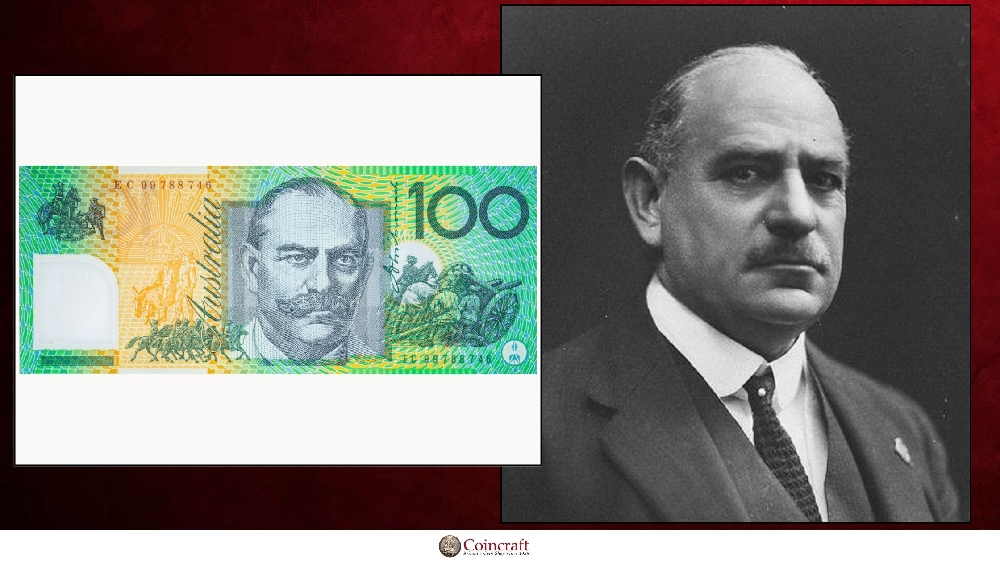
Picture Source of Sir John Monash: Wikipedia
Sir John Monash: The Engineer Who Masterminded Victory
General Sir John Monash (1865–1931) is widely regarded as one of the most brilliant military commanders of the First World War and one of Australia’s most significant historical figures. Unlike the traditional aristocratic military leaders of his era, Monash was a citizen-soldier and a civil engineer of Prussian-Jewish descent. He approached the brutal stalemate of trench warfare not with a reliance on raw attrition, but as a complex engineering problem requiring meticulous logistics, technological integration, and the preservation of human life. His leadership of the Australian Corps in 1918 was instrumental in the Allied victory on the Western Front.
Key Facts
Born: June 27, 1865, Melbourne, Victoria, Australia.
Died: October 8, 1931, Melbourne, Victoria, Australia.
Military Rank: General (promoted posthumously to full General in 1929; he was a Lieutenant General during his WWI command).
Civilian Profession: Civil Engineer (pioneer of reinforced concrete in Australia).
Major WWI Engagements: Gallipoli Campaign, Battle of Messines, Battle of Hamel, Battle of Amiens, Breaking of the Hindenburg Line.
Key Honours: Knight Grand Cross of the Order of St Michael and St George (GCMG), Knight Commander of the Order of the Bath (KCB), French Légion d'honneur.
Key Takeaways
Pioneer of Combined Arms: Monash revolutionized modern warfare by meticulously coordinating infantry, artillery, tanks, and aircraft to work as a single, cohesive unit, effectively breaking the deadly WWI stalemate [1, 2].
The Engineer’s Mindset: He treated battle as a problem of engineering and logistics. His philosophy was that the true role of infantry was to advance under maximum technological protection, rather than acting as cannon fodder [2].
The Ultimate Citizen-Soldier: Despite facing intense prejudice due to his Jewish heritage, German-sounding name, and lack of professional military pedigree, his undeniable competence forced the British High Command to grant him leadership of the entire Australian Corps [3, 4].
Post-War Nation Builder: After WWI, Monash successfully repatriated 160,000 soldiers, modernized Victoria's power grid as head of the State Electricity Commission, and spearheaded the creation of Melbourne's Shrine of Remembrance [1, 3].
Historical Narrative: The Making of a Master Tactician
Early Life and Civilian Career
John Monash was born in West Melbourne in 1865 to Louis and Bertha Monash, Jewish immigrants from Prussia. Growing up in a German-speaking household in the colony of Victoria, Monash demonstrated early intellectual brilliance. He attended Scotch College in Melbourne, where he graduated as dux, before matriculating to the University of Melbourne. There, his immense capacity for work became evident as he simultaneously studied arts, engineering, and law, eventually graduating with degrees in all three disciplines [3].
Monash’s professional life was rooted in civil engineering. In the 1890s and early 1900s, he became a pioneer in the introduction of reinforced concrete to Australian construction. He formed a highly successful partnership, Monash & Anderson, building bridges, railways, and commercial buildings across Victoria. This civilian career instilled in him a profound understanding of structural planning, resource management, and the coordination of large teams of men—skills that would later define his military genius [1, 3].
Concurrently with his engineering career, Monash was a dedicated part-time soldier. He joined the university company of the Victoria militia in 1884, gradually rising through the ranks. By the outbreak of the First World War in 1914, he was a colonel commanding the 13th Infantry Brigade [3].
Trial by Fire: Gallipoli to the Western Front
When the Australian Imperial Force (AIF) was raised, Monash was appointed commander of the 4th Infantry Brigade. In April 1915, his brigade landed at Gallipoli. The campaign was a strategic disaster, characterized by chaotic planning, rugged terrain, and catastrophic casualties. While Monash’s performance at Gallipoli was competent, the horrific conditions and the sheer waste of life deeply affected him. It reinforced his belief that soldiers should never be thrown pointlessly against fortified positions without adequate support [4].
Following the evacuation of Gallipoli, the AIF was transferred to the Western Front in France and Belgium. Here, the war had devolved into a meat grinder of trench warfare. In July 1916, Monash, now a Major General, took command of the newly formed 3rd Australian Division. He spent months relentlessly training his men, emphasizing discipline, detailed planning, and the use of artillery to protect advancing infantry.
His division performed brilliantly at the Battle of Messines in June 1917, where his meticulous logistical planning ensured that the complex sequence of underground mine detonations, artillery barrages, and infantry assaults worked flawlessly. However, the subsequent slaughter in the mud of Passchendaele later that year further cemented his disdain for the attritional tactics favored by the British High Command [1, 4].
Command of the Australian Corps and the Battle of Hamel
In May 1918, Monash was promoted to Lieutenant General and given command of the entire Australian Corps. This was the largest individual corps on the Western Front, comprising over 100,000 men. His appointment was initially resisted by traditionalists, including the Australian war correspondent Charles Bean and even Prime Minister Billy Hughes, who harbored prejudices against Monash’s Prussian-Jewish background and his status as a "civilian" general. However, his undeniable track record secured his position [3].
Monash’s military masterpiece came shortly after his promotion: the Battle of Hamel on July 4, 1918. Tasked with capturing the village of Le Hamel, Monash designed a battle plan unlike any seen before. He abandoned the traditional tactic of prolonged preliminary bombardments, which merely warned the enemy of an impending attack. Instead, he planned a surprise offensive utilizing a revolutionary "combined arms" approach.
Monash integrated the newly developed Mark V tanks to crush barbed wire and silence machine-gun nests, tasks previously paid for in infantry blood. He used aircraft to drop ammunition directly to advancing troops, ensuring they never ran out of supplies. A creeping artillery barrage advanced precisely ahead of the infantry, providing a shield of high explosives. Monash planned the battle to last exactly 90 minutes. It took 93 minutes. The victory was absolute, with incredibly low Allied casualties. The "Hamel Model" became the blueprint for the rest of the war [2, 5].
The Hundred Days Offensive and the Hindenburg Line
Following the success at Hamel, Monash’s Australian Corps became the shock troops of the British Empire. On August 8, 1918, the Battle of Amiens commenced. Utilizing Monash’s combined arms tactics on a massive scale, the Allied forces smashed through the German lines, advancing miles in a single day. German General Erich Ludendorff famously dubbed this "the black day of the German Army" [1].
On August 12, 1918, King George V visited Monash at his battlefield headquarters at the Château de Bertangles and knighted him. It was the first time a British monarch had knighted a commander on the battlefield in 200 years [3].
Through August and September, Monash relentlessly drove the Australian Corps forward, capturing Mont St Quentin and Péronne in a brilliant, audacious flanking maneuver. Finally, in late September and early October, Monash masterminded the assault that breached the Hindenburg Line—the supposedly impregnable German defensive system. Using American and Australian troops, Monash engineered a massive assault that shattered the German defenses, effectively sealing the fate of the war, which ended with the Armistice on November 11, 1918 [2, 4].
Post-War Nation Builder
Monash’s service to his country did not end with the Armistice. Given the massive logistical task of bringing 160,000 Australian soldiers home, he was appointed Director-General of Repatriation and Demobilisation. He executed the task with his characteristic efficiency, simultaneously establishing vocational education programs to prepare soldiers for civilian life [1, 3].
Returning to Australia a hero, Monash dedicated the rest of his life to public service. In 1920, he was appointed general manager (and later chairman) of the State Electricity Commission of Victoria (SECV). Recognizing that Victoria relied too heavily on imported black coal, he championed the exploitation of the Latrobe Valley's massive brown coal reserves. Under his leadership, the Yallourn power station was built, securing the state's energy independence and driving its industrial expansion for the next century [3].
Simultaneously, Monash served as Vice-Chancellor of the University of Melbourne and was the driving force behind the construction of the Shrine of Remembrance, Victoria’s premier war memorial. He fought tirelessly against political opposition to ensure the Shrine was built to its grand, classical design [1].
Sir John Monash died of a heart attack on October 8, 1931. An estimated 300,000 people—nearly a third of Melbourne’s population at the time—lined the streets for his state funeral. He was a man who applied the precision of a builder to the chaos of war, saving countless lives, and upon returning home, literally provided the power to build the modern state of Victoria.
Frequently Asked Questions (FAQs)
Was Sir John Monash a professional soldier? No. Prior to WWI, Monash was a civilian engineer who served part-time in the citizen militia. This non-traditional background heavily influenced his pragmatic, problem-solving approach to warfare, distinguishing him from career military officers who often relied on outdated doctrines.
What was Monash’s famous quote about the role of infantry? Monash fundamentally changed how the infantry was utilized. He famously wrote: "The true role of infantry is not to expend itself upon heroic physical effort, not to wither away under merciless machine-gun fire, not to impale itself on hostile bayonets... but on the contrary, to advance under the maximum possible protection of the maximum possible array of mechanical resources, in the form of guns, machine-guns, tanks, mortars and aeroplanes."
Why was Monash initially opposed by some Australian figures? During the war, Monash faced intense prejudice. As the son of Prussian-Jewish immigrants, he had a German-sounding name and heritage during a war against Germany. Furthermore, traditionalists like war correspondent Charles Bean distrusted him because he was a "civilian" and a staff officer, rather than a rugged frontline fighter. Monash's sheer competence ultimately overcame these prejudices.
How is Sir John Monash commemorated today? Monash is commemorated extensively across Australia. His face appears on the Australian $100 note. Monash University (one of Australia's largest universities) is named in his honour, as is the City of Monash in Melbourne, the Monash Freeway, and the John Monash Scholars program, which is Australia's equivalent to the Rhodes Scholarship.
References
Serle, G. (1982). John Monash: A Biography. Melbourne University Press. (The definitive, comprehensive biographical work on Monash's life and career).
FitzSimons, P. (2018). Monash's Masterpiece: The Battle of Le Hamel and the 93 Minutes that Changed the World. Hachette Australia. (Focuses specifically on his tactical innovations during WWI).
Serle, G. (1986). "Monash, Sir John (1865–1931)". Australian Dictionary of Biography, Volume 10. National Centre of Biography, Australian National University.
Pedersen, P. A. (1985). Monash as Military Commander. Melbourne University Press. (A detailed analysis of his military strategy and command style).
Australian War Memorial. (n.d.). General Sir John Monash. Retrieved from AWM.gov.au.