 - WAL0206.jpg)
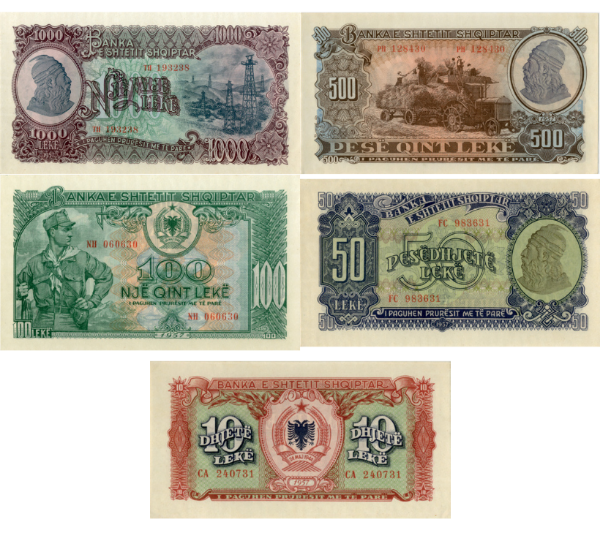
Picture Source of Skanderbeg (Gjergj Kastrioti): Wikipedia
The Dragon of Albania: The Real-Life Warrior Who Defied an Empire
If you think Game of Thrones has the monopoly on political intrigue, underdog battles, and legendary warriors, think again. History has given us figures who make fiction look tame, and sitting comfortably at the top of that list is Gjergj Kastrioti, better known to the world as Skanderbeg.
Imagine a single man holding the line against the most powerful military machine of the 15th century—the Ottoman Empire—for over two decades. He wasn’t just a rebel; he was a tactical genius who turned the mountains of Albania into a fortress that frustrated sultans and fascinated kings. Whether you're a history buff or just love a good underdog story, Skanderbeg’s life is a masterclass in resilience.
Key Takeaways
A Double Life: Skanderbeg was raised as a hostage in the Ottoman court and became a top general for the Sultan before defecting to lead his own people against them.
The League of Lezhë: He successfully united the quarrelsome Albanian chieftains into a single military and political alliance, a rare feat in medieval Balkan history.
Tactical Genius: Despite being vastly outnumbered (often 3 to 1), he remained undefeated in the field for decades by mastering guerrilla warfare and using terrain to his advantage.
Champion of Europe: His resistance bought Western Europe crucial time to fortify itself against Ottoman expansion, earning him the title Athleta Christi (Champion of Christ) from the Pope.
Enduring Legacy: Five centuries later, he remains the heart of Albanian national identity and a symbol of resistance worldwide.
The Making of a Legend: From Hostage to General
Gjergj Kastrioti was born in 1405 into the noble Kastrioti family, who ruled over parts of central Albania. But his childhood wasn’t exactly full of leisure. To ensure the family’s loyalty, his father, Gjon Kastrioti, had to send Gjergj as a hostage to the Ottoman Sultan’s court.^1^
This practice, known as Devshirme, was brutal but effective. Young Gjergj was converted to Islam, educated in Edirne (the Ottoman capital), and trained in the art of war. And he was good at it. He rose through the ranks so quickly that the Turks gave him the name Iskander Bey (Lord Alexander), comparing his military prowess to Alexander the Great.^2^ "Skanderbeg" is essentially the Albanian corruption of this title.
For years, he fought for the Sultan, defeating Christians and expanding the Empire. But beneath the Ottoman armor, he never forgot who he was.
The Great Betrayal
The turning point came in 1443. During the Battle of Niš, where the Ottomans were fighting a Hungarian crusade, Skanderbeg saw his chance. In the chaos of defeat, he didn't just retreat—he switched sides.
He gathered 300 loyal Albanian knights and rode hard for his father's old fortress in Krujë. Through a mix of cunning (he used a forged letter from the Sultan) and force, he took the castle without a prolonged siege.^3^ Once inside, he raised his family’s banner—a double-headed black eagle on a red field—and famously declared: “I have not brought you liberty; I found it here, among you.”
United We Stand: The League of Lezhë
Skanderbeg knew that a single castle couldn’t stop an empire. He needed a nation. In 1444, he convened a massive assembly of Albanian nobles in the Venetian-held town of Lezhë.
This was no small feat. These chieftains were notorious for their feuds, yet Skanderbeg managed to unite them under the League of Lezhë. It was the first time in history that Albania was politically united under a single leader.^4^ While the other nobles kept their lands, Skanderbeg was named the Commander-in-Chief of the League’s forces.
David vs. Goliath: 25 Years of Resistance
For the next quarter-century, Skanderbeg fought a war that, on paper, he should have lost immediately. The Ottoman armies were massive, professional, and well-funded. Skanderbeg’s forces rarely exceeded 10,000 to 15,000 men.
So, how did he win?
He turned Albania’s geography into a weapon. He mastered guerrilla warfare, using the rugged mountains to ambush slow-moving Ottoman columns. He was famous for lightning-fast cavalry strikes and feigned retreats that lured enemies into traps—tactics he had learned from the Ottomans and now used against them.^5^
His helmet, adorned with goat horns (a nod to ancient mythology and Alexander the Great), became a terrifying sight for his enemies.
The Siege of Krujë (1450)
One of his most legendary moments was the First Siege of Krujë. Sultan Murad II himself led an army of 100,000 men to crush the rebellion. Skanderbeg left a garrison inside the castle and took his mobile army into the mountains, harassing the Sultan’s supply lines day and night. After months of failure and thousands of casualties, the Sultan was forced to retreat in shame.^6^
The Battle of Albulena (1457)
In 1457, the Ottomans sent 80,000 men led by Skanderbeg’s own nephew, Hamza Kastrioti (who had defected). It looked like the end. Skanderbeg “vanished” for months, tricking the Ottomans into thinking he was defeated. Then, he launched a surprise attack at Albulena, crushing the Ottoman army and capturing Hamza.^7^
The Diplomat and the "Champion of Christ"
Skanderbeg wasn’t fighting in a vacuum. He knew he was the shield of Christian Europe. He formed alliances with the Kingdom of Naples and the Papacy. Pope Callixtus III, awestruck by his ability to hold back the "infidel" tide, named him Athleta Christi—Champion of Christ.^8^
While Western powers promised much and often delivered little (a classic historical trope), Skanderbeg’s resistance effectively blocked the Ottoman path into Italy for decades.
The End of an Era
Gjergj Kastrioti died of malaria on January 17, 1468. He didn’t die on the battlefield, but undefeated in his bed. Legend says that when the Ottomans finally captured Lezhë years later, they dug up his bones and wore them as amulets, believing they would grant the wearer invincibility.^9^
Without his leadership, the Albanian resistance eventually fractured, and the country fell to the Ottomans a decade later. However, his legacy was cemented. He remains the definitive symbol of Albanian independence and national pride.
FAQs
1. Was Skanderbeg Albanian or Serbian? Skanderbeg was ethnically Albanian. He was born into the Kastrioti family, a noble Albanian house. While royal intermarriage was common in the Balkans (his mother, Voisava, may have had Slavic origins), historical consensus and his own self-identification firmly place him as an Albanian leader fighting for Albanian lands.^10^
2. Did Skanderbeg really fight for the Sultan before fighting against him? Yes. He spent roughly 20 years in Ottoman service. This experience was crucial because it taught him exactly how the Ottoman military worked. He knew their formations, their logistics, and their commanders personally, which gave him a massive strategic advantage when he rebelled.
3. Why does his helmet have goat horns? The goat head on his helmet is believed to be a symbolic connection to Alexander the Great (who was also associated with horned imagery in antiquity) and Pyrrhus of Epirus. It served as a potent symbol of authority and ancient heritage to unite his people.^11^
References
Britannica, T. Editors of Encyclopaedia (2024). Skanderbeg. Encyclopedia Britannica. Available at: https://www.britannica.com/biography/Skanderbeg [Accessed 4 Dec. 2024].
Frashëri, K. (2002). Gjergj Kastrioti Skënderbeu: Jeta dhe Vepra (1405–1468). Tirana: Botimet Toena.
Elsie, R. (2010). Historical Dictionary of Albania. 2nd ed. Lanham: Scarecrow Press.
Noli, F.S. (1947). George Castrioti Scanderbeg (1405–1468). New York: International Universities Press.
Schmitt, O.J. (2009). Skanderbeg: Der neue Alexander auf dem Balkan. Regensburg: Verlag Friedrich Pustet.
Housley, N. (1992). The Later Crusades, 1274–1580: From Lyons to Alcazar. Oxford: Oxford University Press.
Babinger, F. (1978). Mehmed the Conqueror and His Time. Princeton: Princeton University Press.
Setton, K.M. (1978). The Papacy and the Levant, 1204–1571: The Fifteenth Century. Philadelphia: American Philosophical Society.
Gibbon, E. (1776). The History of the Decline and Fall of the Roman Empire. London: Strahan & Cadell.
Fine, J.V.A. (1994). The Late Medieval Balkans: A Critical Survey from the Late Twelfth Century to the Ottoman Conquest. Ann Arbor: University of Michigan Press.
The Kunsthistorisches Museum Vienna (n.d.). The Skanderbeg Helmet and Sword. Available at: https://www.khm.at [Accessed 4 Dec. 2024].