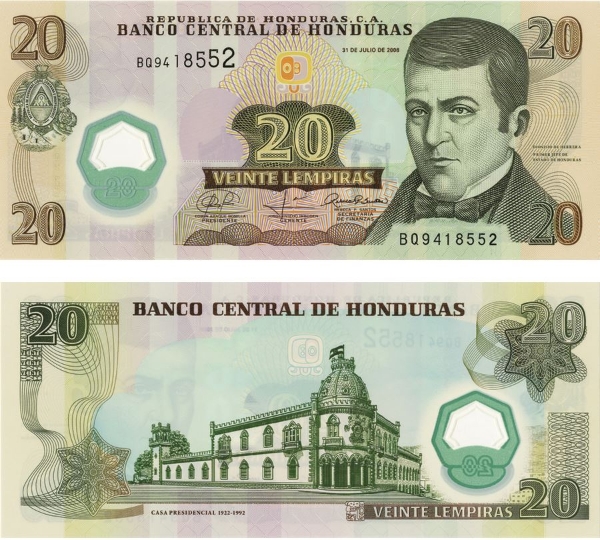
.jpg)
Picture Source of Dionisio de Herrera: Wikipedia
The Early Years of José Dionisio de la Trinidad de Herrera y Díaz del Valle
José Dionisio de la Trinidad de Herrera y Díaz del Valle, a prominent figure in Central American history, was born on October 9, 1781, in Choluteca, Honduras. His early life was marked by the tumultuous period of Spanish colonial rule in Central America, which would later shape his political ideologies and aspirations for the region.
Herrera's family belonged to the local elite, providing him with opportunities for education and social advancement that were rare for most inhabitants of the region at that time. His father, Juan Jacinto de Herrera, was a prominent landowner and held various administrative positions in the colonial government. This background exposed young José Dionisio to the intricacies of governance and the challenges faced by the colonial territories.
Growing up in Choluteca, Herrera witnessed firsthand the disparities between the ruling class and the general population. These early observations would later fuel his passion for social reform and his vision for a united Central America. The cultural and political environment of his youth laid the foundation for his future role as a key figure in the region's struggle for independence and subsequent efforts to establish a federal republic.
Education and Intellectual Development
Herrera's formal education began in his hometown of Choluteca, where he received primary instruction from local tutors. Recognizing his exceptional intellectual capacity, his family decided to send him to Guatemala City for further studies. At the time, Guatemala City was the seat of the Captaincy General of Guatemala and home to some of the most prestigious educational institutions in Central America.
In Guatemala City, Herrera enrolled at the Universidad de San Carlos de Guatemala, one of the oldest and most respected universities in the Americas. Here, he immersed himself in a wide range of subjects, including:
- Philosophy
- Law
- Theology
- Classical literature
This diverse educational background would prove invaluable in his future political career, providing him with a broad understanding of governance, ethics, and social structures.
During his time at the university, Herrera was exposed to Enlightenment ideas that were beginning to circulate throughout the Spanish colonies. These progressive concepts, emphasizing reason, individual rights, and representative government, had a profound impact on his intellectual development. He became particularly interested in the works of:
- John Locke
- Jean-Jacques Rousseau
- Montesquieu
These philosophers' ideas on social contract theory, separation of powers, and natural rights would later influence Herrera's political philosophy and his vision for Central American governance.
Political Career in Central America
Herrera's political career began in earnest following his return to Honduras after completing his studies in Guatemala. His education and family connections quickly propelled him into local politics, where he served in various administrative roles. These early experiences provided him with valuable insights into the challenges facing the region and the limitations of the colonial system.
As the independence movement gained momentum across Latin America, Herrera became increasingly involved in the push for Central American autonomy. He played a crucial role in organizing support for independence in Honduras, leveraging his connections and oratory skills to rally the populace behind the cause. His efforts contributed significantly to Honduras declaring independence from Spain on September 15, 1821, as part of the broader Central American independence movement.
Following independence, Herrera's political influence continued to grow. He was elected to serve as a representative in the Constituent Assembly of the Federal Republic of Central America, where he advocated for a strong federal system that would unite the newly independent states of the region. His vision for Central American unity would become a defining aspect of his political legacy.
Herrera's Role in the Federal Republic of Central America
The Federal Republic of Central America, established in 1823, represented the realization of Herrera's vision for a united Central American state. As a key figure in the formation of this new political entity, Herrera worked tirelessly to promote cooperation and integration among the member states, which included:
- Guatemala
- El Salvador
- Honduras
- Nicaragua
- Costa Rica
Herrera served in various capacities within the federal government, including as a member of the Federal Congress. In this role, he championed policies aimed at strengthening the central government and fostering economic development across the region. His efforts were guided by the belief that a strong, unified Central America could better resist external threats and achieve prosperity for its citizens.
One of Herrera's most significant contributions during this period was his work on the federal constitution. He played a crucial role in drafting and debating the document, which sought to balance the interests of the individual states with the need for a robust central authority. The constitution reflected many of the Enlightenment principles that Herrera had studied, including:
- Separation of powers
- Protection of individual rights
- Representative government
Despite his efforts, the Federal Republic faced numerous challenges, including regional rivalries and conflicts between conservative and liberal factions. Herrera's dedication to the federal project would be tested in the years to come, as he navigated the complex political landscape of Central America.
Key Contributions to Honduran Politics
While Herrera is best known for his role in the Federal Republic of Central America, his contributions to Honduran politics were equally significant. Following the dissolution of the federation in 1838, Herrera returned his focus to his home state, where he continued to advocate for progressive reforms and strong governance.
In Honduras, Herrera served in various governmental positions, including:
- Chief of State (1824-1827)
- Member of the National Congress
- Advisor to subsequent administrations
During his tenure as Chief of State, Herrera implemented several important reforms aimed at modernizing Honduras and improving the lives of its citizens. These initiatives included:
- Expanding access to education
- Promoting agricultural development
- Improving infrastructure, particularly roads and ports
- Reforming the tax system to increase government revenue
Herrera's leadership was characterized by a commitment to the rule of law and a desire to build strong democratic institutions in Honduras. He worked to establish a professional civil service and to reduce corruption in government, setting a standard for ethical governance that would influence future generations of Honduran leaders.
Despite facing opposition from conservative factions and entrenched interests, Herrera remained dedicated to his vision of a progressive and prosperous Honduras. His efforts laid the groundwork for many of the democratic institutions that continue to shape Honduran politics to this day.
Herrera's Vision for Central American Unity
Throughout his political career, José Dionisio de la Trinidad de Herrera y Díaz del Valle remained committed to the idea of Central American unity. Even after the collapse of the Federal Republic, he continued to advocate for closer cooperation and integration among the region's nations. Herrera believed that only through unity could Central America achieve true independence and prosperity.
Herrera's vision for Central American unity encompassed several key elements:
Economic Integration: He advocated for the creation of a common market and the elimination of trade barriers between Central American countries. This, he argued, would promote economic growth and reduce dependency on foreign powers.
Political Cooperation: Herrera envisioned a system of shared governance that would allow Central American nations to coordinate their policies on issues of regional importance, such as defense and foreign relations.
Cultural Exchange: Recognizing the shared cultural heritage of Central America, Herrera promoted initiatives to foster greater understanding and cooperation among the region's diverse populations.
Educational Reform: He believed that a standardized education system across Central America would help create a shared identity and prepare the region's youth for the challenges of the future.
Infrastructure Development: Herrera saw the need for improved transportation and communication networks to physically connect the nations of Central America and facilitate greater interaction.
Despite the challenges faced by the Federal Republic, Herrera never abandoned his belief in the potential of a united Central America. He continued to write and speak on the subject, inspiring future generations of Central American leaders to pursue regional integration.
Challenges and Obstacles Faced During His Leadership
Herrera's political career was marked by numerous challenges and obstacles, reflecting the complex and often turbulent nature of Central American politics in the early 19th century. Some of the key difficulties he faced included:
Regional Rivalries
The newly independent states of Central America often prioritized their individual interests over those of the region as a whole. This led to conflicts and disagreements that undermined efforts at unity and cooperation.
Conservative Opposition
Herrera's progressive ideas and reforms faced strong opposition from conservative factions, who sought to maintain the traditional social and economic structures inherited from the colonial period.
Economic Instability
The transition from colonial rule to independence brought significant economic challenges, including:
- Disruption of trade networks
- Lack of financial resources
- Underdeveloped infrastructure
These issues made it difficult to implement the ambitious reforms Herrera envisioned.
External Pressures
Foreign powers, particularly the United States and European nations, sought to exert influence over Central America, complicating efforts at regional unity and independent governance.
Military Conflicts
Periodic outbreaks of violence and military confrontations between and within Central American states disrupted political stability and hindered progress towards Herrera's goals.
Despite these challenges, Herrera remained committed to his vision and continued to work towards the betterment of Central America throughout his career. His ability to navigate these obstacles and maintain his principles in the face of adversity is a testament to his leadership and dedication.
Legacy and Impact on Central American History
José Dionisio de la Trinidad de Herrera y Díaz del Valle left an indelible mark on Central American history, influencing political thought and governance in the region for generations to come. His legacy can be seen in various aspects of Central American society:
Democratic Institutions: Herrera's emphasis on representative government and the rule of law helped lay the foundation for democratic institutions in Central America.
Regional Integration: Although his vision of a united Central America was not fully realized in his lifetime, Herrera's ideas continue to inspire efforts at regional cooperation and integration.
Educational Reform: His commitment to expanding access to education has had a lasting impact on Central American societies, contributing to increased literacy rates and social mobility.
Political Philosophy: Herrera's synthesis of Enlightenment ideas with Central American realities created a unique political philosophy that continues to influence progressive thinkers in the region.
Ethical Governance: His emphasis on combating corruption and promoting transparency in government set a standard for ethical leadership in Central America.
Herrera's impact extended beyond his immediate political achievements. His writings and speeches inspired subsequent generations of Central American leaders and intellectuals, who continued to grapple with the challenges of nation-building and regional cooperation.
Commemorations and Tributes to Herrera
In recognition of his significant contributions to Central American history and politics, José Dionisio de la Trinidad de Herrera y Díaz del Valle has been honored in various ways throughout the region. Some notable commemorations include:
Statues and Monuments: Several cities in Honduras and other Central American countries have erected statues or monuments in Herrera's honor, serving as reminders of his vision and leadership.
Educational Institutions: Schools and universities bearing Herrera's name can be found across Central America, reflecting his commitment to education and intellectual development.
Currency: Herrera's likeness has appeared on Honduran currency, acknowledging his importance to the nation's history and identity.
Street Names: Many towns and cities in Central America have named streets or public spaces after Herrera, ensuring that his legacy remains a visible part of daily life.
Literary Works: Numerous books, articles, and academic studies have been written about Herrera's life and ideas, contributing to ongoing scholarly interest in his contributions to Central American history.
These commemorations serve not only to honor Herrera's memory but also to keep his ideas and vision alive in the public consciousness, inspiring new generations to consider the possibilities of Central American unity and cooperation.
Lessons from Herrera's Life for Modern Central American Politics
The life and career of José Dionisio de la Trinidad de Herrera y Díaz del Valle offer valuable lessons for contemporary Central American politics. His experiences and ideas remain relevant in addressing many of the challenges facing the region today:
Importance of Regional Cooperation: Herrera's vision of Central American unity underscores the potential benefits of closer cooperation among the region's nations in addressing shared challenges.
Balance Between National and Regional Interests: His efforts to reconcile the needs of individual states with broader regional goals provide insights into managing the complexities of international cooperation.
Progressive Reform within Cultural Context: Herrera's ability to adapt Enlightenment ideas to Central American realities demonstrates the importance of implementing reforms that are sensitive to local cultures and traditions.
Education as a Foundation for Development: His emphasis on expanding access to education remains a crucial strategy for promoting social and economic development in Central America.
Ethical Leadership: Herrera's commitment to combating corruption and promoting transparency in government continues to be a vital aspect of good governance in the region.
Resilience in the Face of Adversity: His persistence in pursuing his goals despite numerous obstacles serves as an inspiration for modern leaders facing complex challenges.
Long-term Vision: Herrera's focus on building institutions and structures for the future, rather than short-term gains, highlights the importance of strategic thinking in governance.
Dionisio de Herrera's Retirement and Death
In 1838 he retired from politics, working as a teacher in the city of San Vicente, El Salvador. He remained there until his death in 1850.